Application Screening
Screen Every Applicant, Instantly
Use StackOne to connect your AI agent to your ATS, document stores, and messaging tools to automate application screening and shortlisting.




AI Agents
Connect
MCP and A2A to REST, SOAP, and proprietary APIs.
Optimize
Tool discovery, data shaping, and reliable execution.
Secure
Scoped permissions, audit trails, and observability.
StackOne Integration Layer


 StackOne Integration Layer
Connect
200+ connectors, build your own, and multi-protocol support.
Optimize
Context, token, and speed optimization infrastructure.
Secure
Permissions API and prompt injection protection.
What Can AI Agents Do for Application Screening?
Your agent detects new applications, parses resumes, scores candidates against job criteria, and delivers a ranked shortlist to recruiters.
Detect New Applications
Monitor incoming applications across Greenhouse, Lever, Ashby, or Bullhorn. Capture new candidates as they arrive via ATS webhooks or inbox polling.
Parse Resumes and Applications
Extract structured candidate data — skills, experience, education — from resumes and application forms stored in the ATS or attached via Google Drive. Handle PDF, DOCX, and plain-text formats.
Deduplicate and Normalize
Standardize extracted fields and check for existing candidate records in the ATS to prevent duplicate profiles. Merge new data into existing records when a match is found.
Score and Rank Candidates
Compare candidate profiles against job requirements using weighted criteria — skill match, years of experience, education, location fit — and assign tier rankings with explainable rationale.
Deliver Shortlist to Recruiters
Push top candidates with scores and match rationale into the recruiter's ATS queue in Greenhouse, Lever, SmartRecruiters, or Teamtailor.
Detect New Applications
Monitor incoming applications across Greenhouse, Lever, Ashby, or Bullhorn. Capture new candidates as they arrive via ATS webhooks or inbox polling.
Parse Resumes and Applications
Extract structured candidate data — skills, experience, education — from resumes and application forms stored in the ATS or attached via Google Drive. Handle PDF, DOCX, and plain-text formats.
Deduplicate and Normalize
Standardize extracted fields and check for existing candidate records in the ATS to prevent duplicate profiles. Merge new data into existing records when a match is found.
Score and Rank Candidates
Compare candidate profiles against job requirements using weighted criteria — skill match, years of experience, education, location fit — and assign tier rankings with explainable rationale.
Deliver Shortlist to Recruiters
Push top candidates with scores and match rationale into the recruiter's ATS queue in Greenhouse, Lever, SmartRecruiters, or Teamtailor.
Why Building a Good Screening Agent Is Hard
Connecting to Many ATS Platforms
A screening agent needs connectors to Greenhouse, Lever, Ashby, Bullhorn, SmartRecruiters, and Teamtailor. Each has different APIs, auth flows, pagination logic, and rate limits. Building and maintaining each connector is a massive lift.
Auth Complexity Across Providers
Greenhouse uses API keys with per-endpoint permissions. Lever uses OAuth 2.0 with token refresh rotation. Bullhorn demands session-based authentication. Managing each method and refreshing credentials mid-screening adds serious engineering burden.
Token Cost Grows with Application Volume
Without a search-first approach, the agent pre-loads every ATS action definition — list candidates, get applications, move stages, download resumes — burning tokens before processing a single resume. The problem compounds at high application volume.
Resume Content Carries Prompt Injection Risk
Resumes are untrusted text. Malicious candidates embed hidden instructions in PDF metadata, white-on-white font, or invisible text to manipulate scoring logic or auto-promote themselves past screening criteria.
How StackOne Makes Screening Agents Possible
Everything your screening agent needs to parse applications, score candidates, and deliver shortlists — with the controls your team demands.
200+ connectors with 10K+ agent-optimized actions
Pre-built connectors for Greenhouse, Lever, Ashby, Bullhorn, SmartRecruiters, Teamtailor, and more — each with full native action coverage and agent instructions included.
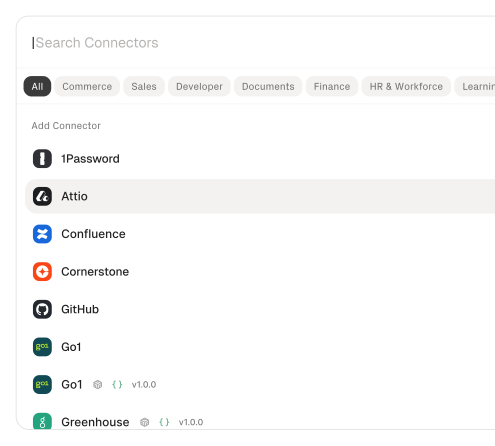
Managed Auth handles credentials across ATS providers
OAuth flows, API keys, and token refresh managed per tenant for every connected ATS — agents never touch raw credentials.
Search and execute finds the right action
Agent searches StackOne's action catalog by natural language and executes the matching ATS action — no pre-loading thousands of tool definitions into the context window.
Falcon handles pagination and rate limits
StackOne's execution engine manages retries, rate limiting, and pagination per ATS provider. One action call returns the complete candidate list with built-in back-off logic.
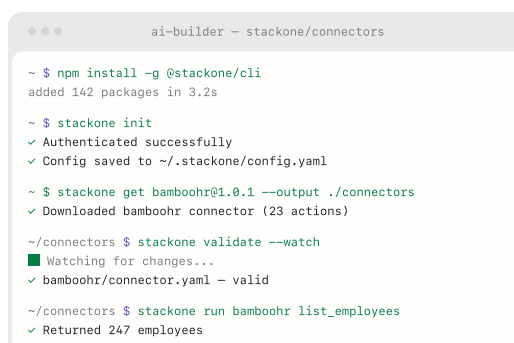
Connector Studio extends to any system
Build custom connectors for unsupported ATS platforms or internal screening systems via REST, SOAP, or GraphQL — no waiting on vendor support.
Defender blocks prompt injection from resume content
StackOne Defender screens inbound resume text for injection attempts before the agent processes it, preventing adversarial content from corrupting screening decisions.
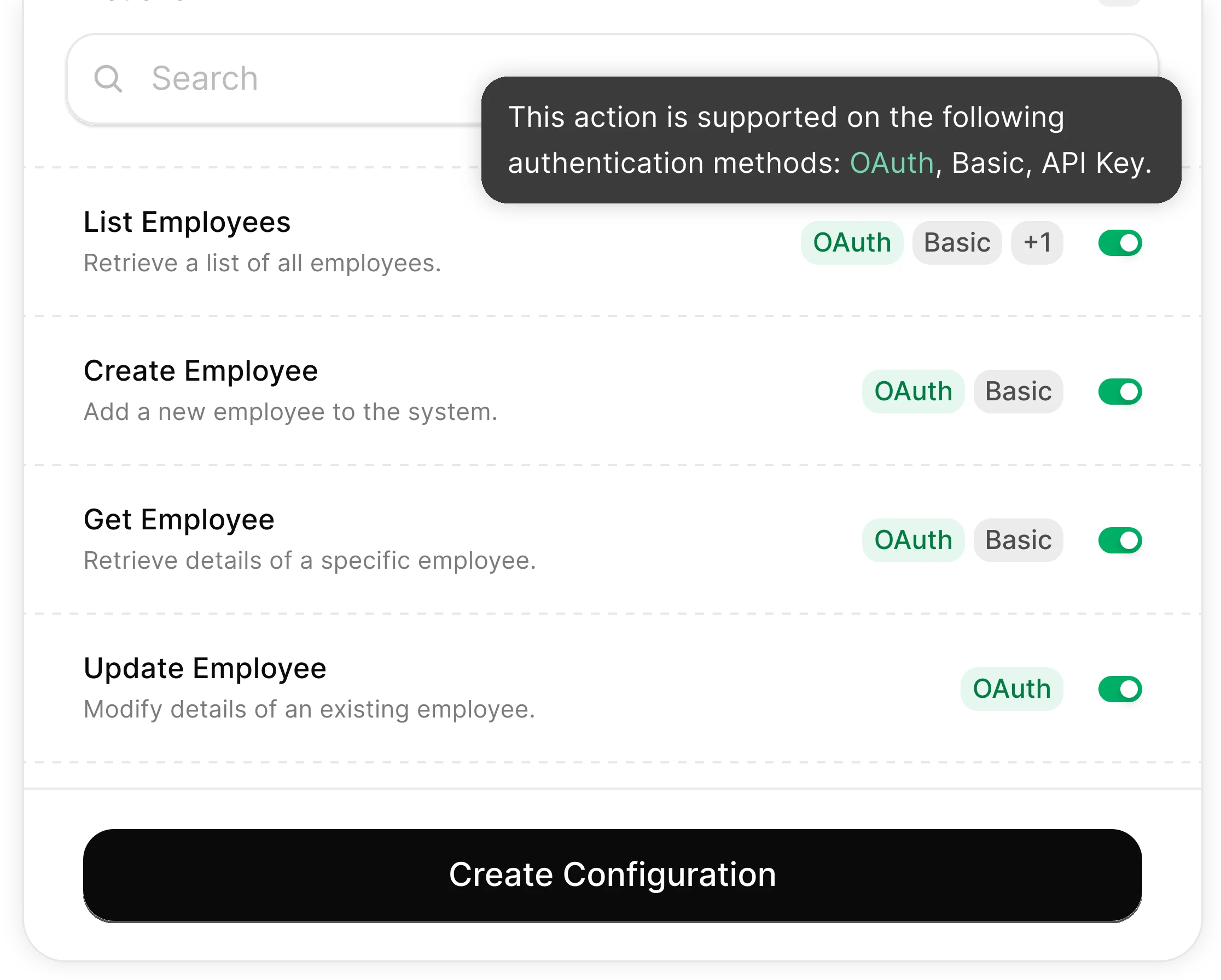
You Control What the Agent Can Do
Scoped permissions define exactly which candidate fields the agent reads and which ATS actions it can trigger. Full audit trail of every operation for GDPR and EEOC compliance.
Integrates with your entire recruiting stack. Whatever it is.
Connect Any Agent to Automate Application Screening

Any Agent Framework
Claude, OpenAI, LangChain, Vercel AI SDK, CrewAI, Pydantic AI — StackOne works with every major agent framework out of the box.


Any Agent Builder
Whether you're building with code, a visual builder, or an enterprise platform — StackOne provides the integration layer your agent needs.
Connect Your Agent to Your Recruiting Stack
Start building in minutes. MCP connectors to every ATS your agent needs.
Frequently Asked Questions
Connect Your Agent to Your Recruiting Stack
Start building in minutes. MCP connectors to every ATS your agent needs.