Month-End Accruals
Close the Books Faster
Use StackOne to connect your AI agent to your accounting, payment, and analytics systems to automate month-end accruals and journal entries.




AI Agents
Connect
MCP and A2A to REST, SOAP, and proprietary APIs.
Optimize
Tool discovery, data shaping, and reliable execution.
Secure
Scoped permissions, audit trails, and observability.
StackOne Integration Layer


 StackOne Integration Layer
Connect
200+ connectors, build your own, and multi-protocol support.
Optimize
Context, token, and speed optimization infrastructure.
Secure
Permissions API and prompt injection protection.
What Can AI Agents Do for Month-End Accruals?
Your agent identifies accruals across open POs, recurring expenses, and pending invoices — then generates, validates, and routes journal entries for approval.
Identify Accruals
Pull recurring expense schedules and pending transactions from QuickBooks, Xero, or NetSuite and cross-reference paid and outstanding amounts from Stripe.
Calculate Accrual Amounts
Apply period-end accounting rules to determine GL accounts, cost centers, departments, and accrual amounts for each identified item. Flag exceptions like unusual amounts or missing cost center mappings for human review.
Generate Journal Entries
Create draft journal entries with proper debit-credit pairings, GL account codes, period dates, descriptions, and supporting reference numbers via QuickBooks or Xero.
Validate Entries
Cross-check entries against the chart of accounts, materiality thresholds, period lock status, and duplicate-entry detection rules. Surface mismatches for review before routing.
Post and Report
Upon approval, post entries to the General Ledger via the accounting connector. Export the period-end accruals summary to Snowflake for audit trail and reporting.
Identify Accruals
Pull recurring expense schedules and pending transactions from QuickBooks, Xero, or NetSuite and cross-reference paid and outstanding amounts from Stripe.
Calculate Accrual Amounts
Apply period-end accounting rules to determine GL accounts, cost centers, departments, and accrual amounts for each identified item. Flag exceptions like unusual amounts or missing cost center mappings for human review.
Generate Journal Entries
Create draft journal entries with proper debit-credit pairings, GL account codes, period dates, descriptions, and supporting reference numbers via QuickBooks or Xero.
Validate Entries
Cross-check entries against the chart of accounts, materiality thresholds, period lock status, and duplicate-entry detection rules. Surface mismatches for review before routing.
Route for Approval
Notify designated approvers via Slack, Teams, or Gmail with entry details and a review link. Track acknowledgement via messaging thread.
Post and Report
Upon approval, post entries to the General Ledger via the accounting connector. Export the period-end accruals summary to Snowflake for audit trail and reporting.
Why Building a Good Month-End Accruals Agent Is Hard
Connecting to Many Accounting and Payment Systems
The agent must reach QuickBooks, Xero, Stripe, Slack, and Snowflake — each with different auth models, pagination schemes, and rate limits. Building and maintaining each connector individually is a massive engineering lift that grows with every new customer.
Niche GL Systems Lack Agent Tooling
Many customers run lesser-known or custom general ledger systems with complex, proprietary APIs that have no pre-built MCP tools or agent-ready action definitions available. Supporting them means months of bespoke integration work per system.
Token Cost Spikes at Month-End Volume
Without search-first tool discovery, the agent pre-loads every accounting action definition across all connected systems into its context window. At month-end — when transaction volumes spike with thousands of open POs, prepaid schedules, and recurring expenses — token costs compound fast.
Financial Documents Carry Prompt Injection Risk
Accrual agents ingest vendor invoices, PO confirmations, and expense receipts from external sources. Malicious content embedded in any document field can hijack the agent into posting fabricated journal entries — a single manipulated entry can misstate financials.
How StackOne Makes Month-End Accruals Agents Possible
Everything your accrual agent needs to identify expenses, generate journal entries, and route approvals — with the controls finance teams demand.
200+ connectors with 10K+ agent-optimized actions
Pre-built connectors for QuickBooks, Xero, NetSuite, Stripe, Slack, Snowflake, and more — each with full native actions mapped with agent instructions included.
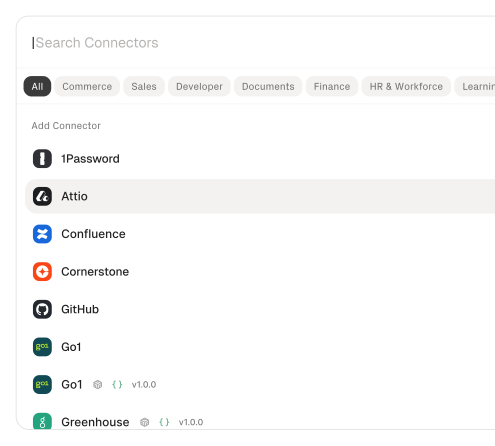
Managed Auth handles credentials across providers
OAuth flows, API keys, and token refresh managed per tenant for every connected accounting and payment system — agents never touch raw credentials.
Search and execute finds the right action
Agent searches StackOne's action catalog by natural language and executes the matching accounting or payment action — no pre-loading thousands of tool definitions.
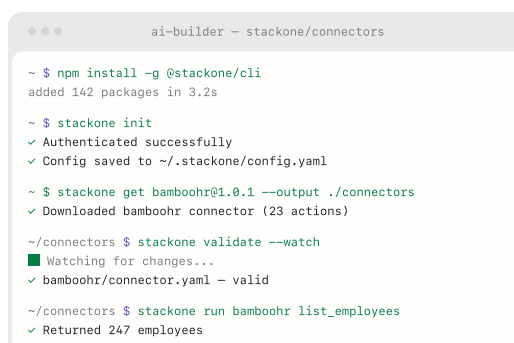
Connector Studio extends to any system
When a customer runs a niche GL system, Connector Studio ships a working connector in hours using AI-assisted mapping — no months of bespoke engineering.
Defender blocks prompt injection from financial documents
StackOne Defender screens vendor invoices, PO confirmations, and expense receipts for injection attempts before the agent processes them, preventing adversarial content from manipulating journal entry generation.
Falcon handles pagination and retries at scale
StackOne manages pagination, rate limiting, and retries across every connected accounting system so agents always work from complete, untruncated period data — even during high-volume month-end pulls.
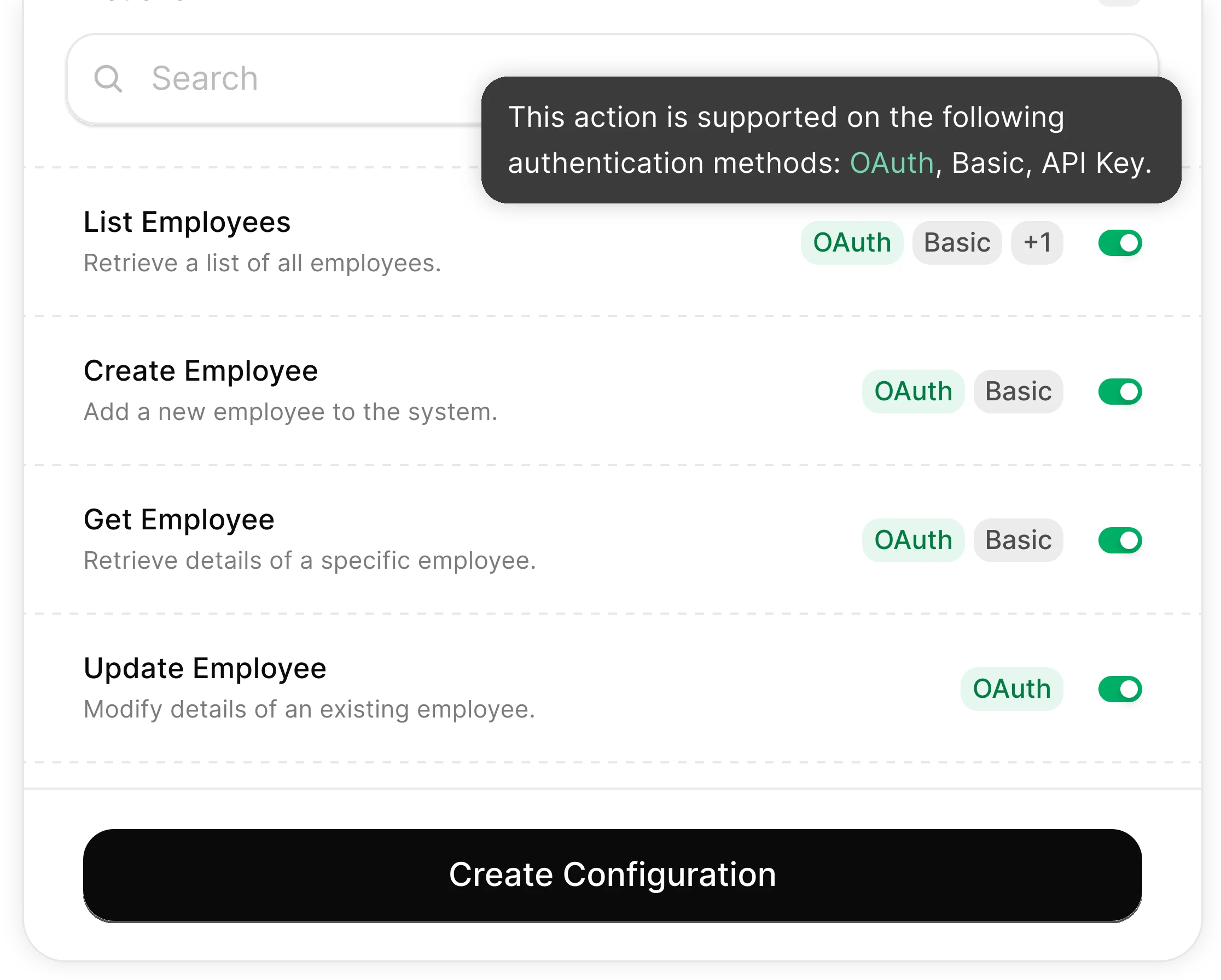
You Control What the Agent Can Do
Scoped permissions define exactly which GL accounts and actions the agent can access. Full audit trail of every accrual identification, entry generation, and posting for SOX and GAAP compliance.
Integrates with your entire finance stack. Whatever it is.
Connect Any Agent to Automate Month-End Accruals

Any Agent Framework
Claude, OpenAI, LangChain, Vercel AI SDK, CrewAI, Pydantic AI — StackOne works with every major agent framework out of the box.


Any Agent Builder
Whether you're building with code, a visual builder, or an enterprise platform — StackOne provides the integration layer your agent needs.
Connect Your Agent to Your Finance Stack
Start building in minutes. MCP connectors to every system your agent needs.
Frequently Asked Questions
Connect Your Agent to Your Finance Stack
Start building in minutes. MCP connectors to every system your agent needs.