Deal Risk Scoring
Stop Losing Deals Silently
Use StackOne to connect your AI agent to your CRM, email, and calendar tools to automate deal risk scoring and pipeline alerts.




AI Agents
Connect
MCP and A2A to REST, SOAP, and proprietary APIs.
Optimize
Tool discovery, data shaping, and reliable execution.
Secure
Scoped permissions, audit trails, and observability.
StackOne Integration Layer


 StackOne Integration Layer
Connect
200+ connectors, build your own, and multi-protocol support.
Optimize
Context, token, and speed optimization infrastructure.
Secure
Permissions API and prompt injection protection.
What Can AI Agents Do for Deal Risk Scoring?
Your agent scans the full pipeline daily, collects activity signals across CRM, email, and calendar, scores every deal, and alerts reps before opportunities go cold.
Scan the Pipeline
Query all open deals from Salesforce, HubSpot, or Pipedrive — pulling stage, amount, expected close date, and days in current stage.
Collect Activity Signals
Fetch recent emails from Gmail, meetings from Google Calendar, and CRM activity logs for each deal's contacts and owner.
Score Deal Risk
Apply a weighted model — email recency, meeting recency, stage duration, days past expected close, activity trend — to compute a 0-100 risk score per deal.
Classify and Recommend
Bucket deals into risk tiers — Low, Medium, High, Critical — and generate specific next-action suggestions for at-risk opportunities.
Alert Deal Owners
Send formatted alerts via Slack or email with risk scores, key signals, and recommended actions so reps know exactly what to do next.
Update CRM Records
Write the risk score and tier back to a custom field on each deal record in Salesforce or HubSpot for dashboard visibility and manager review.
Scan the Pipeline
Query all open deals from Salesforce, HubSpot, or Pipedrive — pulling stage, amount, expected close date, and days in current stage.
Collect Activity Signals
Fetch recent emails from Gmail, meetings from Google Calendar, and CRM activity logs for each deal's contacts and owner.
Score Deal Risk
Apply a weighted model — email recency, meeting recency, stage duration, days past expected close, activity trend — to compute a 0-100 risk score per deal.
Classify and Recommend
Bucket deals into risk tiers — Low, Medium, High, Critical — and generate specific next-action suggestions for at-risk opportunities.
Alert Deal Owners
Send formatted alerts via Slack or email with risk scores, key signals, and recommended actions so reps know exactly what to do next.
Update CRM Records
Write the risk score and tier back to a custom field on each deal record in Salesforce or HubSpot for dashboard visibility and manager review.
Why Building a Good Deal Risk Scoring Agent Is Hard
Connecting CRM, Email, and Calendar Systems
A deal-scoring agent needs connectors to Salesforce, HubSpot, Zoho CRM, Gmail, and Google Calendar. Building and maintaining each one — auth, pagination, rate limits — is a massive engineering lift that compounds with every new customer.
Token Cost Grows with Pipeline Volume
Without search-first architecture, the agent pre-loads every CRM and email action definition into its context window. At pipeline-scan volume that burns tokens on irrelevant tools before the agent even starts scoring deals.
Per-Provider OAuth Lifecycle Management
OAuth token refresh windows, scope requirements, and revocation rules differ across each CRM and email provider. Managing credential rotation for dozens of customer tenants is a recurring operational burden that breaks silently.
CRM Field Data Carries Prompt Injection Risk
Deal notes, contact names, and activity descriptions are untrusted user-generated text. An agent ingesting these fields is exposed to indirect prompt injection hidden in everyday CRM records that can manipulate scoring behavior.
How StackOne Makes Deal Risk Scoring Agents Possible
Everything your deal-scoring agent needs to read pipelines, collect activity signals, and push alerts — with the controls IT demands.
200+ connectors with 10K+ agent-optimized actions
Pre-built connectors for Salesforce, HubSpot, Pipedrive, Zoho CRM, Gmail, Google Calendar, and Slack with full native action coverage and agent instructions included.
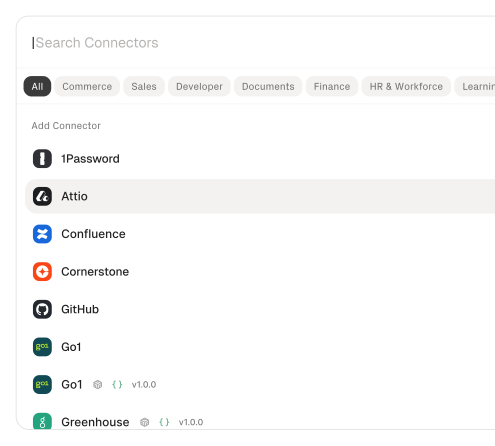
Managed Auth handles credentials across providers
OAuth flows, API keys, and token refresh managed per tenant for every connected CRM, email, and calendar provider — agents never touch raw credentials.
Search and execute finds the right action
Agent searches StackOne's action catalog by natural language and executes the matching CRM or email action — no pre-loading thousands of tool definitions into the context window.
Managed Webhooks detect deal staleness in real time
StackOne subscribes to CRM events like stage changes and close-date updates with synthetic polling fallback. Push-based triggers replace expensive polling loops for staleness detection.
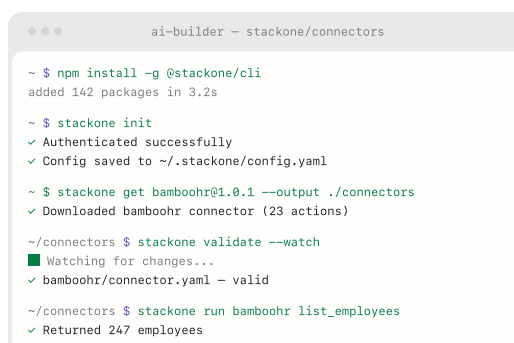
Connector Studio extends to any system
Build custom connectors for unsupported CRMs or internal scoring systems via REST, SOAP, or GraphQL — no waiting on vendor support.
Defender blocks prompt injection from CRM data
StackOne Defender screens inbound deal notes, contact names, and activity descriptions for injection attempts before the agent processes them, preventing adversarial content from manipulating risk scores.
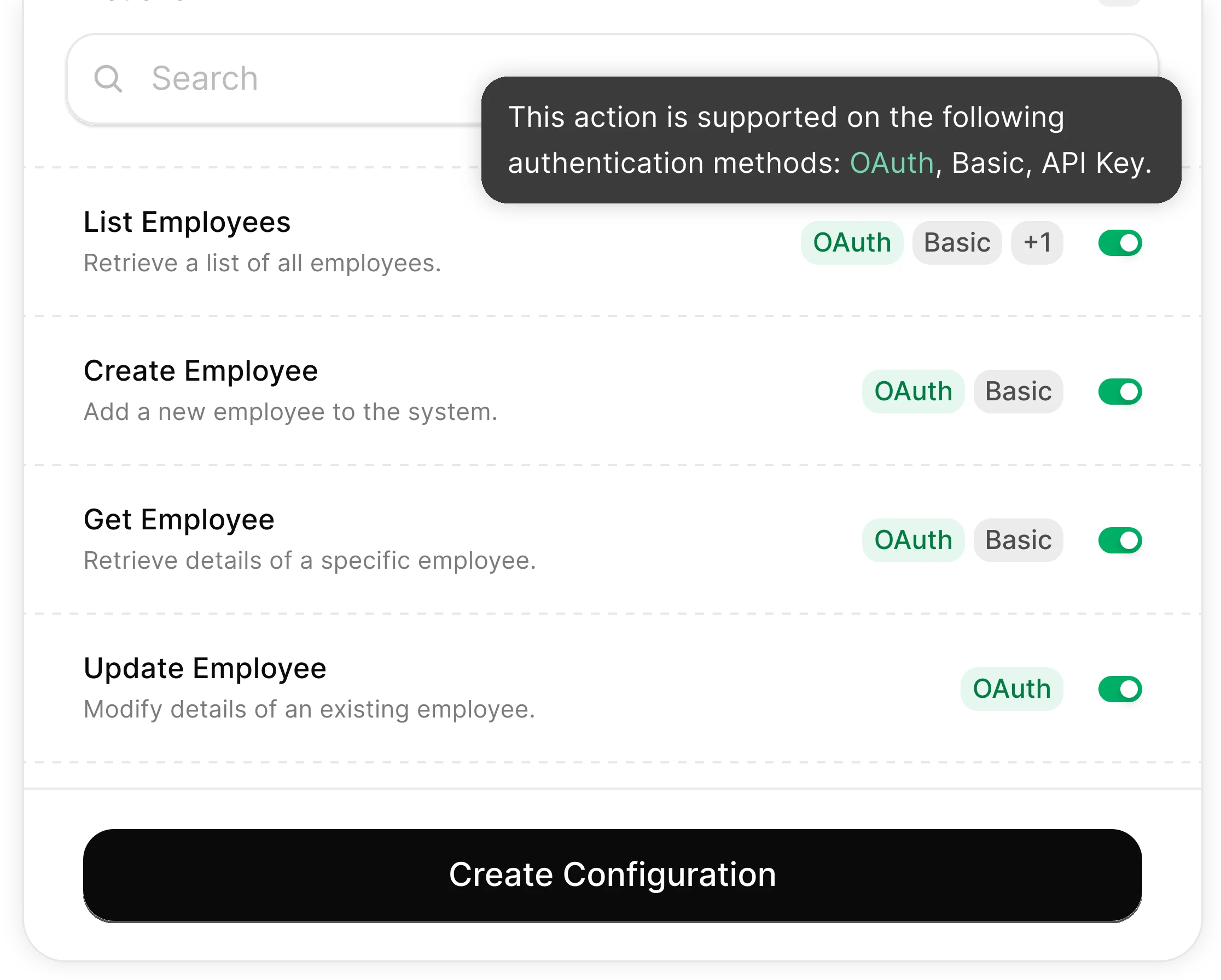
You Control What the Agent Can Do
Scoped permissions define exactly which deal fields the agent reads and which CRM write-back actions it can trigger. Full audit trail of every operation.
Integrates with your entire sales stack. Whatever it is.
Connect Any Agent to Automate Deal Risk Scoring

Any Agent Framework
Claude, OpenAI, LangChain, Vercel AI SDK, CrewAI, Pydantic AI — StackOne works with every major agent framework out of the box.


Any Agent Builder
Whether you're building with code, a visual builder, or an enterprise platform — StackOne provides the integration layer your agent needs.
Connect Your Agent to Your Sales Stack
Start building in minutes. MCP connectors to every system your agent needs.
Frequently Asked Questions
Connect Your Agent to Your Sales Stack
Start building in minutes. MCP connectors to every system your agent needs.