


Cursor MCP Server
for AI Agents
Connect your AI agent to StackOne's Cursor MCP server and give it 164 MCP tools out of the box. Auth, tool execution, and security all managed.
 StackOne


Coverage
164 Agent Actions
Agents can read, write, delete and run operations in Cursor. Extend your agent's capabilities with custom actions.

Authentication
Agent Tool Authentication
Per-user OAuth in one call. Your Cursor MCP server gets session-scoped tokens with zero credentials stored on your infra.
Agent Auth →
Security
Agent Protection
Every Cursor tool response scanned for prompt injection in milliseconds, with 88.7% accuracy, all running on CPU.
Prompt Injection Defense →
Performance
Max Agent Context. Min Cost.
Free up to 96% of your agent's context window to enhance reasoning and reduce cost, on every Cursor call.
Tools Discovery →What is the Cursor MCP Server?
A Cursor MCP server lets AI agents read and write Cursor data through the Model Context Protocol, Anthropic's open standard for connecting LLMs to external tools. StackOne's Cursor MCP server ships with 164 pre-built actions, fully extensible via the Connector Builder, plus managed authentication, prompt injection defense, observability, and agent execution runtime. Connect it from MCP clients like Claude Desktop, Claude Code, Cursor, Goose, and VS Code, or from agent frameworks like OpenAI Agents SDK, LangChain, and Vercel AI SDK.
All Cursor MCP Tools
Every StackOne action for Cursor, ready for your agent. Read, write, delete and run operations, scoped to exactly what you need.
AI Commit Metrics
- Get AI Commit Metrics
List the Cursor team's git commits with how many lines came from Tab, Agent or were written by hand.
- Download AI Commit Metrics
Download the Cursor team's commit metrics for a date range as CSV.
AI Code Change Metrics
- Get AI Code Change Metrics
List accepted AI code changes (Tab completions and Agent edits) with the model and files touched.
- Download AI Code Change Metrics
Download the Cursor team's accepted AI code changes for a date range as CSV.
Groups
- Create Group
Create a billing group in the Cursor team to track spend for a set of members.
- List Groups
List the Cursor team's billing groups with members and spend for a billing cycle.
- Get Group
Get one Cursor billing group with its members and daily spend.
- Update Group
Rename a Cursor billing group or link it to a directory group.
- Delete Group
Permanently delete a Cursor billing group.
An Agents
- Create An Agent
Start a Cursor cloud agent on a prompt, optionally on one or more repositories, and get its first run.
- Get An Agent
Get one Cursor cloud agent with its status, repositories and latest run.
An Environments
- Create An Environment
Create a named Cursor cloud agent environment for a set of repositories.
- Get An Environment
Get one Cursor cloud agent environment with its definition and build settings.
- Update An Environment
Rename a Cursor cloud agent environment, change its definition or repositories, or change its build settings.
- Delete An Environment
Permanently delete a Cursor cloud agent environment.
An Environment Secrets
- Set An Environment Secret
Create or change a secret that agents in one Cursor cloud environment can read.
- Delete An Environment Secret
Delete a secret from a Cursor cloud agent environment.
A Team Secrets
- Set A Team Secret
Create or change a secret that every agent on the Cursor team can read.
- Delete A Team Secret
Delete a team-wide Cursor cloud agent secret.
A Personal Secrets
- Set A Personal Secret
Create or change a secret that only the key owner's Cursor cloud agents can read.
- Delete A Personal Secret
Delete one of the key owner's personal Cursor cloud agent secrets.
Team Directory Groups
- Create Team Directory Group
Create a directory group with manually managed membership in the Cursor team.
- List Team Directory Groups
List the Cursor team's directory groups with their member counts and spend limits.
- Get Team Directory Group
Get one of the Cursor team's directory groups by ID.
- Update Team Directory Group
Rename a Cursor directory group or change its monthly spending limit.
- Delete Team Directory Group
Delete an empty Cursor directory group.
Team Directory Group Members
- Add Team Directory Group Members
Add members to a manually managed Cursor directory group.
- List Team Directory Group Members
List the members of one Cursor directory group.
- Remove Team Directory Group Members
Remove members from a manually managed Cursor directory group.
Grok Bot Capabilities
- Get Grok Bot Capabilities
Get whether Grok Bot is on and which of its capabilities the team allows.
- Update Grok Bot Capabilities
Change which Grok Bot capabilities the team allows, such as cloud agents, template sharing or local execution.
Grok Bot Access
- Get Grok Bot Access
Get whether every team member or only some billing groups can use Grok Bot.
- Update Grok Bot Access
Let every team member use Grok Bot, or only members of chosen groups.
Grok Bot Team Rules
- Create Grok Bot Team Rule
Add a rule that Grok Bot follows for the whole team.
- List Grok Bot Team Rules
List the team rules Grok Bot follows, newest first.
- Update Grok Bot Team Rule
Rename, rewrite, or turn on or off a Grok Bot team rule.
- Delete Grok Bot Team Rule
Delete a Grok Bot team rule.
Grok Bot Setup Manifests
- List Grok Bot Setup Manifests
List the setup manifests whose scripts prepare Grok Bot computers.
- Delete Grok Bot Setup Manifest
Delete a Grok Bot setup manifest.
Unified Groups
- List Unified Groups
List unified directory groups in a Cursor team.
- Get Unified Group
Get a unified Cursor directory group by ID.
Unified Roles
- List Unified Roles
List the built-in team roles of Cursor.
- Get Unified Role
Get a built-in Cursor team role by ID.
Unified Users
- List Unified Users
List unified users in a Cursor team.
- Get Unified User
Get a unified Cursor team member by ID.
Team Members
- Get Team Members
List every member of the Cursor team with their role and removal status.
- Remove Team Member
Remove a member from the Cursor team by user ID or email.
Model Access Configurations
- Get Model Access Configuration
Get the Cursor team's model access policy and its defaults for new providers and models.
- List Model Access Configuration
List the model access policy of each team in the Cursor organization.
- Update Model Access Configuration
Turn on a custom model access policy for the Cursor team, change its defaults, or clear it.
Model Access Providers
- List Model Access Providers
List model providers and their models with what the Cursor team allows for each.
- Update Model Access Provider
Allow or block a whole model provider, such as openai or anthropic, for the Cursor team.
Organization Groups
- Create Organization Group
Create a organization group with manually managed membership.
- List Organization Groups
List the Cursor organization's groups with their member counts and spend limits.
- Get Organization Group
Get one of the Cursor organization's groups by ID.
- Update Organization Group
Rename a Cursor organization group or change its monthly spending limit.
- Delete Organization Group
Delete an empty Cursor organization group.
Organization Group Members
- Add Organization Group Members
Add members to a manually managed Cursor organization group.
- List Organization Group Members
List the members of one Cursor organization group.
- Remove Organization Group Members
Remove members from a manually managed Cursor organization group.
Team Model Access Configurations
- Get Team Model Access Configuration
Get the model access policy of one team in the Cursor organization.
- Update Team Model Access Configuration
Turn on a custom model access policy for one team in the Cursor organization, change its defaults, or clear it.
Team Model Access Providers
- Get Team Model Access Providers
List the model providers and models one Cursor team allows, with parameter limits.
- Update Team Model Access Provider
Allow or block a model provider for one team in the Cursor organization.
Other (100)
- Add Members To Group
Add team members to a Cursor billing group.
- Send A Follow-Up Or Steer
Give a Cursor cloud agent a follow-up prompt as a new run, or steer the run in progress.
- Create A User-Scoped Worker Token
Get a one-hour token that lets a service account act as a team member on the Cloud Agents API.
- Create A Session Token
Get a session token for a request a self-hosted worker has already claimed.
- Get Commit Details
Show which lines of one or more commits came from which AI conversation and model.
- Get Agent Edits
Get the Cursor team's daily Agent edit totals (diffs suggested, accepted and rejected, and lines added and removed).
- Get Tab Usage
Get the Cursor team's daily Tab completion totals (suggestions shown, accepted and rejected, and lines).
- Get Daily Active Users (DAU)
Get the Cursor team's daily active users, split by editor, CLI, cloud agents and Bugbot.
- Get Client Versions
Get how many Cursor team members ran each Cursor client version per day.
- Get Model Usage
Get the Cursor team's daily message and user counts per AI model.
- Get Top File Extensions
Get the five file extensions with the most Cursor suggestions each day.
- Get MCP Adoption
Get how often the Cursor team used each MCP server tool per day.
- Get Commands Adoption
Get how often the Cursor team ran each command per day.
- Get Plans Adoption
Get how often the Cursor team used Plan mode per model per day.
- Get Skills Adoption
Get how often the Cursor team used each skill per day.
- Get Ask Mode Adoption
Get how often the Cursor team used Ask mode per model per day.
- Get Conversation Insights
Get what the Cursor team's AI conversations were about (intents, complexity, categories, guidance levels and work types).
- Get Leaderboard
Rank Cursor team members by accepted Tab completions and accepted Agent lines.
- Get Bugbot Analytics
Get Bugbot review results per pull request (reviews run, issues found and issues resolved by severity).
- Get Bugbot Review Analytics
List individual Bugbot reviews with the bugs found, cost and publication status.
- Get Agent Edits By User
Get daily Agent edit totals for each Cursor team member.
- Get Tab Usage By User
Get daily Tab completion totals for each Cursor team member.
- Get Model Usage By User
Get daily message counts per AI model for each Cursor team member.
- Get Top File Extensions By User
Get each Cursor team member's top file extensions by suggestion volume per day.
- Get Client Versions By User
Get the Cursor client version each team member ran per day.
- Get MCP Adoption By User
Get MCP tool usage per day for each Cursor team member.
- Get Commands Adoption By User
Get command usage per day for each Cursor team member.
- Get Plans Adoption By User
Get Plan mode usage per model per day for each Cursor team member.
- Get Skills Adoption By User
Get skill usage per day for each Cursor team member.
- Get Ask Mode Adoption By User
Get Ask mode usage per model per day for each Cursor team member.
- Get Audit Logs
List the Cursor team's audit log events, such as sign-ins, member changes and settings changes.
- List Bugbot Repositories
List the repositories Bugbot knows for the team with whether each is enabled or manual-only.
- List Agents
List Cursor cloud agents, newest first, optionally only those working on a pull request.
- List Runs
List the runs of one Cursor cloud agent.
- Get A Run
Get one run of a Cursor cloud agent, with its result and branches once it has finished.
- Get Agent Usage
Get the tokens a Cursor cloud agent used, in total and per run.
- List Artifacts
List the files a Cursor cloud agent saved as artifacts, such as screenshots and reports.
- Download An Artifact
Get a temporary download link for one of a Cursor cloud agent's artifacts.
- List Environments
List the Cursor cloud agent environments the key can see, filtered by name, owner or repository.
- List Environment History
List the changes made to a Cursor cloud agent environment over time.
- List Environment Builds
List the snapshot builds of a Cursor cloud agent environment, filtered by status or date.
- Get An Environment Build
Get the status and result of one Cursor cloud agent environment build.
- Get The Active Build
Get which build new agents in a Cursor environment start from.
- Get API Key Info
Get the name and owner of the Cursor API key in use.
- List Models
List the models a Cursor cloud agent can run on, with their parameters.
- List GitHub Repositories
List the GitHub repositories the key owner's GitHub connection can reach, for use in create_an_agent.
- List Secrets
List the names and scopes of the Cursor cloud agent secrets the key can see, without their values.
- List Environment Secrets
List the secrets of one Cursor cloud agent environment, without their values.
- List Team Secrets
List the team-wide Cursor cloud agent secrets, without their values.
- List Workers
List the self-hosted Cursor cloud agent workers that are connected, and whether each is busy.
- Get Worker Summary
Get how many self-hosted Cursor workers are connected and how many are busy, for the key owner and the team.
- Get Worker By ID
Get one self-hosted Cursor worker by its ID.
- List Pools
List the self-hosted worker pools that Cursor cloud agents can run on.
- List Pending Pool Requests
List agent requests waiting for a self-hosted worker to claim them.
- Get Enforce Auto-Review
Get whether Grok Bot auto-review is enforced and its allow and block instructions.
- Get Grok Bot Network Policy
Get the network egress policy for Grok Bot computers.
- List Models For A Provider
List one provider's models with whether the Cursor team allows each and its parameter limits.
- Get Grok Bot Computer Operation
Get the progress of a Grok Bot computer operation, with the result for each member.
- Get Latest Grok Bot Computer Operation
Get the most recent Grok Bot computer operation of one Cursor team.
- List Organization Members
List the members of the Cursor organization with their organization role and the teams they belong to.
- Get Organization Audit Logs
List audit log events across the Cursor organization and its teams.
- Get Pooled Usage
Get the Cursor organization's pooled spend limit, how much is used and how much each team has spent.
- Get Usage Events
List individual usage events across the Cursor organization's teams with model, tokens and charged cost.
- Get Organization Daily Usage Data
List daily usage rows for every member across the Cursor organization's teams.
- Get Organization Spending Data
List each member's spend on each team across the Cursor organization for the current contract period.
- Get Team Repo Blocklists
List the repositories with blocklist patterns that keep files out of Cursor's AI features.
- Get Daily Usage Data
List the Cursor team's daily usage rows, one per member per day, with lines, accepts, requests and models used.
- Get Spending Data
List each Cursor team member's spend in the current billing cycle with their spend limits.
- Get Usage Events Data
List individual Cursor usage events with model, token usage and charged cost, filtered by user, agent or date.
- Update Model Access Model
Allow or block one model for the Cursor team and limit its parameter values.
- Sync Organization Team Memberships
Set exactly which teams each Cursor organization member belongs to, for up to 500 members at once.
- Update Team Model Access Model
Allow or block one model for one team in the Cursor organization and limit its parameter values.
- Set User Spend Limit
Set the monthly spend limit of one Cursor team member.
- Set User Spend Limits In Bulk
Set the spend limits of up to 100 Cursor team members in one request.
- Remove Members From Group
Remove members from a Cursor billing group.
- Delete An Agent Permanently
Permanently delete a Cursor cloud agent and its runs.
- Delete Repo Blocklist
Delete the blocklist of one repository.
- Trigger A Review
Queue a Bugbot review of a GitHub pull request or GitLab merge request, optionally as a dry run.
- Enable Or Disable Bugbot Repository
Turn Bugbot on or off for a repository, or limit it to reviews that are triggered by hand.
- Manage Bugbot User Access
Add or remove a GitHub, GitLab or Bitbucket user on the team's Bugbot allowlist or blocklist.
- Stream A Run
Read a Cursor cloud agent run's event stream of status, messages, tool calls and result.
- Cancel A Run
Stop a Cursor cloud agent run that is still in progress.
- Archive An Agent
Archive a Cursor cloud agent so it no longer takes new runs. It can be unarchived later.
- Unarchive An Agent
Restore an archived Cursor cloud agent.
- Start An Environment Build
Start a new snapshot build of a Cursor cloud agent environment.
- Register A Pool
Register a self-hosted worker pool, optionally tied to one repository.
- Deregister A Pool
Remove a self-hosted worker pool registration.
- Claim A Pending Request
Assign a pending agent request to a self-hosted worker.
- Release A Claim
Free a self-hosted worker from a request it claimed.
- Fail A Claim
Report that a self-hosted worker could not run a request it claimed.
- Enable Grok Bot
Turn on Grok Bot for the Cursor team.
- Disable Grok Bot
Turn off Grok Bot for the Cursor team.
- Replace Enforce Auto-Review
Replace the Grok Bot auto-review policy and its allow and block instructions.
- Replace Grok Bot Network Policy
Replace the network egress policy and allowlist for Grok Bot computers.
- Upsert Grok Bot Setup Manifest
Create or replace a setup manifest with the scripts that prepare Grok Bot computers.
- Start Grok Bot Computer Operation
Recreate, stop or delete the Grok Bot computers and data of members of one Cursor team.
- Bulk Update Model Access Configuration
Apply the same model access policy to up to 100 teams in the Cursor organization.
- Bulk Update Model Access Provider
Allow or block a model provider for up to 100 teams in the Cursor organization.
- Bulk Update Model Access Model
Allow or block one model for up to 100 teams in the Cursor organization and limit its parameter values.
- Upsert Repo Blocklists
Create or replace the blocklist patterns of one or more repositories.
Set Up Your Cursor MCP Server in Minutes
One endpoint. Any framework. Your agent is talking to Cursor in under 10 lines of code.
Agent Frameworks


 JSON
{
  "mcpServers": {
    "stackone": {
      "command": "npx",
      "args": [
        "-y",
        "mcp-remote@latest",
        "https://api.stackone.com/mcp?x-account-id=<account_id>",
        "--header",
        "Authorization: Basic <YOUR_BASE64_TOKEN>"
      ]
    }
  }
}
Check More AI & ML MCP Servers
182+ actions
126+ actions
121+ actions
62+ actions
57+ actions
42+ actions
37+ actions
Platform Resources

Comparing BM25, TF-IDF, and Hybrid Search for MCP Tool Discovery
Benchmarking BM25, TF-IDF, and hybrid search for MCP tool discovery across 916 tools. The 80/20 TF-IDF/BM25 hybrid hits 21% Top-1 accuracy in under 1ms.
10 min
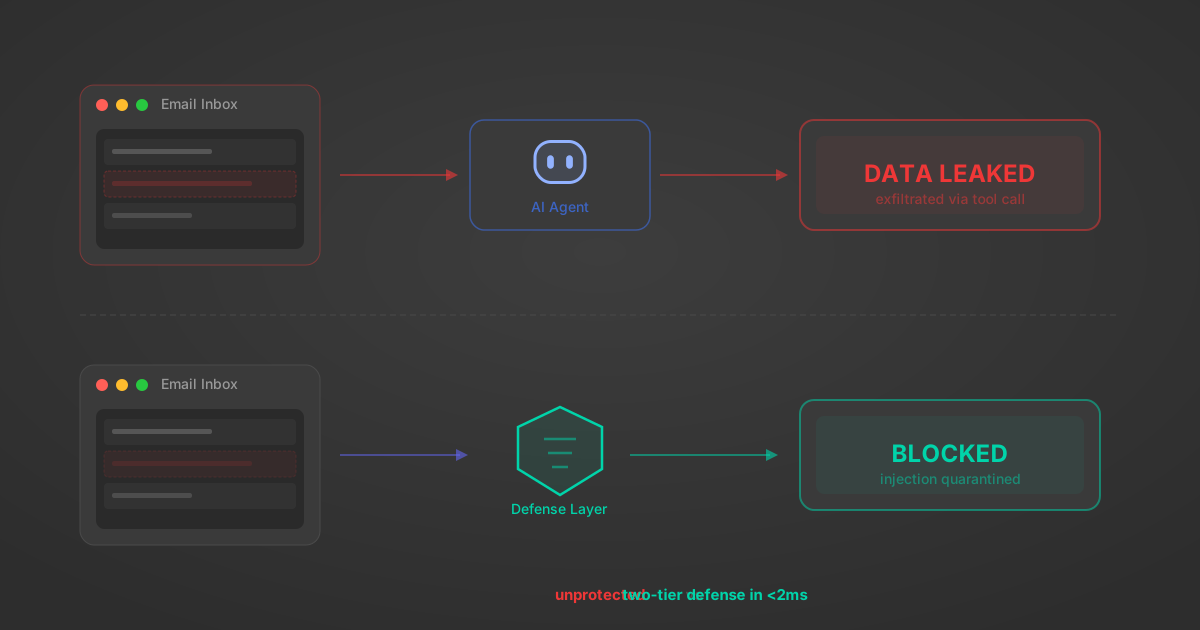
Indirect Prompt Injection Defense for MCP Tools: A Technical Guide
MCP tools that read emails, CRM records, and tickets are indirect prompt injection vectors. Here's how we built a two-tier defense that scans tool results in ~11ms.
12 min

MCP vs A2A: Architecture, Security, and When to Use Each
MCP vs A2A: what each protocol standardizes, how they differ, their shared security risks including indirect prompt injection, and when to use one, both, or a hybrid architecture.
12 min
MCP vs API: What Hundreds of Connector Builds Taught Us
MCP wraps APIs, it doesn't replace them. After building hundreds of connectors that serve both, here's when each approach wins.
14 min read
Cursor MCP Server FAQ
Does StackOne have a Cursor MCP server?
Cursor MCP server vs direct API integration: what's the difference?
How does Cursor authentication work for AI agents?
origin_owner_id.Are Cursor MCP tools vulnerable to prompt injection?
What is the context bloat of a Cursor agent and how do I avoid it?
Can I limit which actions my Cursor agent can access?
Can I create custom agent actions for my Cursor MCP server?
When should I NOT use a Cursor MCP server?
What AI frameworks and AI clients does the StackOne Cursor MCP server support?
Put your AI agents to work
All the tools you need to build and scale AI agent integrations, with best-in-class connectivity, execution, and security.