Offer Letter Generation
Close Candidates Faster
Use StackOne to connect your AI agent to your ATS, HRIS, and document management tools to automate offer letter generation.




AI Agents
Connect
MCP and A2A to REST, SOAP, and proprietary APIs.
Optimize
Tool discovery, data shaping, and reliable execution.
Secure
Scoped permissions, audit trails, and observability.
StackOne Integration Layer


 StackOne Integration Layer
Connect
200+ connectors, build your own, and multi-protocol support.
Optimize
Context, token, and speed optimization infrastructure.
Secure
Permissions API and prompt injection protection.
What Can AI Agents Do for Offer Letter Generation?
Your agent pulls approved comp data, generates a compliant letter, routes it for sign-off, and tracks every negotiation round back to the ATS.
Select Template & Generate Letter
Pick the correct offer letter template from Google Drive, SharePoint, or Notion based on role level, entity, and location. Populate with salary, equity, benefits, and compliance clauses.
Deliver & Collect Signature
Send the offer letter to the candidate and collect their signature via DocuSign. Monitor for acceptance, decline, or counter-offer.
Track Negotiations
Log counter-offer details in the ATS, generate revised letters as needed. Each negotiation round is versioned and timestamped for a complete audit trail.
Finalize & Trigger Onboarding
Upon acceptance, update candidate status in Greenhouse or Lever and trigger onboarding workflows in Workday or BambooHR.
Pull Candidate & Comp Data
Candidate is marked "offer approved" in Greenhouse, Lever, or Ashby. The agent retrieves candidate details from the ATS and compensation bands from Workday, BambooHR, or Personio.
Select Template & Generate Letter
Pick the correct offer letter template from Google Drive, SharePoint, or Notion based on role level, entity, and location. Populate with salary, equity, benefits, and compliance clauses.
Route for Internal Approval
Send the completed draft to the hiring manager and HR for sign-off via Slack, Teams, or Gmail. Track approval status back in the ATS.
Deliver & Collect Signature
Send the offer letter to the candidate and collect their signature via DocuSign. Monitor for acceptance, decline, or counter-offer.
Track Negotiations
Log counter-offer details in the ATS, generate revised letters as needed. Each negotiation round is versioned and timestamped for a complete audit trail.
Finalize & Trigger Onboarding
Upon acceptance, update candidate status in Greenhouse or Lever and trigger onboarding workflows in Workday or BambooHR.
Why Building a Good Offer Letter Agent Is Hard
Connecting to ATS, HRIS, and Document Systems
The agent needs connectors to Greenhouse, Lever, Ashby, Workday, BambooHR, Personio, and document stores like Google Drive and SharePoint. Building and maintaining each one — auth flows, pagination, rate limits — is a massive lift that grows with every customer.
Token Cost from Loading Tool Definitions
Without a search-first approach, the agent pre-loads every ATS and HRIS action definition into its context window, burning tokens before it generates a single letter. Costs compound when processing many offers in parallel.
Managing OAuth and API Keys per Provider
Each ATS and HRIS uses different auth flows — OAuth for Greenhouse, API keys for BambooHR, custom tokens for Workday. Maintaining token refresh and credential rotation across all providers for every customer tenant is fragile and error-prone.
Candidate Input Carries Prompt Injection Risk
Candidate names, counter-offer notes, and free-text fields from ATS records are untrusted inputs that can contain hidden instructions. When the agent reads these fields to populate a letter, injected prompts can manipulate its behavior.
How StackOne Makes Offer Letter Agents Possible
Everything your offer letter agent needs to pull comp data, generate letters, and track negotiations — with the controls HR and IT demand.
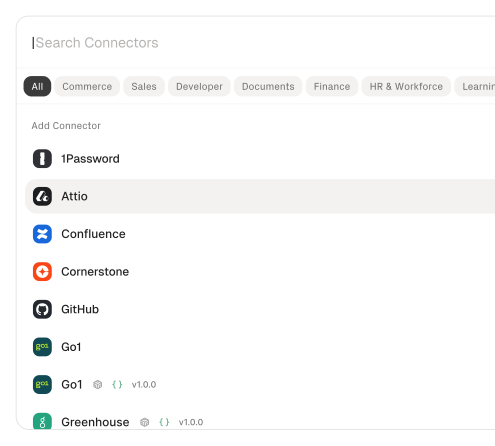
200+ connectors with 10K+ agent-optimized actions
Pre-built connectors for Greenhouse, Lever, Ashby, Workday, BambooHR, Personio, Google Drive, SharePoint, and DocuSign with full native action coverage and agent instructions included.
Managed Auth handles credentials across providers
OAuth flows, API keys, and token refresh managed per tenant for every connected ATS, HRIS, and document store — agents never touch raw credentials.
Search and execute finds the right action
Agent searches StackOne's action catalog by natural language and executes the matching offer-related action — no pre-loading thousands of tool definitions.
Managed Webhooks deliver offer events consistently
StackOne normalizes offer-approval and acceptance events from Greenhouse, Lever, and Ashby into a single event stream, handling registration, retries, and delivery differences per provider.
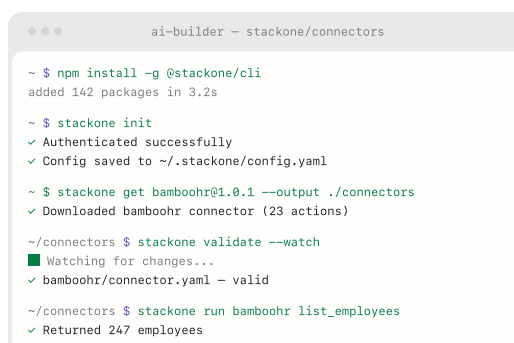
Connector Studio extends to any system
Build custom connectors for unsupported document stores or e-signature platforms via REST, SOAP, or GraphQL — no waiting on vendor support.
Defender blocks prompt injection from candidate fields
StackOne Defender screens inbound candidate data — names, counter-offer notes, free-text fields — for injection attempts before the agent processes it, preventing adversarial content from manipulating letter generation.
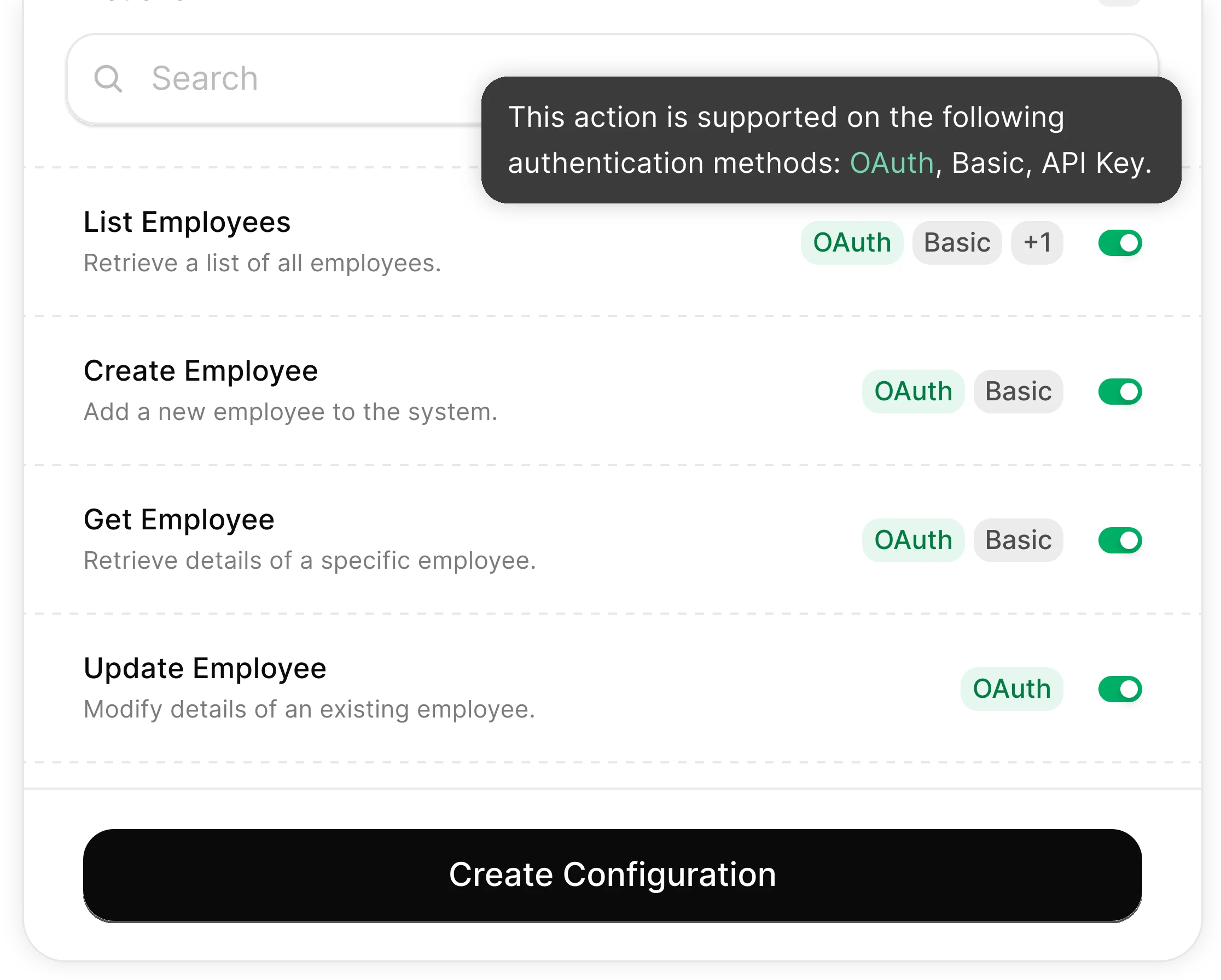
You Control What the Agent Can Do
Scoped permissions define exactly which candidate and compensation fields the agent reads and which document actions it can trigger. Full audit trail of every operation.
Integrates with your entire recruiting stack. Whatever it is.
Connect Any Agent to Automate Offer Letter Generation

Any Agent Framework
Claude, OpenAI, LangChain, Vercel AI SDK, CrewAI, Pydantic AI — StackOne works with every major agent framework out of the box.


Any Agent Builder
Whether you're building with code, a visual builder, or an enterprise platform — StackOne provides the integration layer your agent needs.
Connect Your Agent to Your Recruiting Stack
Start building in minutes. MCP connectors to every system your agent needs.
Frequently Asked Questions
Connect Your Agent to Your Recruiting Stack
Start building in minutes. MCP connectors to every system your agent needs.