Job Posting Distribution
Post Jobs Everywhere, Instantly
Use StackOne to connect your AI agent to your ATS and job boards to automate job posting distribution.




AI Agents
Connect
MCP and A2A to REST, SOAP, and proprietary APIs.
Optimize
Tool discovery, data shaping, and reliable execution.
Secure
Scoped permissions, audit trails, and observability.
StackOne Integration Layer


 StackOne Integration Layer
Connect
200+ connectors, build your own, and multi-protocol support.
Optimize
Context, token, and speed optimization infrastructure.
Secure
Permissions API and prompt injection protection.
What Can AI Agents Do for Job Posting Distribution?
Your agent extracts approved requisitions from the ATS, formats and distributes postings across job boards, tracks performance, and recommends budget reallocation.
Extract Requisition Data
Pull approved job details — title, location, salary range, and posting preferences — from Greenhouse, Lever, or SmartRecruiters.
Format and Distribute Postings
Transform job data to match each board's required format and trigger distribution via ATS-native syndication to LinkedIn, Indeed, and other connected boards.
Verify Posting Status
Confirm each posting is live by reading syndicated posting status back from the ATS. Flag any boards where distribution failed or the listing is pending review.
Track Performance Metrics
Monitor application volume, cost-per-application, and conversion rates across channels. Rank boards by performance to identify top-performing sources.
Recommend Budget Reallocation
Rank channels by cost-per-application and conversion rate. Recommend shifting budget from underperforming boards to top-performing sources.
Sync Results and Report
Write posting URLs and channel performance data back to the ATS. Send a summary report to the recruiting team via Slack.
Extract Requisition Data
Pull approved job details — title, location, salary range, and posting preferences — from Greenhouse, Lever, or SmartRecruiters.
Format and Distribute Postings
Transform job data to match each board's required format and trigger distribution via ATS-native syndication to LinkedIn, Indeed, and other connected boards.
Verify Posting Status
Confirm each posting is live by reading syndicated posting status back from the ATS. Flag any boards where distribution failed or the listing is pending review.
Track Performance Metrics
Monitor application volume, cost-per-application, and conversion rates across channels. Rank boards by performance to identify top-performing sources.
Recommend Budget Reallocation
Rank channels by cost-per-application and conversion rate. Recommend shifting budget from underperforming boards to top-performing sources.
Sync Results and Report
Write posting URLs and channel performance data back to the ATS. Send a summary report to the recruiting team via Slack.
Why Building a Good Job Posting Distribution Agent Is Hard
Connecting to 10+ ATS Providers
A job distribution agent needs connectors to Greenhouse, Lever, Ashby, SmartRecruiters, and more. Each one has different APIs, OAuth scopes, pagination styles, and rate limits. Building and maintaining them all competes directly with product development.
Token Cost Grows with Posting Volume
Without search-first architecture, the agent pre-loads every ATS action definition into its context window. At hundreds of open requisitions per week, that burns tokens on irrelevant tools before the agent even starts distributing postings.
Job Descriptions Carry Prompt Injection Risk
Job distribution agents ingest untrusted text from requisition fields, hiring manager notes, and job descriptions. Any of those fields can contain adversarial instructions that hijack agent behavior — a risk that grows with every posting the agent processes.
Getting High Accuracy Requires Purpose-Built Tools
Distributing postings accurately requires reading job fields, syndication status, and board-specific formatting rules in a single call. Raw ATS API wrappers expose too many low-level details, lead to hallucinated parameters, and fail silently.
How StackOne Makes Job Posting Distribution Agents Possible
Everything your job distribution agent needs to syndicate postings, track performance, and optimize spend — with the controls IT demands.
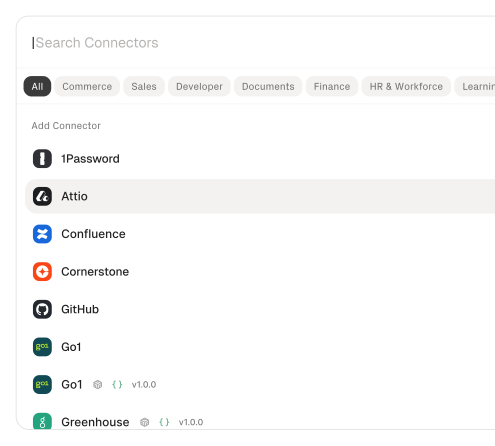
200+ connectors with 10K+ agent-optimized actions
Pre-built connectors for Greenhouse, Lever, Ashby, SmartRecruiters, Workable, and more with full native ATS action coverage and agent instructions included.
Managed Auth handles credentials across providers
OAuth flows, API keys, and token refresh managed per tenant for every connected ATS — agents never touch raw credentials.
Search and execute finds the right action
Agent searches StackOne's action catalog by natural language and executes the matching ATS action — no pre-loading thousands of tool definitions.
Managed Webhooks deliver requisition events consistently
StackOne subscribes to requisition approval and posting status events across connected ATS systems, handling registration, retries, and delivery differences so the agent receives a consistent event stream.
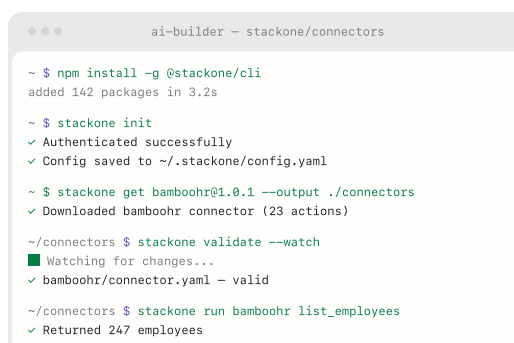
Connector Studio extends to any system
Build custom connectors for unsupported ATS platforms or internal job distribution systems via REST, SOAP, or GraphQL — no waiting on vendor support.
Defender blocks prompt injection from job content
StackOne Defender screens inbound job description text for injection attempts before the agent processes it, preventing adversarial content from manipulating distribution behavior.
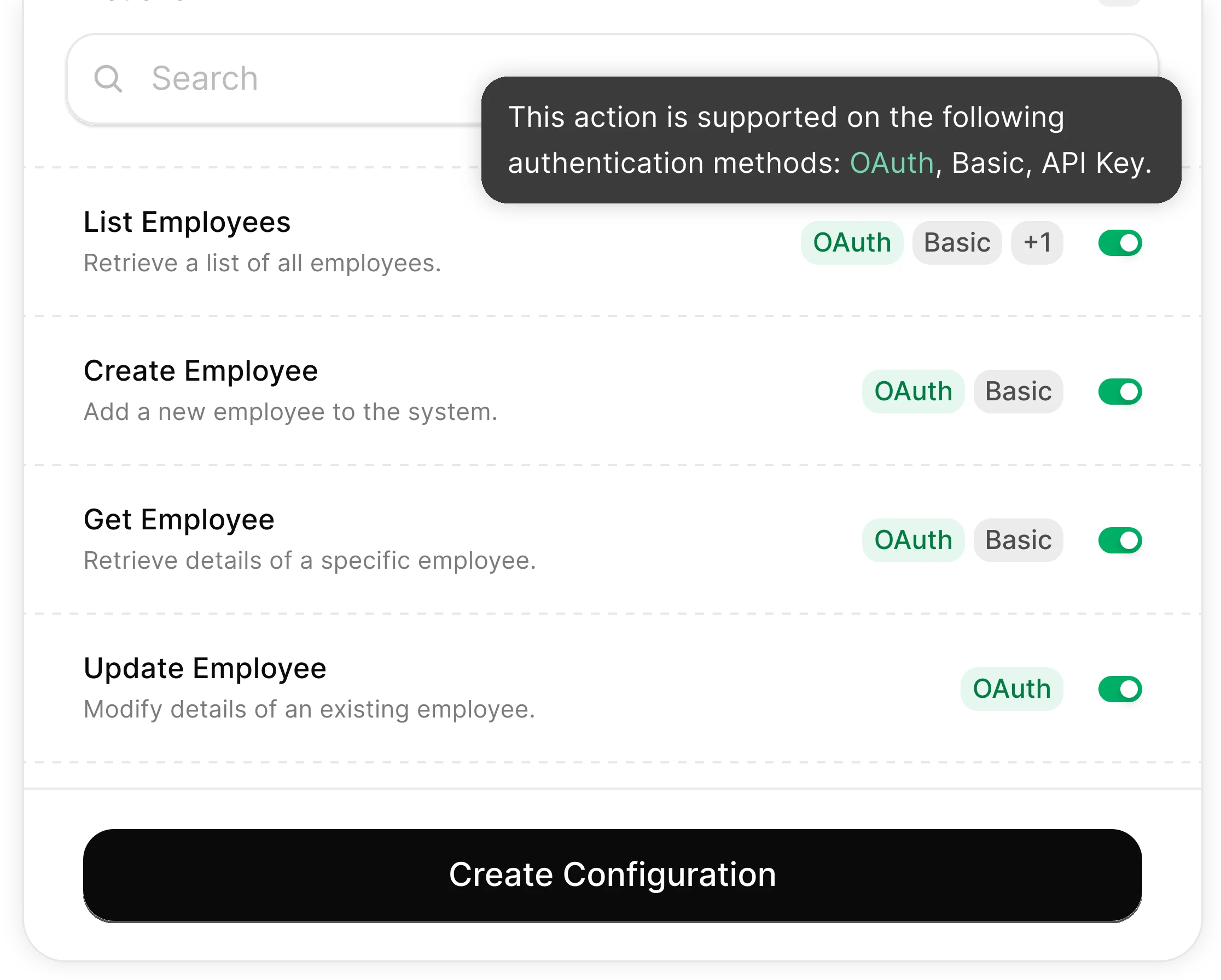
You Control What the Agent Can Do
Scoped permissions define exactly which job fields the agent reads and which distribution actions it can trigger. Full audit trail of every operation.
Integrates with your entire recruiting stack. Whatever it is.
Connect Any Agent to Automate Job Posting Distribution

Any Agent Framework
Claude, OpenAI, LangChain, Vercel AI SDK, CrewAI, Pydantic AI — StackOne works with every major agent framework out of the box.


Any Agent Builder
Whether you're building with code, a visual builder, or an enterprise platform — StackOne provides the integration layer your agent needs.
Connect Your Agent to Your Recruiting Stack
Start building in minutes. MCP connectors to every system your agent needs.
Frequently Asked Questions
Connect Your Agent to Your Recruiting Stack
Start building in minutes. MCP connectors to every system your agent needs.