- Retrieve all approved TLS certificates for a connection
- Approve a TLS certificate for a connection to enable secure connectivity
- Retrieve details of a specific approved certificate for a connection
- Revoke an approved TLS certificate from a connection
- Retrieve all approved SSH fingerprints for a connection
- Approve an SSH fingerprint for a connection
- Revoke an approved SSH fingerprint from a connection
- Retrieve all approved TLS certificates for a destination
- Approve a TLS certificate for a destination
- Revoke an approved TLS certificate from a destination
- Retrieve all approved SSH fingerprints for a destination
- Approve an SSH fingerprint for a destination
- Revoke an approved SSH fingerprint from a destination
- Returns a list of all Connector SDK packages in your Fivetran account
- Returns details for a specific Connector SDK package
- Upload a new Connector SDK package to your Fivetran account
- Update an existing Connector SDK package with new connector code
- Download the connector code package file for a specific Connector SDK package
- Permanently delete a Connector SDK package from your Fivetran account
- Retrieve all connections (data pipelines) in the Fivetran account
- Create a new data connection (pipeline) within a destination group
- Retrieve detailed information about a specific connection by ID
- Modify a connection's configuration, sync schedule, or pause state
- Permanently remove a connection from the Fivetran account
- Manually trigger an incremental data sync for a connection
- Trigger a full historical re-sync of all connection data
- Execute setup validation tests to verify a connection's configuration
- Retrieve the current state of a connection (only for Function and Connection SDK connectors)
- Update the state of a connection (only for Function and Connection SDK connectors)
- Retrieve schema configuration for a connection including enabled tables and columns
- Enable or disable schemas, tables, and columns for a connection
- Reload and refresh the schema configuration from the source to detect new tables or columns
- Generate a Connect Card URI for embedding connector setup in an application
- Retrieve all destinations in the Fivetran account
- Create a new destination (data warehouse or database) within a group
- Retrieve details of a specific destination by ID
- Modify a destination's configuration settings
- Permanently remove a destination from the Fivetran account
- Execute validation tests to verify a destination's configuration and connectivity
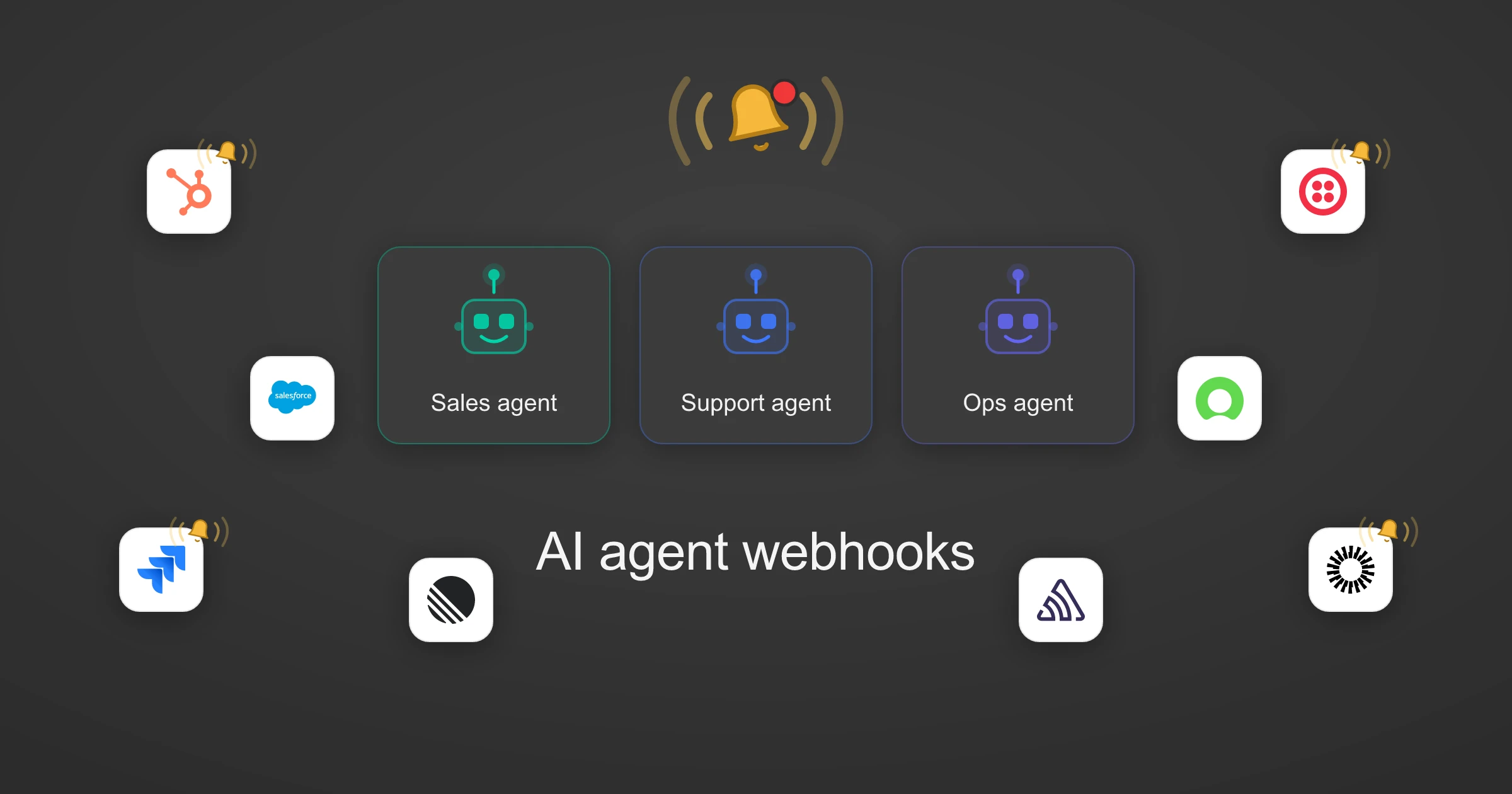
- Acknowledges Fivetran's test_event validation ping (and any unmatched/malformed payload) with a 200 — no event is emitted — so the webhook registers and stays active.
- Processes Fivetran sync_start webhook events.
- Processes Fivetran sync_end webhook events.
- Processes Fivetran transformation_start webhook events.
- Processes Fivetran transformation_succeeded webhook events.
- Processes Fivetran transformation_failed webhook events.
- Processes Fivetran connection_successful webhook events.
- Processes Fivetran connection_failure webhook events.
- Processes Fivetran create_connector webhook events.
- Processes Fivetran pause_connector webhook events.
- Processes Fivetran resume_connector webhook events.
- Processes Fivetran edit_connector webhook events.
- Processes Fivetran delete_connector webhook events.
- Processes Fivetran force_update_connector webhook events.
- Processes Fivetran resync_connector webhook events.
- Processes Fivetran resync_table webhook events.
- Retrieve all groups (destinations) in the Fivetran account
- Create a new group (destination) in the Fivetran account
- Retrieve details of a specific group by ID
- Modify a group's name or properties
- Permanently remove a group from the Fivetran account
- Retrieve all users with access to a specific group
- Add an existing user to a group with a specified role
- Revoke a user's access to a specific group
- Retrieve all connections within a specific group
- Retrieve the SSH public key for a specific group
- Retrieve service account credentials for a specific group
- Return the connected Fivetran account identity and auth type mapped to the IAM unified credentials schema. Fivetran has no /me endpoint and API keys are not bound to a single user (the key inherits its generator's RBAC) — name is the Fivetran account name; auth_type is pinned to "api_key" because this connector exclusively supports API Key + Secret HTTP Basic authentication.
- Validate the current Fivetran API key + secret and return the raw, unmapped Fivetran /v1/account/info JSON (id, account_name, country_code, language, support_account_id, ...). Bypasses the unified IAM credentials schema — use this for debugging credential mismatches or revocation, not for normal app flows.
- List every Fivetran Team mapped to the IAM unified group schema, cursor-paginated up to 1000 per page. Fivetran Teams are the actual user-grouping concept (Enterprise / Business Critical plan only) — distinct from Fivetran "Groups" which are destination containers. Pass expand=["roles"] to inline each team's account-level role.
- Retrieve a single Fivetran Team by id, mapped to the IAM unified group schema. Optionally pass expand=["users"] to inline the first 1000 members and their team-level roles, and/or expand=["roles"] to inline the team's own account-level role.
- List the organizations available to the current Fivetran connection mapped to the IAM unified organization schema. Fivetran is single-tenant per API key, so this returns exactly one record (the connected account) sourced from GET /v1/account/info.
- Retrieve the connected Fivetran account as the single organization record. Fivetran is single-tenant per API key — this action always returns the same one record sourced from GET /v1/account/info. The id input is accepted for round-trip symmetry with unified_list_organizations but is not used to filter (there is nothing to filter to).
- Enumerate the resource_type values accepted by unified_list_resource_users on this connector. On Fivetran the supported types are "destination" (Fivetran Groups — destination containers) and "team" (Fivetran Teams — user groupings, Enterprise / Business Critical plan only). Returns a flat string array.
- List the users with access to a specific Fivetran destination (Group) or Team as IAM users, each annotated with their resource-scoped role. Cursor-paginated up to 1000 per page. resource_type must be "destination" or "team"; resource_id accepts either the raw Fivetran group / team id or a StackOne-encoded composite id (both decode to the same target).
- List every role available in the connected Fivetran account (predefined and custom), mapped to the IAM unified role schema. Role type derives from the current account/destination/connection role tier (Manage/Administrator → admin, Analyst → basic, Edit/Billing/Creator → editor, View/Reviewer → viewer); scope is keyed to the role's Fivetran scope class (ACCOUNT / DESTINATION / CONNECTOR / TEAM).
- Retrieve a single Fivetran role by its name (the Fivetran identifier). Fivetran has no per-role GET endpoint — implemented as a filter over the role list. Returns an empty result when no role matches the name.
- List every user in the connected Fivetran account mapped to the IAM unified user schema, cursor-paginated up to 1000 per page. Pass expand=["roles"] to inline each user's account-level role (admin, basic, editor, viewer, unassigned); status is derived from the active/invited lifecycle flags.
- Retrieve a single Fivetran user by id, mapped to the IAM unified user schema. Optionally pass expand=["groups"] to inline the user's Fivetran Group memberships and/or expand=["roles"] to inline their account-level role.
- Retrieve all hybrid deployment agents in the Fivetran account
- Create a new hybrid deployment agent for on-premises data processing
- Retrieve details of a specific hybrid deployment agent by ID
- Regenerate authentication keys for a hybrid deployment agent
- Reset credentials for a hybrid deployment agent
- Permanently remove a hybrid deployment agent
- Retrieve all configured external log service integrations
- Configure a new external log service integration for a group
- Retrieve details of a specific log service integration by ID
- Modify a log service integration's configuration
- Run validation tests for a log service integration
- Permanently remove a log service integration
- Retrieve the account-level external log service configuration
- Configure an account-level external log service integration
- Modify the account-level log service integration configuration
- Permanently remove the account-level log service integration
- Retrieve all private link configurations in the Fivetran account
- Set up a new private network connection for Fivetran
- Retrieve details of a specific private link configuration by ID
- Modify a private link configuration
- Permanently remove a private link configuration
- Retrieve all proxy agents in the Fivetran account
- Create a new proxy agent for network routing
- Retrieve details of a specific proxy agent by ID
- Retrieve all connections routed through a specific proxy agent
- Permanently remove a proxy agent
- Retrieve account details associated with the current API credentials
- Retrieve metadata about all connector types supported by Fivetran
- Retrieve configuration metadata for a specific connector type
- Retrieve all predefined and custom roles in the Fivetran account
- Retrieve all system API keys in the Fivetran account
- Generate a new system API key for programmatic access
- Retrieve details of a specific system key by ID
- Modify a system key's name or permission role
- Generate a new secret for an existing system key without downtime
- Permanently remove a system key and revoke its access
- Retrieve all teams in the Fivetran account
- Create a new team for organizing users and managing permissions
- Retrieve details of a specific team by ID
- Modify a team's name, description, or account-level role
- Permanently remove a team from the Fivetran account
- Revoke a team's account-level role assignment
- Retrieve all users that are members of a specific team
- Retrieve details of a user's membership in a specific team
- Add a user to a team with a specified role
- Modify a user's role within a specific team
- Remove a user from a specific team
- Retrieve all connections accessible by a specific team
- Retrieve a team's access details for a specific connection
- Grant a team access to a specific connection
- Modify a team's role for a specific connection
- Revoke a team's access to a specific connection
- Retrieve all groups accessible by a specific team
- Retrieve a team's membership details for a specific group
- Associate a team with a group, granting group-level access
- Modify a team's role within a specific group
- Remove a team's membership from a specific group
- Retrieve all data transformations in the Fivetran account
- Create a new data transformation in Fivetran
- Retrieve details of a specific transformation by ID
- Modify a transformation's configuration or schedule
- Manually trigger a transformation run
- Stop a currently running transformation
- Permanently remove a transformation from the account
- Retrieve available Quickstart transformation packages
- Retrieve all transformation projects in the account
- Create a new transformation project (e.g., a dbt project)
- Retrieve details of a specific transformation project by ID
- Modify a transformation project's configuration
- Run validation tests for a transformation project configuration
- Permanently remove a transformation project
- Returns a list of all users within your Fivetran account
- Invites a new user to your Fivetran account
- Returns a user object if a valid identifier was provided
- Updates information for an existing user within your Fivetran account
- Deletes a user from your Fivetran account
- Removes a user's role from an account; the user remains a member of the account
- Returns all connection memberships for a user within your Fivetran account
- Returns the details of a user's membership in a connection
- Adds a connection membership for a user
- Updates user membership in a connection
- Removes user membership in a connection
- Returns the membership details for all groups a user belongs to
- Returns details of a user membership in a group
- Adds a user membership in a group
- Updates user group membership
- Removes user from a group
- Retrieve all configured webhooks in the Fivetran account
- Create a new webhook for the current account
- Create a new webhook for a specific group
- Retrieve details of a specific webhook by ID
- Update an existing webhook's URL, events, active state, or secret
- Send a test event to a webhook to verify its configuration
- Delete an existing webhook by ID
No matching actions