Vendor Payment Scheduling
Pay Vendors. On Autopilot.
Use StackOne to connect your AI agent to your accounting, payment, and ticketing systems to automate vendor payment scheduling.




AI Agents
Connect
MCP and A2A to REST, SOAP, and proprietary APIs.
Optimize
Tool discovery, data shaping, and reliable execution.
Secure
Scoped permissions, audit trails, and observability.
StackOne Integration Layer


 StackOne Integration Layer
Connect
200+ connectors, build your own, and multi-protocol support.
Optimize
Context, token, and speed optimization infrastructure.
Secure
Permissions API and prompt injection protection.
What Can AI Agents Do for Vendor Payment Scheduling?
Your agent collects approved invoices, batches them by vendor and method, evaluates cash position and discount opportunities, routes approvals, and records every transaction back to your ledger.
Collect Approved Invoices
Pull all approved invoices due within the upcoming payment window from QuickBooks Online, Xero, or Zoho Books. Filter by due date, vendor, and currency.
Batch and Prioritize Payments
Group invoices by vendor, currency, and payment method — ACH, wire, check, or virtual card. Prioritize by due date, early-payment discount ROI, and vendor tier.
Evaluate Cash Position and Discounts
Assess available cash against outstanding obligations. Calculate whether capturing early-payment discounts yields a better return than holding cash through the full payment term.
Route Approvals
Create approval tickets in Jira or ServiceNow for high-value batches that exceed threshold limits. Notify approvers via Slack.
Execute and Record Payments
Generate payment records, write transactions back to Xero or Zoho Books, and send remittance advice to vendors via Gmail or Slack.
Reconcile and Audit
Match settled payments against invoices in the accounting system. Log every action — invoice reads, batch decisions, payment submissions — with timestamps and request payloads for compliance.
Collect Approved Invoices
Pull all approved invoices due within the upcoming payment window from QuickBooks Online, Xero, or Zoho Books. Filter by due date, vendor, and currency.
Batch and Prioritize Payments
Group invoices by vendor, currency, and payment method — ACH, wire, check, or virtual card. Prioritize by due date, early-payment discount ROI, and vendor tier.
Evaluate Cash Position and Discounts
Assess available cash against outstanding obligations. Calculate whether capturing early-payment discounts yields a better return than holding cash through the full payment term.
Route Approvals
Create approval tickets in Jira or ServiceNow for high-value batches that exceed threshold limits. Notify approvers via Slack.
Execute and Record Payments
Generate payment records, write transactions back to Xero or Zoho Books, and send remittance advice to vendors via Gmail or Slack.
Reconcile and Audit
Match settled payments against invoices in the accounting system. Log every action — invoice reads, batch decisions, payment submissions — with timestamps and request payloads for compliance.
Why Building a Good Vendor Payment Agent Is Hard
Connecting to Many AP, Accounting, and Ticketing Systems
The agent needs connectors to QuickBooks Online, Xero, Zoho Books, Jira, ServiceNow, and Slack. Each one requires its own OAuth flow, pagination logic, and rate-limit handling — a massive engineering lift before the agent can process a single invoice.
No Agent-Ready Tooling for Accounting APIs
QuickBooks, Xero, and Zoho expose complex REST APIs with proprietary auth flows and nested data models. Without agent-optimized action definitions, the agent cannot discover or call the right endpoint, leading to hallucinated parameters and silent failures.
Token Cost and Tool Discovery at Scale
Without search-first discovery, the agent pre-loads every action definition across accounting and ticketing systems, burning tokens and money on irrelevant tools. The problem compounds with every new provider and every high-volume payment run.
Vendor Invoice Data Carries Prompt Injection Risk
Invoice descriptions, line-item notes, and remittance fields flow directly into the LLM context as untrusted input. A malicious vendor can embed hidden instructions that redirect payment routing or exfiltrate account data — and the risk scales with every invoice the agent processes.
How StackOne Makes Vendor Payment Agents Possible
Everything your payment agent needs to collect invoices, batch payments, route approvals, and record transactions — with the controls finance teams demand.
200+ connectors with 10K+ agent-optimized actions
Pre-built connectors for QuickBooks Online, Xero, Zoho Books, Jira, ServiceNow, and Slack with full native action coverage and agent instructions included.
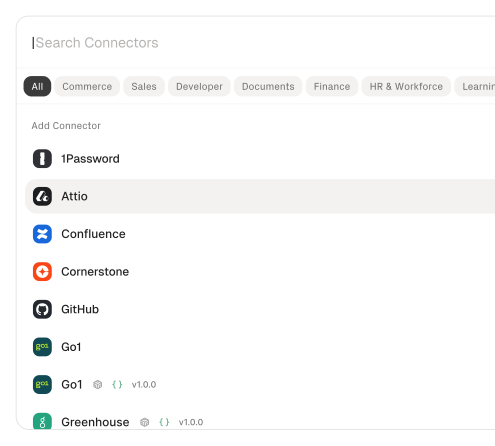
Managed Auth handles credentials across providers
OAuth flows, API keys, and token refresh managed per tenant for every connected accounting and ticketing system — agents never touch raw credentials.
Search and execute finds the right action
Agent searches StackOne's action catalog by natural language and executes the matching accounting or ticketing action — no pre-loading thousands of tool definitions.
Falcon Engine handles pagination and retries
Falcon manages paginated invoice fetches, rate-limit backoff, and idempotent retries across accounting APIs so payment runs never silently fail or duplicate transactions.
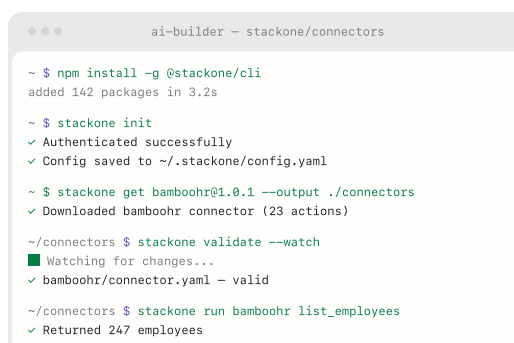
Connector Studio extends to any system
Build custom connectors for unsupported accounting systems or internal payment platforms via REST, SOAP, or GraphQL — no waiting on vendor support.
Defender blocks prompt injection from invoice data
StackOne Defender screens inbound invoice content for injection attempts before the agent processes it, preventing adversarial vendor data from manipulating payment behavior.
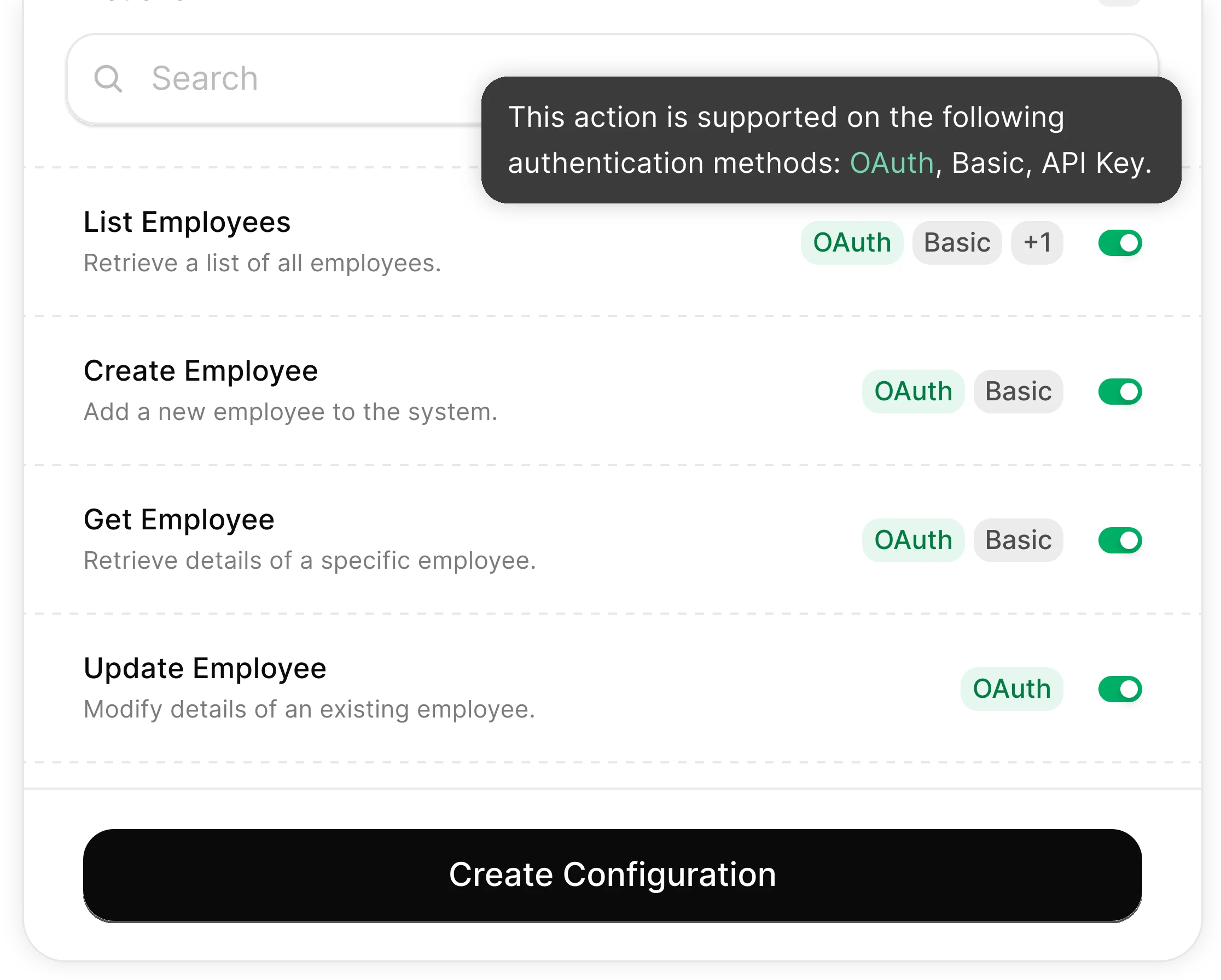
You Control What the Agent Can Do
Scoped permissions define exactly which invoice fields the agent reads and which payment actions it can trigger. Full audit trail of every operation for compliance.
Integrates with your entire accounting stack. Whatever it is.
Connect Any Agent to Automate Vendor Payments

Any Agent Framework
Claude, OpenAI, LangChain, Vercel AI SDK, CrewAI, Pydantic AI — StackOne works with every major agent framework out of the box.


Any Agent Builder
Whether you're building with code, a visual builder, or an enterprise platform — StackOne provides the integration layer your agent needs.
Connect Your Agent to Your Accounting Stack
Start building in minutes. MCP connectors to every system your agent needs.
Frequently Asked Questions
Connect Your Agent to Your Accounting Stack
Start building in minutes. MCP connectors to every system your agent needs.