Invoice Processing
Invoice to Paid, Instantly
Use StackOne to connect your AI agent to your accounting, email, and document management systems to automate invoice processing and purchase order matching.




AI Agents
Connect
MCP and A2A to REST, SOAP, and proprietary APIs.
Optimize
Tool discovery, data shaping, and reliable execution.
Secure
Scoped permissions, audit trails, and observability.
StackOne Integration Layer


 StackOne Integration Layer
Connect
200+ connectors, build your own, and multi-protocol support.
Optimize
Context, token, and speed optimization infrastructure.
Secure
Permissions API and prompt injection protection.
What Can AI Agents Do for Invoice Processing?
Your agent captures invoices from email and file storage, extracts line-item data, matches against purchase orders, routes approved invoices to payment, and escalates exceptions — across every provider.
Capture Invoices
Monitor inbound invoices from Gmail, Outlook, Google Drive, or SharePoint and extract PDF attachments for processing.
Extract Invoice Data
Use AI and OCR to extract vendor name, invoice number, line items, quantities, unit prices, and totals from PDF and image-based invoices.
Match Against Purchase Orders
Look up the corresponding purchase order in QuickBooks Online or Xero and perform a three-way match on line items, quantities, and prices.
Auto-Approve or Flag
Route matched invoices to the payment queue in QuickBooks Online or Xero. Flag discrepancies that exceed tolerance thresholds for manual review.
Route Exceptions
Assign mismatched invoices to a reviewer via Jira or ServiceNow and notify the AP team in Slack or Microsoft Teams.
Audit Logging & Notification
Log every extraction, match result, and approval decision. Send audit summaries to AP managers via Slack or Gmail and archive records in Google Drive or SharePoint.
Capture Invoices
Monitor inbound invoices from Gmail, Outlook, Google Drive, or SharePoint and extract PDF attachments for processing.
Extract Invoice Data
Use AI and OCR to extract vendor name, invoice number, line items, quantities, unit prices, and totals from PDF and image-based invoices.
Match Against Purchase Orders
Look up the corresponding purchase order in QuickBooks Online or Xero and perform a three-way match on line items, quantities, and prices.
Auto-Approve or Flag
Route matched invoices to the payment queue in QuickBooks Online or Xero. Flag discrepancies that exceed tolerance thresholds for manual review.
Route Exceptions
Assign mismatched invoices to a reviewer via Jira or ServiceNow and notify the AP team in Slack or Microsoft Teams.
Audit Logging & Notification
Log every extraction, match result, and approval decision. Send audit summaries to AP managers via Slack or Gmail and archive records in Google Drive or SharePoint.
Why Building a Good Invoice Processing Agent Is Hard
Connecting AP Systems Across Email, Storage, and Accounting
Invoice processing agents need connectors to Gmail, Outlook, Google Drive, SharePoint, QuickBooks, Xero, Jira, Slack, and Teams. Building each one — auth, pagination, rate limits — is a massive engineering lift that scales linearly with every new provider.
Token Cost Grows with Tool Definitions
Without search-first architecture, the agent pre-loads every action definition across email, document storage, accounting, and ticketing systems into its context window. At high invoice volume, that burns tokens before the agent even starts matching.
Invoice Content Carries Prompt Injection Risk
Invoices are untrusted external documents — vendor names, line-item descriptions, and memo fields are free-text that flows directly into the agent's context. A malicious string in an invoice PDF could hijack AP workflows or authorize payments the agent shouldn't approve.
Getting High Accuracy Requires Purpose-Built Tools
Generic API wrappers don't give agents enough context to perform three-way matching between invoices, purchase orders, and goods receipts. High accuracy demands tools designed for accounting workflows with structured data models.
How StackOne Makes Invoice Processing Agents Possible
Everything your AP agent needs to capture invoices, match purchase orders, route payments, and flag exceptions — with the controls finance demands.
200+ connectors with 10K+ agent-optimized actions
Pre-built connectors for Gmail, Outlook, Google Drive, SharePoint, QuickBooks Online, Xero, Jira, and Slack with full native action coverage and agent instructions included.
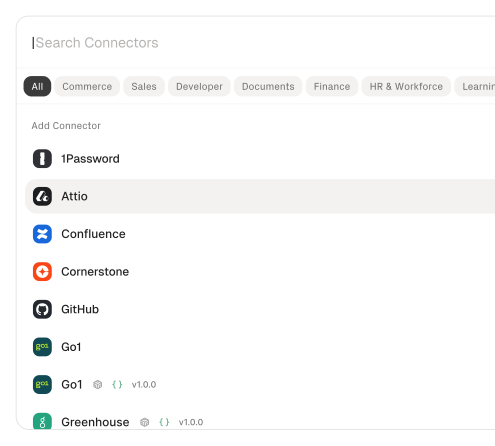
Managed Auth handles credentials across providers
OAuth flows, API keys, and token refresh managed per tenant for every connected email, storage, and accounting provider — agents never touch raw credentials.
Search and execute finds the right action
Agent searches StackOne's action catalog by natural language — "create bill in Xero" — and executes the matching action. No pre-loading thousands of tool definitions.
Managed Webhooks detect new invoices consistently
StackOne subscribes to inbox and file-upload events across email and storage providers, handling registration, retries, and delivery differences so the agent receives a consistent event stream regardless of provider.
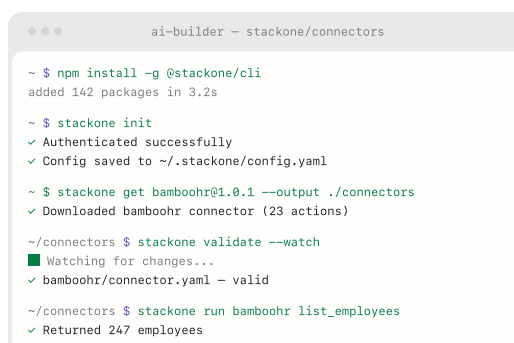
Connector Studio extends to any system
Build custom connectors for unsupported accounting, ERP, or document management systems via REST, SOAP, or GraphQL — no waiting on vendor support.
Defender blocks prompt injection from invoice data
StackOne Defender screens inbound invoice fields — vendor names, line-item descriptions, memo text — for injection attempts before the agent processes them, preventing adversarial content from manipulating AP workflows.
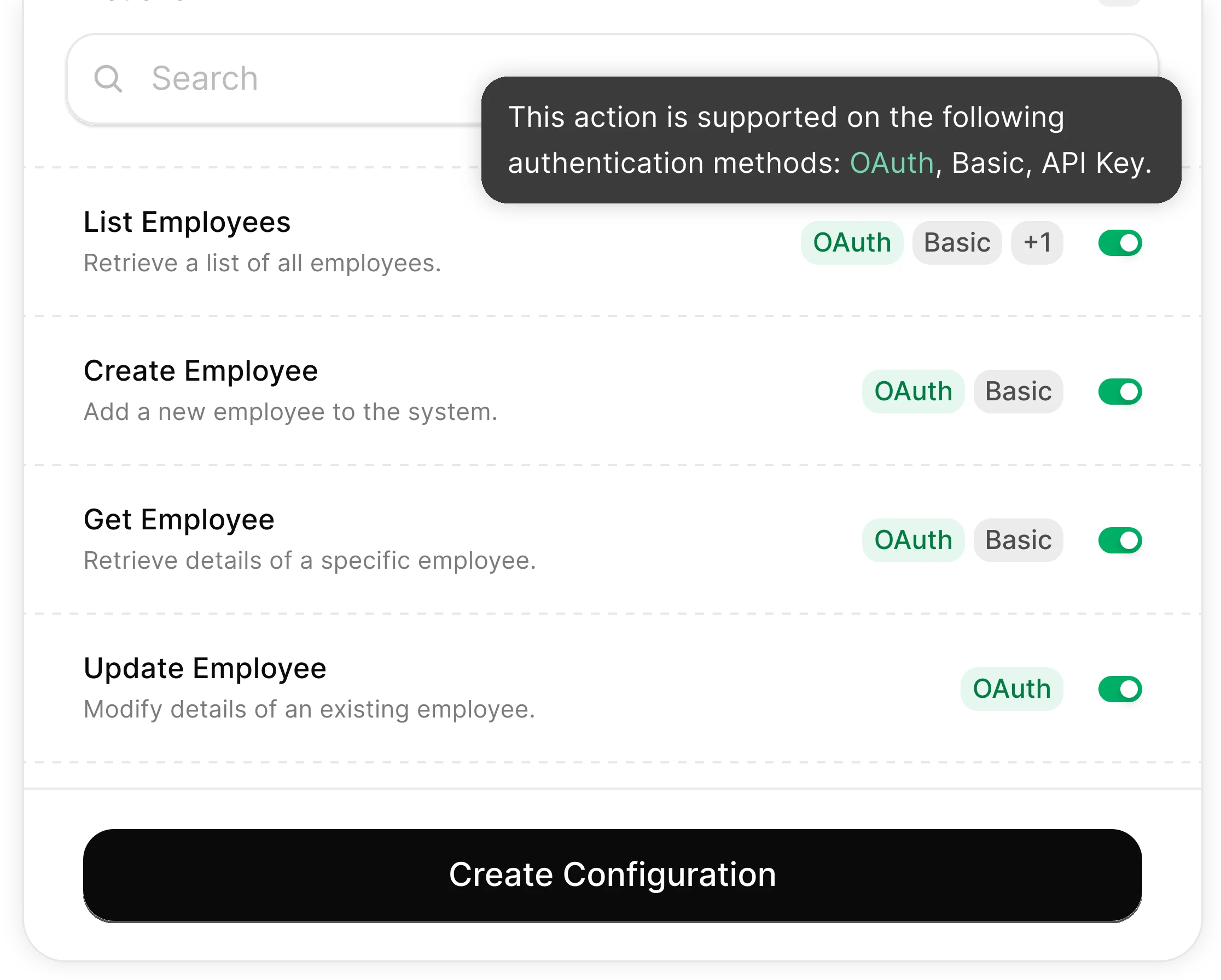
You Control What the Agent Can Do
Scoped permissions define exactly which invoice fields the agent reads and which payment actions it can trigger. Full audit trail of every operation for SOX compliance.
Integrates with your entire finance stack. Whatever it is.
Connect Any Agent to Automate Invoice Processing

Any Agent Framework
Claude, OpenAI, LangChain, Vercel AI SDK, CrewAI, Pydantic AI — StackOne works with every major agent framework out of the box.


Any Agent Builder
Whether you're building with code, a visual builder, or an enterprise platform — StackOne provides the integration layer your agent needs.
Connect Your Agent to Your Finance Stack
Start building in minutes. MCP connectors to every system your agent needs.
Frequently Asked Questions
Connect Your Agent to Your Finance Stack
Start building in minutes. MCP connectors to every system your agent needs.