AR Dunning & Payment Follow-Up
Get Paid. Automatically.
Use StackOne to connect your AI agent to your accounting, CRM, and messaging systems to automate AR dunning and payment follow-up.




AI Agents
Connect
MCP and A2A to REST, SOAP, and proprietary APIs.
Optimize
Tool discovery, data shaping, and reliable execution.
Secure
Scoped permissions, audit trails, and observability.
StackOne Integration Layer


 StackOne Integration Layer
Connect
200+ connectors, build your own, and multi-protocol support.
Optimize
Context, token, and speed optimization infrastructure.
Secure
Permissions API and prompt injection protection.
What Can AI Agents Do for AR Dunning & Payment Follow-Up?
Your agent detects overdue invoices, enriches with customer context, sends timed reminders, escalates through configurable tiers, and logs every touchpoint.
Detect Overdue Invoices
Poll the accounting system for invoices past due date plus grace period. Extract invoice amount, currency, due date, and debtor details from QuickBooks, Xero, or Stripe.
Enrich with Customer Context
Look up the debtor in Salesforce or HubSpot to retrieve contact info, account tier, relationship owner, and prior payment history. Set escalation tier and personalise tone.
Run Escalation Sequences
Apply time-based escalation rules — second notice at +7 days, firm demand at +14, collections flag at +21. Each tier triggers the next communication automatically across email and messaging channels.
Log Activity and Reconcile
Record every outreach attempt, response, and payment status change in the CRM and accounting system. When payment is confirmed in Stripe, mark the invoice as settled and close the related ticket.
Detect Overdue Invoices
Poll the accounting system for invoices past due date plus grace period. Extract invoice amount, currency, due date, and debtor details from QuickBooks, Xero, or Stripe.
Enrich with Customer Context
Look up the debtor in Salesforce or HubSpot to retrieve contact info, account tier, relationship owner, and prior payment history. Set escalation tier and personalise tone.
Send Payment Reminders
Send a personalised payment reminder via Gmail or Slack with invoice number, amount due, due date, and a direct payment link. Log outreach in CRM.
Run Escalation Sequences
Apply time-based escalation rules — second notice at +7 days, firm demand at +14, collections flag at +21. Each tier triggers the next communication automatically across email and messaging channels.
Alert Internal Stakeholders
At each escalation step, update the CRM record, create a task for the account manager in Jira or Zendesk, and notify finance leadership via Slack.
Log Activity and Reconcile
Record every outreach attempt, response, and payment status change in the CRM and accounting system. When payment is confirmed in Stripe, mark the invoice as settled and close the related ticket.
Why Building a Good AR Dunning Agent Is Hard
Connecting Accounting, CRM, and Messaging Systems
A dunning agent needs QuickBooks or Xero for invoices, Salesforce or HubSpot for customer context, plus Gmail and Slack for outreach. Each system requires separate OAuth flows, pagination logic, and rate-limit handling — a massive connector maintenance burden.
Token Cost Explodes with Tool Pre-Loading
Without search-first discovery, the agent loads thousands of action definitions from accounting, CRM, and messaging providers before every run. At scale, that burns tokens on irrelevant tools before the agent even identifies the first overdue invoice.
Debtor Replies Can Inject Prompts
Customer email responses re-enter the agent loop as untrusted input. A crafted reply could suppress future reminders, alter escalation logic, or extract invoice details for other accounts — a risk that grows with every debtor the agent contacts.
Every Outreach Step Must Be Auditable
Regulators and auditors require a structured log of each reminder sent, escalation triggered, and payment status change. Agents produce no structured trail by default — their reasoning is unstructured and ephemeral.
How StackOne Makes AR Dunning Agents Possible
Everything your AR dunning agent needs to detect overdue invoices, send reminders, escalate accounts, and log collection activity — with the controls finance demands.
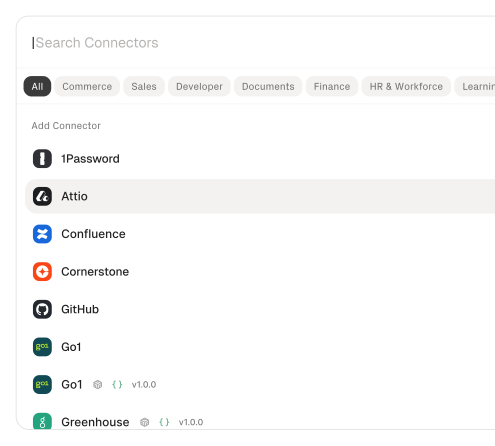
200+ connectors with 10K+ agent-optimized actions
Pre-built connectors to QuickBooks, Xero, Salesforce, HubSpot, Gmail, Slack, and Stripe with full native action coverage and agent instructions included.
Managed Auth handles credentials across providers
OAuth flows, API keys, and token refresh managed per tenant for every connected accounting, CRM, and messaging system — agents never touch raw credentials.
Search and execute finds the right action
Agent searches StackOne's action catalog by natural language and executes the matching accounting or CRM action — no pre-loading thousands of tool definitions.
Managed Webhooks deliver invoice events consistently
StackOne normalizes webhook delivery and provides synthetic polling webhooks across accounting and CRM providers so escalation cadences fire on schedule.
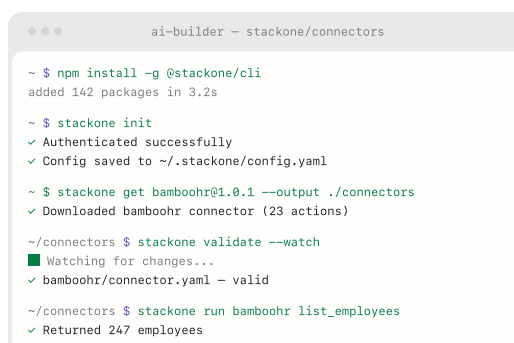
Connector Studio extends to any system
Build custom connectors for unsupported accounting systems or internal collection workflows via REST, SOAP, or GraphQL — no waiting on vendor support.
Defender blocks prompt injection from debtor replies
StackOne Defender screens inbound email text for injection attempts before the agent processes it, preventing adversarial content from manipulating escalation behavior.
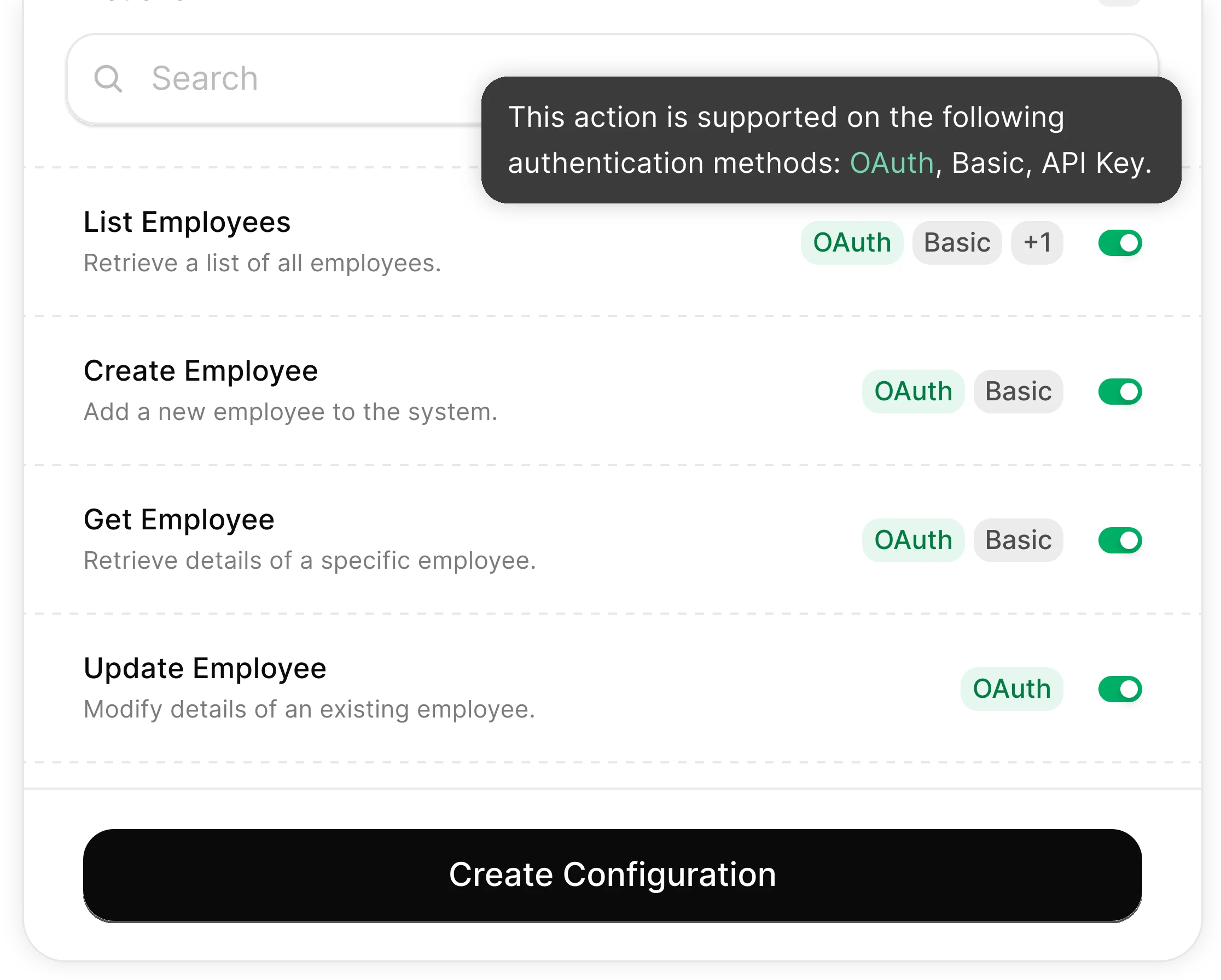
You Control What the Agent Can Do
Scoped permissions define exactly which invoice fields the agent reads and which escalation actions it can trigger. Full audit trail of every operation for compliance-ready reporting.
Integrates with your entire accounting stack. Whatever it is.
Connect Any Agent to Automate AR Dunning

Any Agent Framework
Claude, OpenAI, LangChain, Vercel AI SDK, CrewAI, Pydantic AI — StackOne works with every major agent framework out of the box.


Any Agent Builder
Whether you're building with code, a visual builder, or an enterprise platform — StackOne provides the integration layer your agent needs.
Connect Your Agent to Your Accounting Stack
Start building in minutes. MCP connectors to every system your agent needs.
Frequently Asked Questions
Connect Your Agent to Your Accounting Stack
Start building in minutes. MCP connectors to every system your agent needs.