


Zapier MCP Server
for AI Agents
Connect your AI agent to StackOne's Zapier MCP server and give it 37 MCP tools out of the box. Auth, tool execution, and security all managed.
 StackOne


Coverage
37 Agent Actions
Agents can read, write, delete and run operations in Zapier. Extend your agent's capabilities with custom actions.

Authentication
Agent Tool Authentication
Per-user OAuth in one call. Your Zapier MCP server gets session-scoped tokens with zero credentials stored on your infra.
Agent Auth →
Security
Agent Protection
Every Zapier tool response scanned for prompt injection in milliseconds, with 88.7% accuracy, all running on CPU.
Prompt Injection Defense →
Performance
Max Agent Context. Min Cost.
Free up to 96% of your agent's context window to enhance reasoning and reduce cost, on every Zapier call.
Tools Discovery →What is the Zapier MCP Server?
A Zapier MCP server lets AI agents read and write Zapier data through the Model Context Protocol, Anthropic's open standard for connecting LLMs to external tools. StackOne's Zapier MCP server ships with 37 pre-built actions, fully extensible via the Connector Builder, plus managed authentication, prompt injection defense, observability, and agent execution runtime. Connect it from MCP clients like Claude Desktop, Claude Code, Cursor, Goose, and VS Code, or from agent frameworks like OpenAI Agents SDK, LangChain, and Vercel AI SDK.
All Zapier MCP Tools
Every StackOne action for Zapier, ready for your agent. Read, write, delete and run operations, scoped to exactly what you need.
Action Runs
- Create Action Run
Run an app action once outside a Zap
- Get Action Run
Get the status and results of an action run
Authentications
- Create Authentication
Create a connected app authentication from credential fields
- List Authentications
List the user's connected app authentications for an app
- Delete Authentication
Delete a connected app authentication
Groups
- List Groups
List groups in the connected Zapier account through the SCIM API.
- Get Group
Get a single Zapier group by SCIM ID.
Unified Groups
- List Unified Groups
List unified groups in the connected Zapier account.
- Get Unified Group
Get a unified Zapier group by ID.
Unified Users
- List Unified Users
List unified users in the connected Zapier account.
- Get Unified User
Get a unified Zapier user by ID.
Promotion Enrollments
- Create Promotion Enrollment
Enroll the connected Zapier account in a partner promotion
- Get Promotion Enrollment
Get the status and task usage of a promotion enrollment
- Delete Promotion Enrollment
Unenroll an account from a promotion
Users
- List Users
List users in the connected Zapier account through the SCIM API.
- Get User
Get a single Zapier user by SCIM ID.
Zaps
- Create Zap
Create a Zap from a title and an ordered list of steps
- List Zaps
List the Zaps of the authenticated user
- Update Zap
Edit a Zap title or replace its steps
- Delete Zap
Permanently remove a Zap and its configuration by id, which cannot be undone
Other (17)
- List Actions
List the triggers and actions an app offers
- Get Input Choices
Get the allowed values for a dropdown input field of an action
- List Apps
List or search apps in the Zapier App Directory
- Get Apps V1
List apps in the Zapier App Directory sorted by popularity
- Get Categories
List Zapier app categories
- Get Input Fields
Get the input fields of an action
- Get Output Fields
Get the output fields an action produces
- Get Service Provider Config
Get the SCIM configuration of the connected Zapier account.
- Get Schemas
Get how Zapier formats SCIM users or groups.
- List Zap Runs
List Zap run history with status and date filters
- Get User Profile
Get the profile of the authenticated Zapier user
- Get Zaps V1
List the authenticated user's Zaps with your app's step params
- Get Zap Templates
List popular Zap templates for your integration
- Test Action Step
Run a test of an action step with the given inputs
- Guess Zap
Suggest a Zap and a pre-filled Zapier URL from a plain-language description (beta)
- Disable Zap
Turn a Zap off without deleting it
- Enable Zap
Turn a Zap on by republishing its current version
Set Up Your Zapier MCP Server in Minutes
One endpoint. Any framework. Your agent is talking to Zapier in under 10 lines of code.
Agent Frameworks


 JSON
{
  "mcpServers": {
    "stackone": {
      "command": "npx",
      "args": [
        "-y",
        "mcp-remote@latest",
        "https://api.stackone.com/mcp?x-account-id=<account_id>",
        "--header",
        "Authorization: Basic <YOUR_BASE64_TOKEN>"
      ]
    }
  }
}Platform Resources

Comparing BM25, TF-IDF, and Hybrid Search for MCP Tool Discovery
Benchmarking BM25, TF-IDF, and hybrid search for MCP tool discovery across 916 tools. The 80/20 TF-IDF/BM25 hybrid hits 21% Top-1 accuracy in under 1ms.
10 min
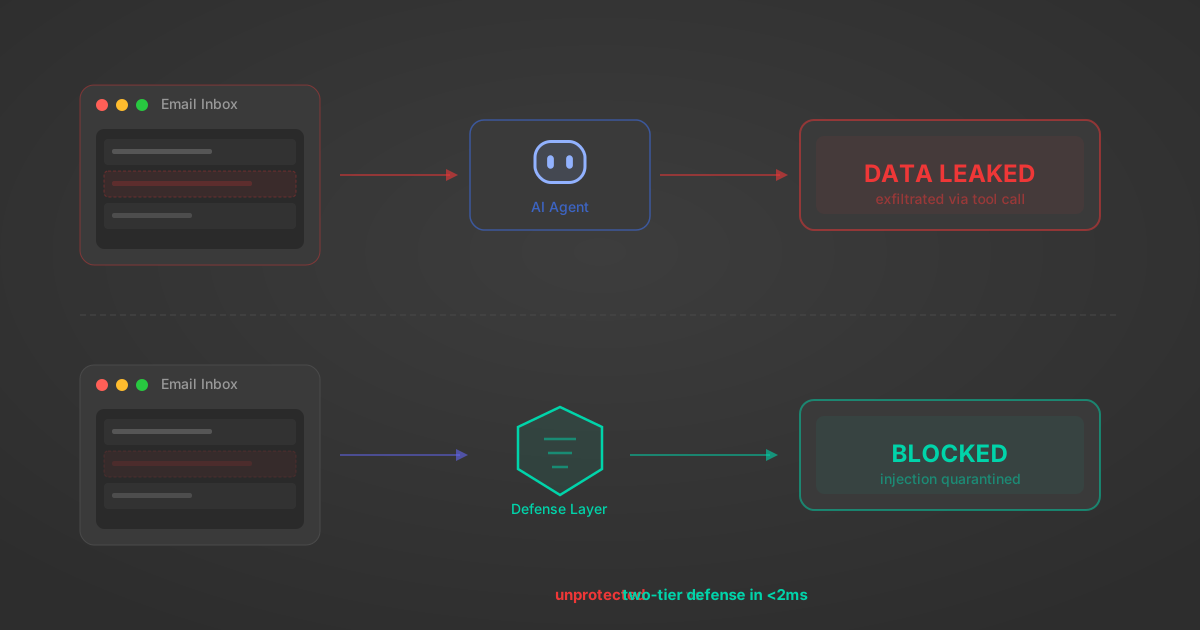
Indirect Prompt Injection Defense for MCP Tools: A Technical Guide
MCP tools that read emails, CRM records, and tickets are indirect prompt injection vectors. Here's how we built a two-tier defense that scans tool results in ~11ms.
12 min

MCP vs A2A: Architecture, Security, and When to Use Each
MCP vs A2A: what each protocol standardizes, how they differ, their shared security risks including indirect prompt injection, and when to use one, both, or a hybrid architecture.
12 min
MCP vs API: What Hundreds of Connector Builds Taught Us
MCP wraps APIs, it doesn't replace them. After building hundreds of connectors that serve both, here's when each approach wins.
14 min read
Zapier MCP Server FAQ
Does StackOne have a Zapier MCP server?
Zapier MCP server vs direct API integration: what's the difference?
How does Zapier authentication work for AI agents?
origin_owner_id.Are Zapier MCP tools vulnerable to prompt injection?
What is the context bloat of a Zapier agent and how do I avoid it?
Can I limit which actions my Zapier agent can access?
Can I create custom agent actions for my Zapier MCP server?
When should I NOT use a Zapier MCP server?
What AI frameworks and AI clients does the StackOne Zapier MCP server support?
Put your AI agents to work
All the tools you need to build and scale AI agent integrations, with best-in-class connectivity, execution, and security.