
OneSignal MCP Server
for AI Agents
Connect your AI agent to StackOne's OneSignal MCP server and give it 63 MCP tools out of the box. Auth, tool execution, and security all managed.
 StackOne






Coverage
63 Agent Actions
Create, read, update, and delete across OneSignal — and extend your agent's capabilities with custom actions.

Authentication
Agent Tool Authentication
Per-user OAuth in one call. Your OneSignal MCP server gets session-scoped tokens with zero credentials stored on your infra.
Agent Auth →
Security
Agent Protection
Every OneSignal tool response scanned for prompt injection in milliseconds — 88.7% accuracy, all running on CPU.
Prompt Injection Defense →
Performance
Max Agent Context. Min Cost.
Free up to 96% of your agent's context window to enhance reasoning and reduce cost, on every OneSignal call.
Tools Discovery →What is the OneSignal MCP Server?
A OneSignal MCP server lets AI agents read and write OneSignal data through the Model Context Protocol — Anthropic's open standard for connecting LLMs to external tools. StackOne's OneSignal MCP server ships with 63 pre-built actions, fully extensible via the Connector Builder — plus managed authentication, prompt injection defense, observability, and agent execution runtime. Connect it from MCP clients like Claude Desktop, Claude Code, Cursor, Goose, and VS Code, or from agent frameworks like OpenAI Agents SDK, LangChain, and Vercel AI SDK.
All OneSignal MCP Tools
Every action from OneSignal's API, ready for your agent. Create, read, update, and delete — scoped to exactly what you need.
API Keys
- Create API Key
Create a new app API key (Rich Authentication Token) for a OneSignal app, optionally restricted to an IP allowlist.
- Update API Key
Rename an existing app API key or change its IP allowlist settings, leaving its secret value unchanged.
- Delete API Key
Permanently revoke one app API key so it can no longer authenticate requests.
An Apps
- Create An App
Create a new OneSignal app, optionally configuring its Web, Android and iOS push credentials in the same call.
- Update An App
Update the name or the Web, Android and iOS push platform configuration of the configured OneSignal app.
View Journeys
- View Journeys
Retrieve a paginated list of journeys configured for a OneSignal app.
- View Journey
Retrieve the full configuration of a single journey by its UUID.
Journeys
- Create Journey
Create a new journey in draft state with an audience, optional scheduling and an initial node graph.
- Update Journey
Apply a full or partial update to a journey's top-level fields, including its state and node graph.
- Delete Journey
Permanently delete a journey by its UUID.
View Messages
- View Messages
Retrieve a collection of messages previously sent or scheduled for a OneSignal app.
- View Message
Retrieve the full definition and delivery counters of a single message.
View Segments
- View Segments
Retrieve the segments configured for a OneSignal app.
- View Segment
Retrieve a single segment's subscriber count and, optionally, its metadata and filter definition.
Segments
- Create Segment
Create a saved audience segment in a OneSignal app from a chain of tag, activity and location filters.
- Update Segment
Rename a segment and optionally replace its entire filter definition.
- Delete Segment
Permanently delete a segment definition from a OneSignal app.
Subscriptions
- Update Subscription
Update the properties of an existing OneSignal subscription addressed by its subscription ID.
- Delete Subscription
Permanently delete a OneSignal subscription by its subscription ID.
View Templates
- View Templates
Retrieve a paginated list of message templates configured for the OneSignal app.
- View Template
Retrieve the full details of a single message template by its template ID.
Templates
- Create Template
Create a reusable push, email or SMS message template on the OneSignal app.
- Update Template
Update the name or channel content of an existing message template.
- Delete Template
Permanently delete a message template from the OneSignal app by its template ID.
Users
- Create User
Create a OneSignal user with its identity, profile properties and channel subscriptions.
- Update User
Modify the properties of a OneSignal user, or apply incremental deltas, using a known alias pair.
- Delete User
Permanently delete a OneSignal user, with all of its properties, aliases and subscriptions, by alias pair.
Other (36)
- Create Custom Events
Record one or more custom events for OneSignal users to feed Journey triggers and analytics.
- Create Inbox Broadcast Message
Broadcast a message into the in-app inbox of the app's users.
- Create Push Notification
Send or schedule a push notification to app and web subscribers of a OneSignal app.
- Create Email Message
Send or schedule an email to the email subscriptions of a OneSignal app.
- Create SMS Message
Send or schedule an SMS or MMS message to the phone numbers of a OneSignal app.
- Create Subscription By Alias
Attach a new push, email or SMS subscription to an existing OneSignal user identified by an alias.
- Create Alias (By Subscription)
Create or update aliases on the user who owns a given OneSignal subscription.
- Copy Template To Another App
Duplicate a message template into another app in the same OneSignal organization.
- Create Or Update Alias
Add or update one or more aliases on a OneSignal user located by a known alias pair.
- List Audit Logs
Retrieve a paginated, time-scoped list of audit log events for a OneSignal organization.
- Export Subscriptions CSV
Start an asynchronous background job that generates a GZip-compressed CSV of the app's subscription records and returns a csv_file_url to download once the file is ready.
- Export Audience Activity CSV
Start an asynchronous background job that generates a compressed CSV of per-recipient delivery and engagement events for one message and returns a csv_file_url to download once the file is ready.
- Get Message History
Request a report of which subscriptions were sent or clicked a particular message.
- Update Journey Node
Apply a JSON Merge Patch to a single node inside a journey's node graph.
- Update Live Activity
Push a content update to a running iOS Live Activity, or end it.
- Update Subscription By Token
Update the properties of an existing OneSignal subscription addressed by its raw channel token.
- Update Message State
Update the read, opened or deleted state of one specific in-app inbox message for a OneSignal user.
- Delete Alias
Remove one alias label from a OneSignal user, located by a known alias pair, keeping the user intact.
- View API Keys
Retrieve the details of every app API key (Rich Authentication Token) registered against a OneSignal app.
- Rotate API Key
Issue a new secret for an existing app API key while keeping its token_id, name and IP allowlist unchanged.
- View Apps
Retrieve every OneSignal app belonging to the organization behind the Organization API Key.
- View An App
Retrieve the full metadata and push platform configuration of the configured OneSignal app.
- View Broadcasts
Retrieve the inbox broadcasts sent to an app's audience, each with its delivery stats.
- View Journey Stats
Retrieve entry, exit, node and branch level performance counters for a single journey.
- Start Live Activity
Remotely start an iOS Live Activity on targeted devices.
- Cancel Message
Stop a scheduled or currently outgoing message.
- Estimate Notification Recipients
Return the estimated recipient count for a set of targeting criteria without creating or sending a message.
- Unsubscribe Email (With Token)
Disable the email subscription tied to a sent message using its unsubscribe token.
- View Outcomes
Retrieve aggregated outcome metrics attributed back to the messages that drove them.
- View User Identity (By Subscription)
Retrieve every alias bound to the user who owns a given OneSignal subscription.
- Transfer Subscription
Move a known OneSignal subscription, addressed by its subscription_id, to a different user within the same app.
- View User Broadcasts
List the in-app inbox broadcasts delivered to a single OneSignal user, located by an alias pair.
- View User Unread Message Count
Retrieve the number of unread in-app inbox messages for a single OneSignal user.
- Bulk Update Or Delete Message State
Update the read, opened or deleted state of many of a user's in-app inbox messages at once, across a range bounded by last_message_id.
- View User
Retrieve a single OneSignal user, including aliases, properties and subscriptions, by a known alias pair.
- View User Identity
Retrieve every alias attached to a OneSignal user, located by any one known alias pair.
OneSignal AI Agent Use Cases
Connect your AI agent to OneSignal and help your team scale the marketing operations they run by hand today.
Use StackOne to connect your AI agent to your marketing automation, CRM, and email tools to automate lead nurture email sequences.
ViewUse StackOne to connect your AI agent to your marketing automation, email, and analytics platforms to automate campaign performance reporting.
ViewUse StackOne to connect your AI agent to your document stores, email platforms, and messaging tools to automate content repurposing and distribution.
ViewSet Up Your OneSignal MCP Server in Minutes
One endpoint. Any framework. Your agent is talking to OneSignal in under 10 lines of code.
Agent Frameworks


 JSON
JSON{
"mcpServers": {
"stackone": {
"command": "npx",
"args": [
"-y",
"mcp-remote@latest",
"https://api.stackone.com/mcp?x-account-id=<account_id>",
"--header",
"Authorization: Basic <YOUR_BASE64_TOKEN>"
]
}
}
}Platform Resources
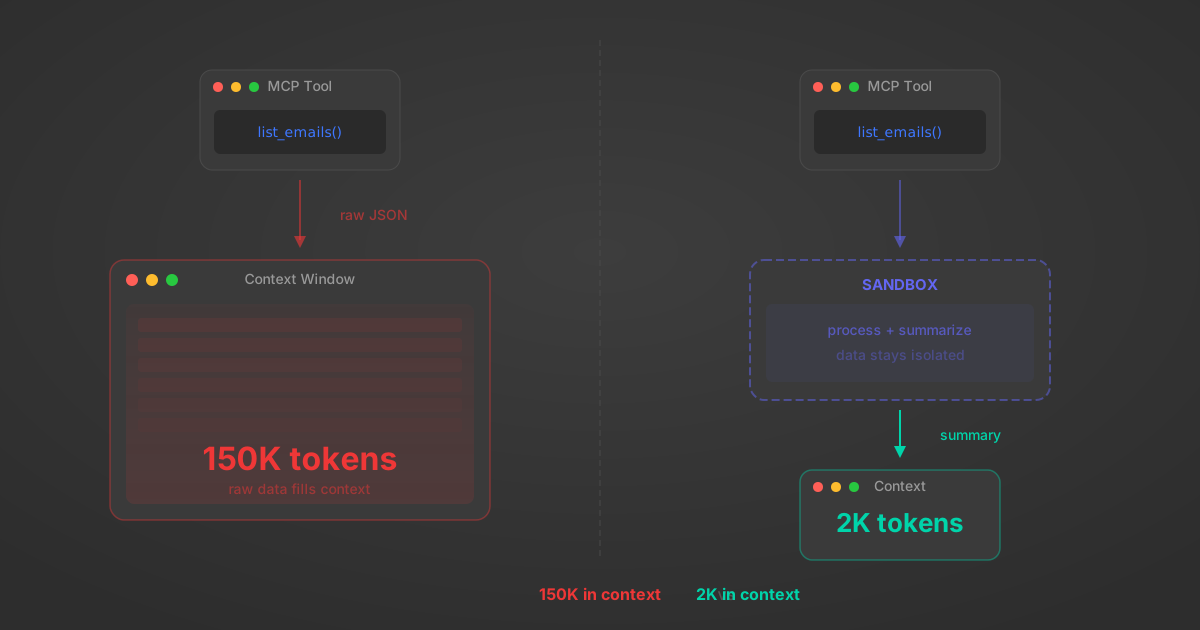
MCP Code Mode: Keeping Tool Responses Out of Agent Context
Anthropic's code_execution processes data already in context. Custom MCP code mode keeps raw tool responses in a sandbox. 14K tokens vs 500.
11 min
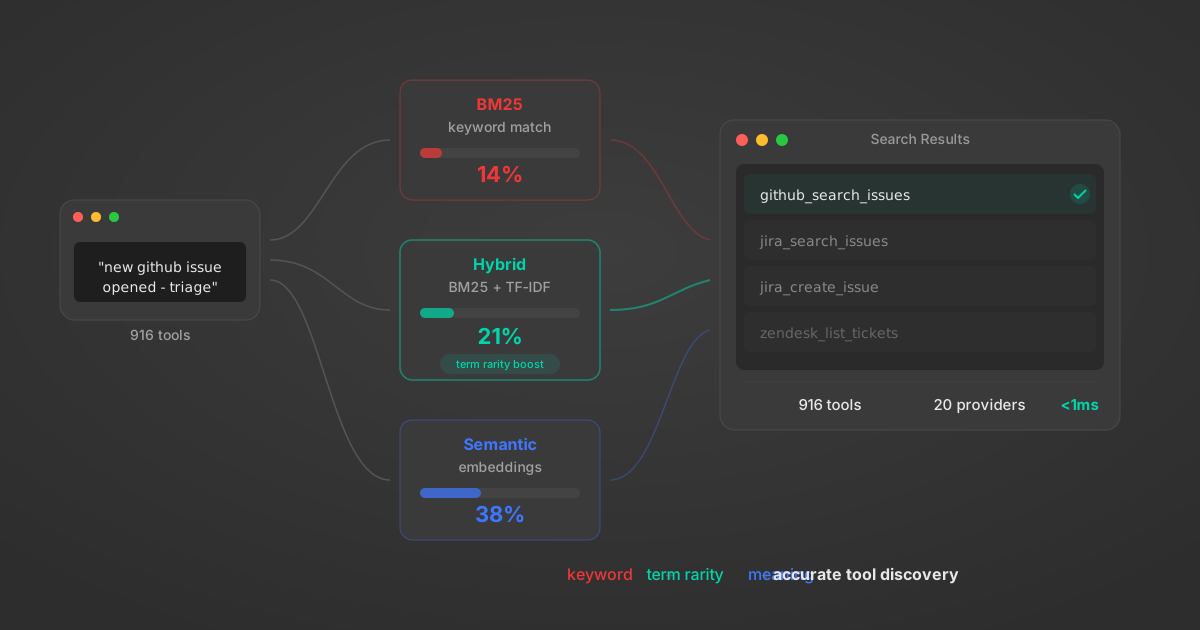
Comparing BM25, TF-IDF, and Hybrid Search for MCP Tool Discovery
Benchmarking BM25, TF-IDF, and hybrid search for MCP tool discovery across 916 tools. The 80/20 TF-IDF/BM25 hybrid hits 21% Top-1 accuracy in under 1ms.
10 min
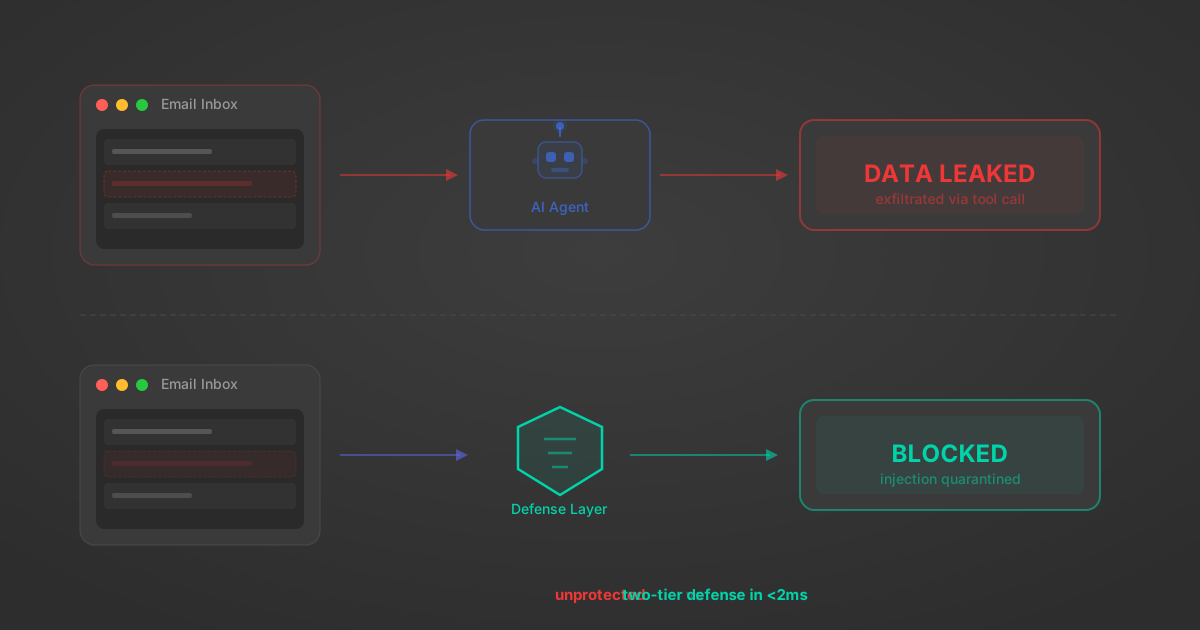
Indirect Prompt Injection Defense for MCP Tools: A Technical Guide
MCP tools that read emails, CRM records, and tickets are indirect prompt injection vectors. Here's how we built a two-tier defense that scans tool results in ~11ms.
12 min
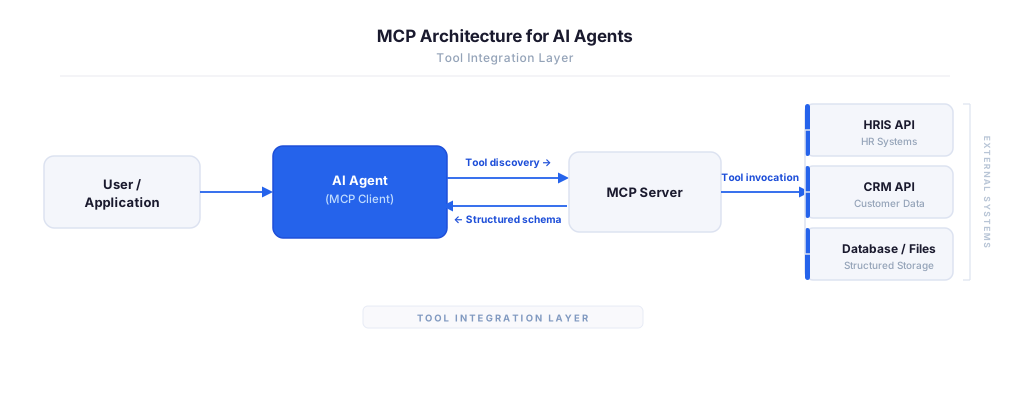
MCP vs A2A: Architecture, Security, and When to Use Each
MCP vs A2A: what each protocol standardizes, how they differ, their shared security risks including indirect prompt injection, and when to use one, both, or a hybrid architecture.
12 min
MCP vs API: What Hundreds of Connector Builds Taught Us
MCP wraps APIs, it doesn't replace them. After building hundreds of connectors that serve both, here's when each approach wins.
14 min read
OneSignal MCP Server FAQ
Does StackOne have a OneSignal MCP server?
OneSignal MCP server vs direct API integration — what's the difference?
How does OneSignal authentication work for AI agents?
origin_owner_id.Are OneSignal MCP tools vulnerable to prompt injection?
What is the context bloat of a OneSignal agent and how do I avoid it?
Can I limit which actions my OneSignal agent can access?
Can I create custom agent actions for my OneSignal MCP server?
When should I NOT use a OneSignal MCP server?
What AI frameworks and AI clients does the StackOne OneSignal MCP server support?
Put your AI agents to work
All the tools you need to build and scale AI agent integrations, with best-in-class connectivity, execution, and security.