Outbound Prospecting
Outbound on Autopilot
Use StackOne to connect your AI agent to your CRM, sales engagement, and messaging tools to automate outbound prospecting.



AI Agents
Connect
MCP and A2A to REST, SOAP, and proprietary APIs.
Optimize
Tool discovery, data shaping, and reliable execution.
Secure
Scoped permissions, audit trails, and observability.
StackOne Integration Layer


 StackOne Integration Layer
Connect
200+ connectors, build your own, and multi-protocol support.
Optimize
Context, token, and speed optimization infrastructure.
Secure
Permissions API and prompt injection protection.
What Can AI Agents Do for Outbound Prospecting?
Your agent handles the full outbound pipeline — from prospect activation to warm-lead handoff — personalizing outreach and tracking engagement across every channel.
Activate Prospects
Import prospects from Salesforce or HubSpot via CRM list sync, ICP match detection, or manual selection. The agent picks up new leads automatically.
Enrich and Assign Sequences
Pull firmographic and contact data from the CRM, then assign the right multi-step sequence template based on persona, industry, and deal stage.
Hand Off Warm Leads
Aggregate engagement scores and route prospects exceeding the threshold to the assigned AE with context notes via Salesforce. Notify the rep via Slack.
Log and Report
Write all sequence activity back to the CRM. Mark outcomes — converted, nurture, or disqualified — and report on reply and conversion rates for continuous optimization.
Activate Prospects
Import prospects from Salesforce or HubSpot via CRM list sync, ICP match detection, or manual selection. The agent picks up new leads automatically.
Enrich and Assign Sequences
Pull firmographic and contact data from the CRM, then assign the right multi-step sequence template based on persona, industry, and deal stage.
Hand Off Warm Leads
Aggregate engagement scores and route prospects exceeding the threshold to the assigned AE with context notes via Salesforce. Notify the rep via Slack.
Log and Report
Write all sequence activity back to the CRM. Mark outcomes — converted, nurture, or disqualified — and report on reply and conversion rates for continuous optimization.
Why Building a Good Outbound Prospecting Agent Is Hard
Connecting CRM and Sales Engagement Systems
The agent needs connectors to Salesforce, HubSpot, Outreach, Salesloft, and Lemlist. Building OAuth flows, pagination, and rate-limit handling per system is months of engineering before the agent sends its first email.
Each Provider Handles Auth Differently
OAuth flows, API keys, and token refresh cycles vary across every CRM and sales engagement platform. Building multi-tenant credential management that handles rotation, revocation, and scope differences is a security engineering project on its own.
Engagement Events Are Scattered Across Providers
Email opens, clicks, replies, and bounces surface through different event delivery mechanisms per platform. Outreach uses webhooks, others require polling. Building and maintaining that infrastructure across each provider is costly and brittle.
Untrusted Prospect Data Risks Prompt Injection
The agent ingests replies, form fills, and CRM notes from external sources. Without input guards, malicious content embedded in prospect messages can hijack agent behavior — a documented risk that led to a CVSS 9.4 vulnerability in Salesforce Agentforce.
How StackOne Makes Outbound Prospecting Agents Possible
Everything your outbound agent needs to execute sequences, track engagement, and hand off warm leads — with the controls IT demands.
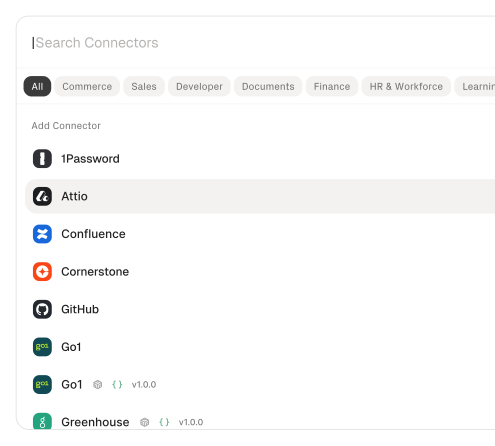
200+ connectors with 10K+ agent-optimized actions
Pre-built connectors for Salesforce, HubSpot, Outreach, Salesloft, Lemlist, Gmail, and Slack with full native action coverage and agent instructions included.
Managed Auth handles credentials across providers
OAuth flows, API keys, and token refresh managed per tenant for every connected CRM and sales engagement platform — agents never touch raw credentials.
Search and execute finds the right action
Agent searches StackOne's action catalog by natural language and executes the matching CRM or sales engagement action — no pre-loading thousands of tool definitions.
Managed Webhooks deliver engagement events consistently
StackOne subscribes to engagement events across all sales engagement providers, with synthetic polling where native webhooks are unavailable. One consistent event stream regardless of provider.
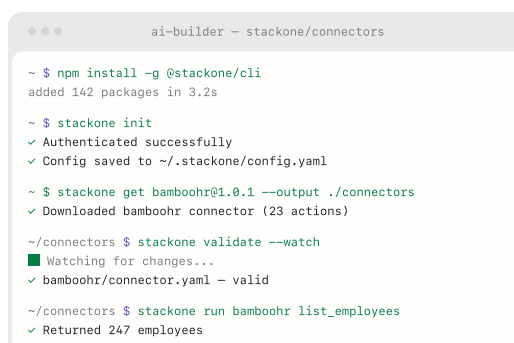
Connector Studio extends to any sales tool
Build custom connectors for niche CRMs and sequencers like Pipedrive, Close, or custom internal tools via REST, SOAP, or GraphQL — no waiting on vendor support.
Defender blocks prompt injection from prospect data
StackOne Defender screens inbound prospect replies and CRM field content for injection attempts before the agent processes them, preventing adversarial content from manipulating outreach behavior.
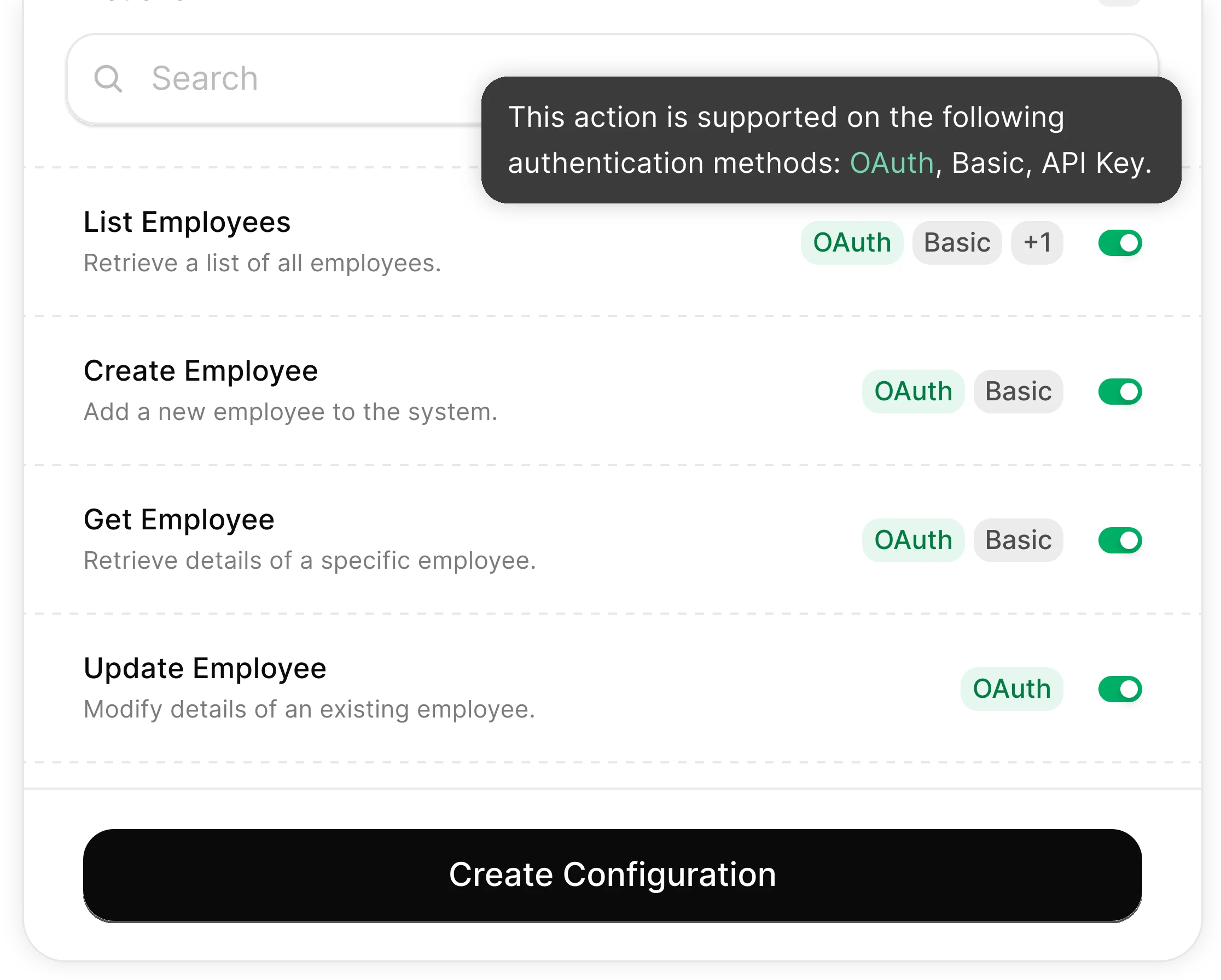
You Control What the Agent Can Do
Scoped permissions define exactly which CRM fields the agent reads and which outreach actions it can trigger. Full audit trail of every operation.
Integrates with your entire sales stack. Whatever it is.
Connect Any Agent to Automate Outbound Prospecting

Any Agent Framework
Claude, OpenAI, LangChain, Vercel AI SDK, CrewAI, Pydantic AI — StackOne works with every major agent framework out of the box.


Any Agent Builder
Whether you're building with code, a visual builder, or an enterprise platform — StackOne provides the integration layer your agent needs.
Connect Your Agent to Your Sales Stack
Start building in minutes. MCP connectors to every system your agent needs.
Frequently Asked Questions
Connect Your Agent to Your Sales Stack
Start building in minutes. MCP connectors to every system your agent needs.