Inbound Lead Qualification
Qualify Every Lead Instantly
Use StackOne to connect your AI agent to your CRM, marketing automation, and messaging tools to automate inbound lead qualification and routing.




AI Agents
Connect
MCP and A2A to REST, SOAP, and proprietary APIs.
Optimize
Tool discovery, data shaping, and reliable execution.
Secure
Scoped permissions, audit trails, and observability.
StackOne Integration Layer


 StackOne Integration Layer
Connect
200+ connectors, build your own, and multi-protocol support.
Optimize
Context, token, and speed optimization infrastructure.
Secure
Permissions API and prompt injection protection.
What Can AI Agents Do for Inbound Lead Qualification?
Your agent captures every inbound lead, scores against ICP criteria, enriches with firmographic data, and routes qualified leads to the right rep.
Capture Inbound Leads
Detect new leads from form submissions, demo requests, or campaigns in Salesforce, HubSpot, or Pipedrive via webhooks or polling.
Deduplicate and Enrich
Search existing contacts in the CRM, merge duplicates, and enrich with firmographic data — company size, industry, and tech stack — from connected enrichment tools or CRM fields.
Score Against ICP Criteria
Assess firmographic fit, behavioral signals, and demographic match. Classify each lead into a tier — Hot, Warm, or Cold — based on scoring rules the agent applies automatically.
Disqualify and Filter
Flag leads matching exclusion criteria — competitors, personal emails, existing customers — and route them to a disqualified status before they consume rep time.
Route to the Right Rep
Apply territory or round-robin routing rules, assign the lead in Salesforce or HubSpot, and send a real-time alert to the rep via Slack with the enrichment summary.
Create Follow-Up Tasks
Generate follow-up tasks or sequence enrollments in the CRM with SLAs based on lead tier. Hot leads get immediate outreach; warm leads enter a nurture cadence.
Capture Inbound Leads
Detect new leads from form submissions, demo requests, or campaigns in Salesforce, HubSpot, or Pipedrive via webhooks or polling.
Deduplicate and Enrich
Search existing contacts in the CRM, merge duplicates, and enrich with firmographic data — company size, industry, and tech stack — from connected enrichment tools or CRM fields.
Score Against ICP Criteria
Assess firmographic fit, behavioral signals, and demographic match. Classify each lead into a tier — Hot, Warm, or Cold — based on scoring rules the agent applies automatically.
Disqualify and Filter
Flag leads matching exclusion criteria — competitors, personal emails, existing customers — and route them to a disqualified status before they consume rep time.
Route to the Right Rep
Apply territory or round-robin routing rules, assign the lead in Salesforce or HubSpot, and send a real-time alert to the rep via Slack with the enrichment summary.
Create Follow-Up Tasks
Generate follow-up tasks or sequence enrollments in the CRM with SLAs based on lead tier. Hot leads get immediate outreach; warm leads enter a nurture cadence.
Why Building a Good Lead Qualification Agent Is Hard
Connecting to 10+ CRM and Marketing Providers
A lead qualification agent needs to read leads from Salesforce, HubSpot, or Pipedrive, push enriched data back, and alert reps via Slack. Building and maintaining connectors for each — OAuth scopes, cursor-based pagination, per-provider rate limits — is a massive lift.
Token Cost Grows with CRM Action Catalogs
Without search-first architecture, the agent pre-loads every CRM action definition into its context window. CRMs like Salesforce expose 370+ actions — that burns tokens on irrelevant tools before the agent even starts scoring a lead.
Lead Form Data Carries Prompt Injection Risk
Inbound form fields — company name, job title, notes — are untrusted input fed directly into the agent's context. A malicious submission can embed instructions that hijack agent behavior, overriding scoring logic or exfiltrating data.
Getting High Accuracy Requires Purpose-Built Tools
Qualifying leads requires searching contacts, creating records, assigning owners, and creating tasks in a single flow. Raw CRM API wrappers expose too many low-level details, lead to hallucinated parameters, and fail silently.
How StackOne Makes Lead Qualification Agents Possible
Everything your lead qualification agent needs to score leads, enrich with CRM data, and route to reps — with the controls IT demands.
200+ connectors with 10K+ agent-optimized actions
Pre-built connectors for Salesforce, HubSpot, Pipedrive, Attio, Zoho CRM, and Slack with full native action coverage and agent instructions included.
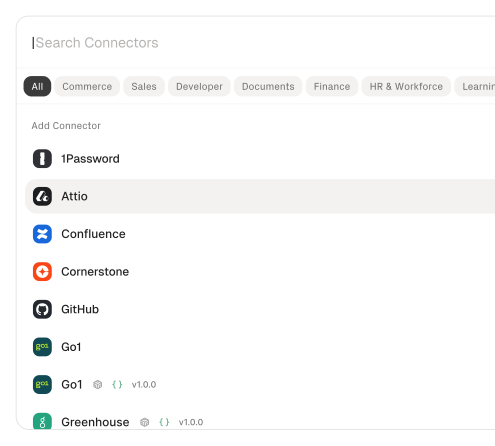
Managed Auth handles credentials across providers
OAuth flows, API keys, and token refresh managed per tenant for every connected CRM and marketing platform — agents never touch raw credentials.
Search and execute finds the right action
Agent searches StackOne's action catalog by natural language and executes the matching CRM or marketing action — no pre-loading thousands of tool definitions.
Managed Webhooks deliver lead events consistently
StackOne subscribes to lead lifecycle events across connected CRMs, handling registration, retries, and delivery differences so the agent receives a consistent event stream.
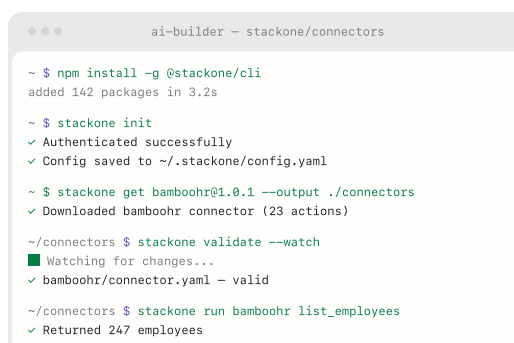
Connector Studio extends to any system
Build custom connectors for unsupported CRMs or internal enrichment systems via REST, SOAP, or GraphQL — no waiting on vendor support.
Defender blocks prompt injection from form data
StackOne Defender screens inbound lead form text for injection attempts before the agent processes it, preventing adversarial content from manipulating scoring or routing behavior.
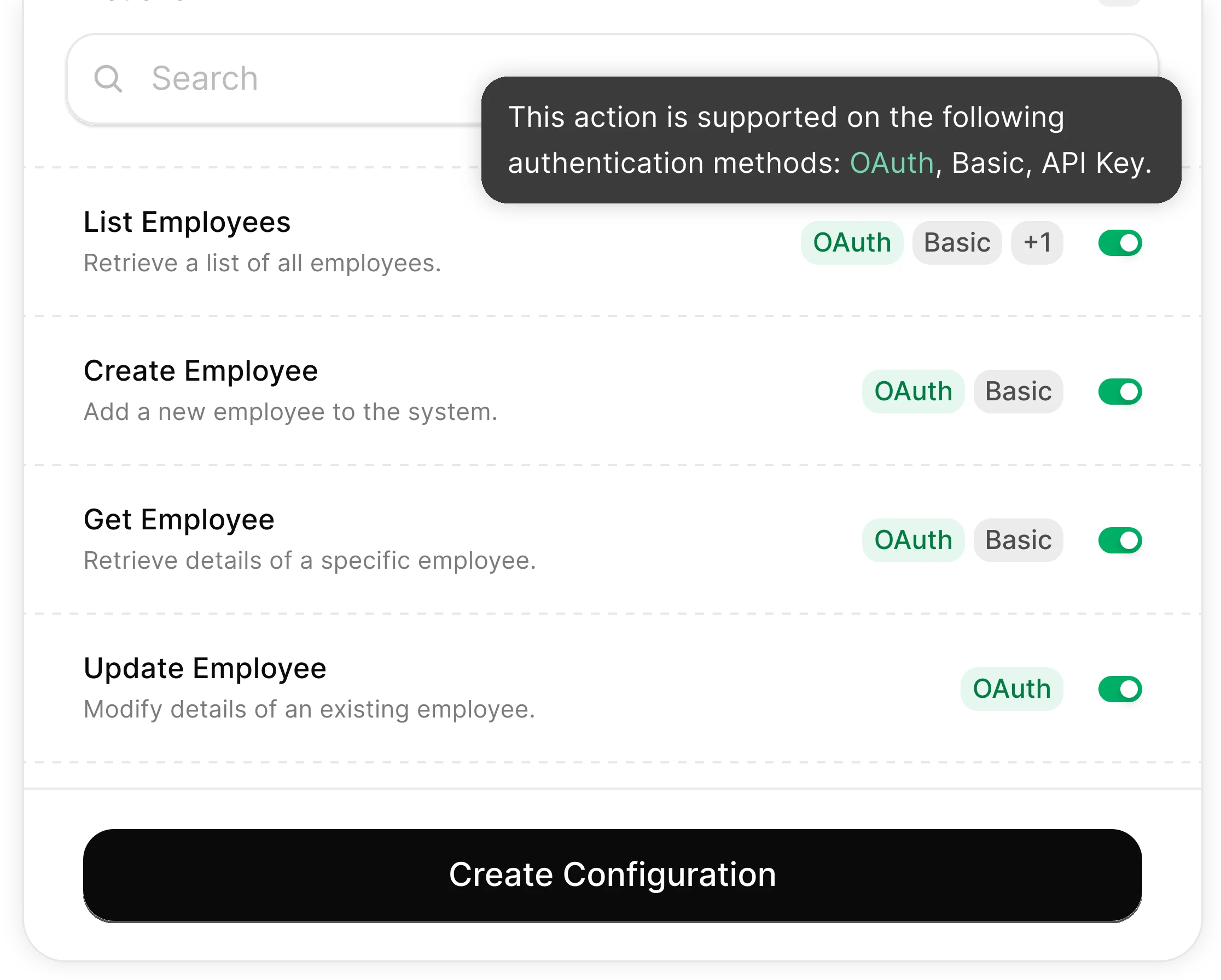
You Control What the Agent Can Do
Scoped permissions define exactly which lead fields the agent reads and which CRM actions it can trigger. Full audit trail of every operation.
Integrates with your entire sales stack. Whatever it is.
Connect Any Agent to Automate Lead Qualification

Any Agent Framework
Claude, OpenAI, LangChain, Vercel AI SDK, CrewAI, Pydantic AI — StackOne works with every major agent framework out of the box.


Any Agent Builder
Whether you're building with code, a visual builder, or an enterprise platform — StackOne provides the integration layer your agent needs.
Connect Your Agent to Your Sales Stack
Start building in minutes. MCP connectors to every system your agent needs.
Frequently Asked Questions
Connect Your Agent to Your Sales Stack
Start building in minutes. MCP connectors to every system your agent needs.