Cash Application
Cash Applied. Automatically.
Use StackOne to connect your AI agent to your accounting, email, and document systems to automate cash application and remittance matching.




AI Agents
Connect
MCP and A2A to REST, SOAP, and proprietary APIs.
Optimize
Tool discovery, data shaping, and reliable execution.
Secure
Scoped permissions, audit trails, and observability.
StackOne Integration Layer


 StackOne Integration Layer
Connect
200+ connectors, build your own, and multi-protocol support.
Optimize
Context, token, and speed optimization infrastructure.
Secure
Permissions API and prompt injection protection.
What Can AI Agents Do for Cash Application?
Your agent parses remittance advice, identifies the payer, matches payments to open invoices, handles deductions, posts cash receipts, and escalates exceptions — end to end.
Identify the Customer
Match the payer to a customer record in QuickBooks or Xero using name, bank account number, or remittance metadata — with fuzzy matching as a fallback.
Match Payments to Invoices
Retrieve open invoices from QuickBooks or Xero and allocate payments using exact amount matching first, then fuzzy rules for partial payments and batch deposits.
Handle Deductions
Classify short-pays by reason — trade promotions, freight claims, early-pay discounts — and route deductions to the relevant team for approval, chargeback, or write-off.
Post Cash Receipts
Apply matched payments to invoices in the AR ledger of QuickBooks or Xero and generate journal entries where the accounting tool permits.
Archive and Reconcile
Verify applied cash equals the deposit total, mark the batch as reconciled, and archive all remittance documents to Google Drive or SharePoint.
Parse Remittance Advice
Receive payment notifications and extract remittance details from inbound emails via Gmail or Outlook, EDI files, or customer portal exports.
Identify the Customer
Match the payer to a customer record in QuickBooks or Xero using name, bank account number, or remittance metadata — with fuzzy matching as a fallback.
Match Payments to Invoices
Retrieve open invoices from QuickBooks or Xero and allocate payments using exact amount matching first, then fuzzy rules for partial payments and batch deposits.
Handle Deductions
Classify short-pays by reason — trade promotions, freight claims, early-pay discounts — and route deductions to the relevant team for approval, chargeback, or write-off.
Post Cash Receipts
Apply matched payments to invoices in the AR ledger of QuickBooks or Xero and generate journal entries where the accounting tool permits.
Archive and Reconcile
Verify applied cash equals the deposit total, mark the batch as reconciled, and archive all remittance documents to Google Drive or SharePoint.
Why Building a Good Cash Application Agent Is Hard
Connecting Accounting, Messaging, and Document Systems
Cash application agents must integrate QuickBooks, Xero, Gmail, Outlook, Google Drive, and SharePoint — each with unique auth flows, pagination patterns, and rate limits. Building and maintaining connectors for each is a massive lift before you write any matching logic.
Writing Matched Payments Back Across Providers
Posting cash receipts to QuickBooks vs. Xero requires different API calls, field mappings, and error handling. Every additional accounting provider your customers use multiplies the integration engineering.
Token Cost Grows with Payment Volume
Without search-first architecture, the agent pre-loads every action definition across accounting and messaging tools into its context window. During high-volume payment runs, that burns tokens on irrelevant tools before matching a single payment.
Remittance Data Carries Prompt Injection Risk
Remittance emails and portal exports contain untrusted free-text fields — payer names, memo lines, invoice descriptions — that an attacker can craft to manipulate agent behavior, misrouting payments or skipping validation steps.
How StackOne Makes Cash Application Agents Possible
Everything your cash application agent needs to parse remittances, match payments, and post receipts — with the controls finance teams demand.
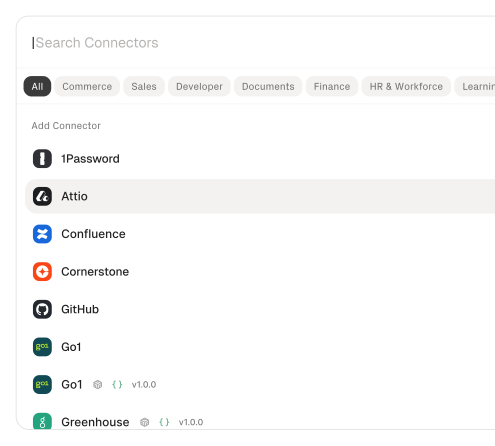
200+ connectors with 10K+ agent-optimized actions
Pre-built connectors for QuickBooks, Xero, Gmail, Outlook, Google Drive, and SharePoint with full native action coverage and agent instructions included.
Managed Auth handles credentials across providers
OAuth flows, API keys, and token refresh managed per tenant for every connected accounting and messaging instance — agents never touch raw credentials.
Search and execute finds the right action
Agent searches StackOne's action catalog by natural language and executes the matching accounting or messaging action — no pre-loading thousands of tool definitions.
Managed Webhooks deliver payment events consistently
StackOne handles webhook and synthetic polling infrastructure across all connected providers with different event delivery mechanisms, so the agent receives consistent payment triggers.
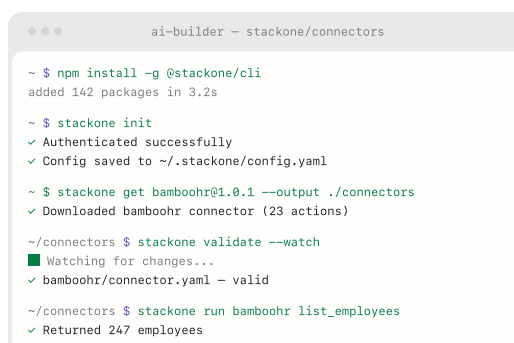
Connector Studio extends to any system
Build custom connectors for unsupported accounting platforms or ERPs via REST, SOAP, or GraphQL — no waiting on vendor support.
Defender blocks prompt injection from remittance data
StackOne Defender screens inbound remittance emails and portal exports for injection attempts before the agent processes them, preventing adversarial content from manipulating payment routing.
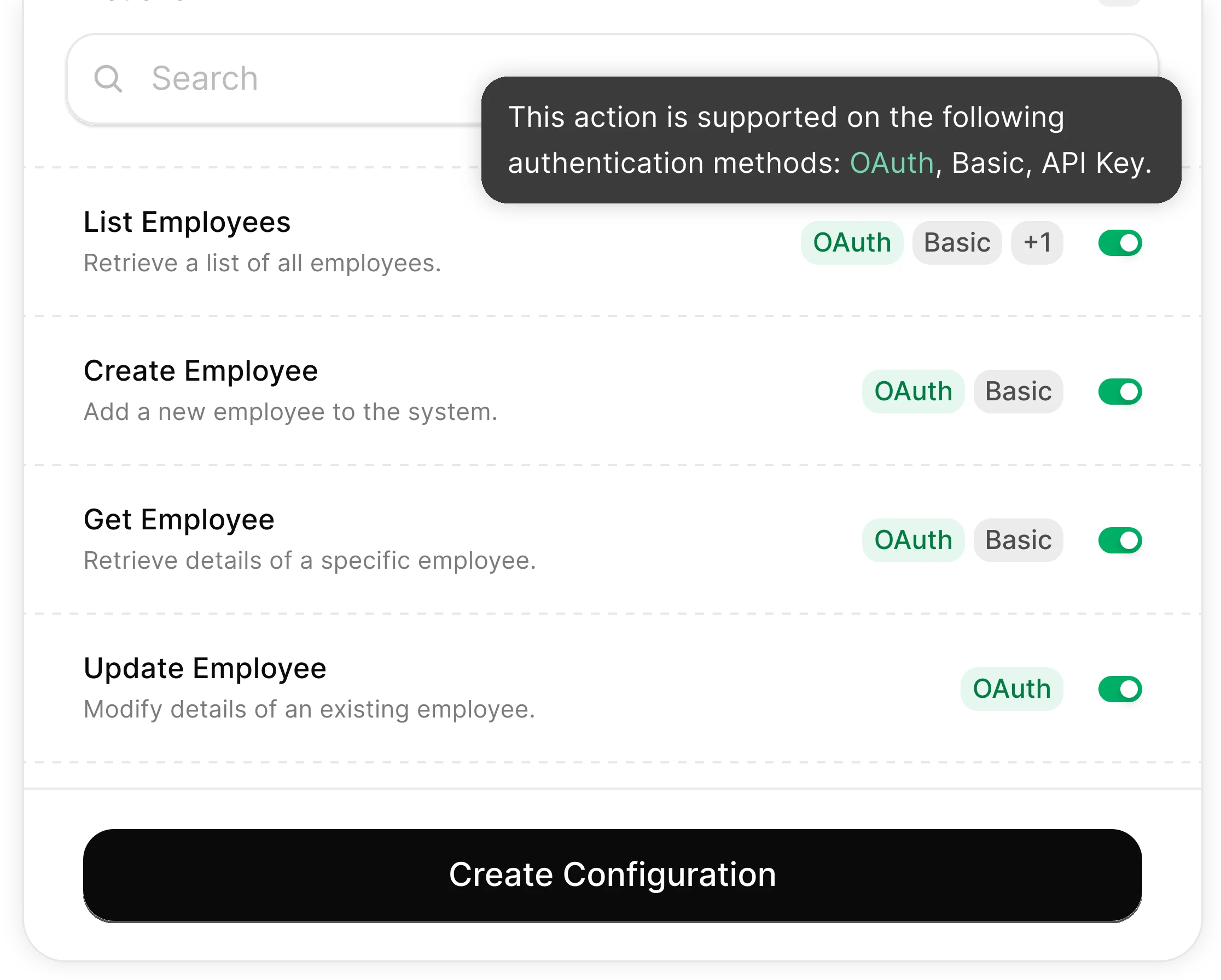
You Control What the Agent Can Do
Scoped permissions define exactly which AR data and actions the agent can access per tenant. Full audit trail of every cash receipt posted for SOX and GAAP compliance.
Integrates with your entire finance stack. Whatever it is.
Connect Any Agent to Automate Cash Application

Any Agent Framework
Claude, OpenAI, LangChain, Vercel AI SDK, CrewAI, Pydantic AI — StackOne works with every major agent framework out of the box.


Any Agent Builder
Whether you're building with code, a visual builder, or an enterprise platform — StackOne provides the integration layer your agent needs.
Connect Your Agent to Your Finance Stack
Start building in minutes. MCP connectors to every system your agent needs.
Frequently Asked Questions
Connect Your Agent to Your Finance Stack
Start building in minutes. MCP connectors to every system your agent needs.