AI Bank Reconciliation
Reconcile Banks in Minutes
Use StackOne to connect your AI agent to your bank feeds, ERP, and accounting systems to automate bank reconciliation.




AI Agents
Connect
MCP and A2A to REST, SOAP, and proprietary APIs.
Optimize
Tool discovery, data shaping, and reliable execution.
Secure
Scoped permissions, audit trails, and observability.
StackOne Integration Layer


 StackOne Integration Layer
Connect
200+ connectors, build your own, and multi-protocol support.
Optimize
Context, token, and speed optimization infrastructure.
Secure
Permissions API and prompt injection protection.
What Can AI Agents Do for Bank Reconciliation?
Your agent handles the full reconciliation pipeline — from transaction ingestion to posting results — matching entries and surfacing exceptions along the way.
Ingest Transactions
Pull unreconciled transactions from QuickBooks, Xero, or NetSuite and retrieve payment data from Stripe.
Normalize and Standardize
Standardize descriptions, currencies, and date formats across bank and ledger datasets so the agent can compare entries directly.
Match Transactions
Match on amount, date, and reference using exact and fuzzy logic. Group many-to-one entries and apply tolerance windows for timing differences.
Flag Exceptions
Compile unmatched items into categorized exception lists — timing differences, missing entries, and amount variances — ready for human review.
Post and Report
Write reconciliation status back to QuickBooks or Xero and generate a summary report for month-end close and audit.
Ingest Transactions
Pull unreconciled transactions from QuickBooks, Xero, or NetSuite and retrieve payment data from Stripe.
Normalize and Standardize
Standardize descriptions, currencies, and date formats across bank and ledger datasets so the agent can compare entries directly.
Match Transactions
Match on amount, date, and reference using exact and fuzzy logic. Group many-to-one entries and apply tolerance windows for timing differences.
Flag Exceptions
Compile unmatched items into categorized exception lists — timing differences, missing entries, and amount variances — ready for human review.
Route for Review
Send exceptions to the accountant via Slack or Gmail with one-click actions to approve, create a journal entry, or dismiss.
Post and Report
Write reconciliation status back to QuickBooks or Xero and generate a summary report for month-end close and audit.
Why Building a Good Bank Reconciliation Agent Is Hard
Connecting to 15+ Accounting and Payment Providers
A reconciliation agent needs to pull bank feeds from Plaid or Stripe, read ledger entries from QuickBooks, Xero, or NetSuite, and post journal entries back. Building and maintaining connectors for each — OAuth refresh cycles, SOAP vs REST, per-provider pagination — is a massive lift.
Token Cost Grows with Transaction Volume
Without search-first architecture, the agent pre-loads every accounting and payment action definition before matching a single transaction. At thousands of transactions per reconciliation cycle, token costs compound fast.
Transaction Data Carries Prompt Injection Risk
Bank descriptions, memo fields, and vendor names come from external sources. A single adversarial string in a transaction description can hijack the reconciliation agent mid-run — misclassifying entries or skipping matches.
Getting High Accuracy Requires Purpose-Built Tools
Accurate reconciliation requires pulling structured transaction data, matching against ledger entries, and posting adjustments — all in the right format per system. Raw accounting API wrappers expose too many low-level details and fail silently on mismatched schemas.
How StackOne Makes Bank Reconciliation Agents Possible
Everything your reconciliation agent needs to pull transactions, match entries, and post results — with the controls finance teams demand.
200+ Connectors, 10K+ Actions
Pre-built connectors for QuickBooks, Xero, NetSuite, Stripe, and PayPal with full native actions mapped and agent instructions. No custom integration code needed.
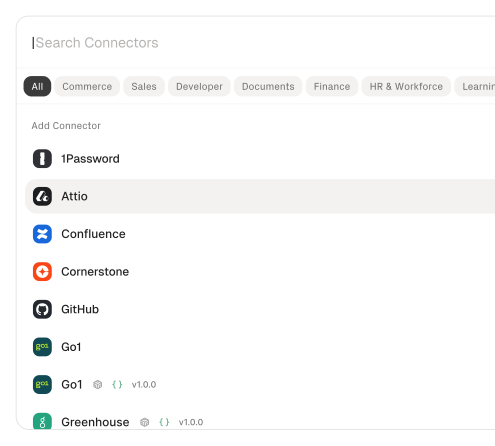
Managed Authentication
OAuth flows, API keys, and token refresh managed per tenant for every connected accounting and payment system — no custom auth code.
Search & Execute
Agent searches StackOne's catalog by natural language and executes the matching accounting or payment action — no pre-loading thousands of tool definitions.
Managed Webhooks
Native and synthetic webhooks detect new transactions across accounting and payment providers, triggering reconciliation automatically without polling.
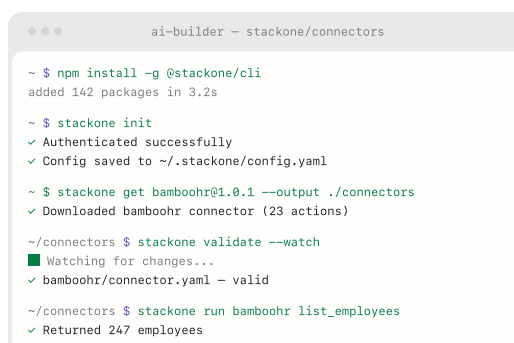
AI Connector Builder
Build custom connectors for unsupported accounting platforms or ERPs via REST, SOAP, or GraphQL using a YAML framework — no waiting on vendor support.
Defender Prompt Injection Guard
Every transaction description and memo field is screened for prompt injection before reaching the agent. Malicious payloads in financial data cannot hijack reconciliation actions.
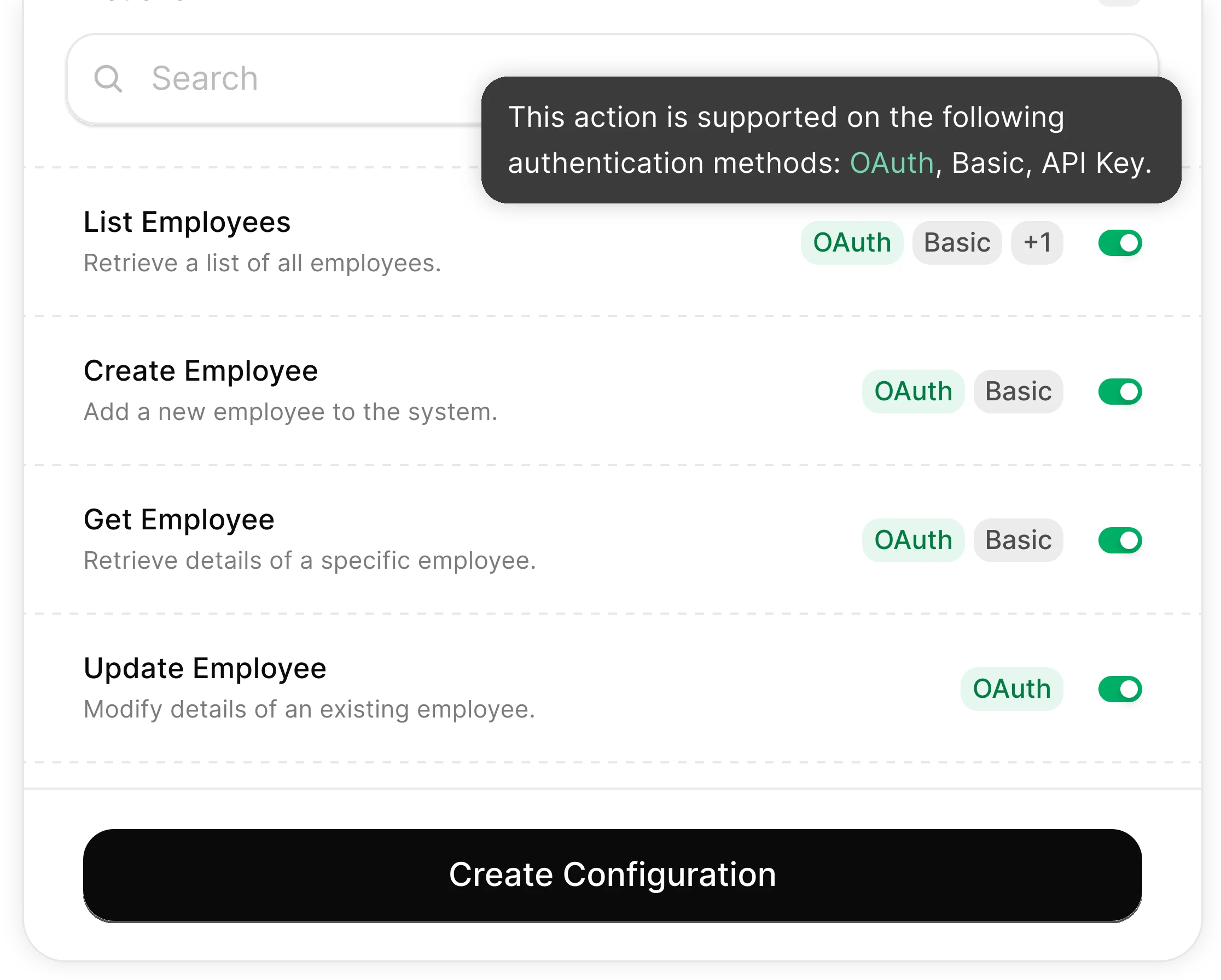
You Control What the Agent Can Do
Scoped permissions define exactly which accounts and actions the agent can access. Full audit trail of every reconciliation read and write for SOX and GAAP compliance.
Integrates with your entire finance stack. Whatever it is.
Connect Any Agent to Automate Bank Reconciliation

Any Agent Framework
Claude, OpenAI, LangChain, Vercel AI SDK, CrewAI, Pydantic AI — StackOne works with every major agent framework out of the box.


Any Agent Builder
Whether you're building with code, a visual builder, or an enterprise platform — StackOne provides the integration layer your agent needs.
Connect Your Agent to Your Finance Stack
Start building in minutes. MCP connectors to every system your agent needs.
Frequently Asked Questions
Connect Your Agent to Your Finance Stack
Start building in minutes. MCP connectors to every system your agent needs.