
Okta Integration for AI Agents
Connect your AI agent to 115 QA'd Okta actions via MCP, A2A, or SDK, with agent authentication, tool-calling execution, and security built-in, plus 21 events to subscribe to.






Okta AI Agent Actions
115 production-ready actions for your agent to do more on Okta.
Okta Webhook Events
21 real-time Okta events your AI agent can subscribe to.
- Active Check Responds to Okta's one-time verification GET by echoing the x-okta-verification-challenge header value back in the JSON response body.
- User Created Emitted when a new user account is created in Okta (provisioned by an admin, sourced from a directory, or self-registered). Maps to Okta event `user.lifecycle.create`.
- User Activated Emitted when a user transitions from STAGED, PROVISIONED, or DEPROVISIONED to ACTIVE status and gains access. Maps to Okta event `user.lifecycle.activate`.
- User Deactivated Emitted when a user is deactivated — access is revoked and sessions are invalidated, but the account is preserved (status DEPROVISIONED). Maps to Okta event `user.lifecycle.deactivate`.
- User Suspended Emitted when a user is temporarily suspended — sign-in is blocked and sessions are invalidated, but the user can be unsuspended without re-provisioning. Maps to Okta event `user.lifecycle.suspend`.
- User Delete Initiated Emitted when a user-deletion request is initiated — the user enters DELETED status. Note that `user.lifecycle.delete.confirmed` is NOT event-hook-eligible — `initiated` is the only signal Okta provides. Maps to Okta event `user.lifecycle.delete.initiated`.
- User Password Reset Emitted when a user's password is reset (admin-initiated, self-service, or via the connector's reset action). Maps to Okta event `user.account.reset_password`.
- User Profile Updated Emitted when one or more user profile attributes are changed (first name, last name, email, phone, custom attributes, etc.). Maps to Okta event `user.account.update_profile`.
- User Universal Logout Emitted when a Universal Logout signal terminates all of a user's sessions and tokens across federated apps. Maps to Okta event `user.authentication.universal_logout`.
- Group Created Emitted when a new group is created in Okta. Maps to Okta event `group.lifecycle.create`.
- Group Deleted Emitted when a group is deleted from Okta. Note that there is no `group.lifecycle.modify` or `update` event — group attribute changes are NOT subscribable via Event Hooks. Maps to Okta event `group.lifecycle.delete`.
- Group Member Added Emitted when a user is added as a member of a group. Maps to Okta event `group.user_membership.add`.
- Group Member Removed Emitted when a user is removed from a group's membership. Maps to Okta event `group.user_membership.remove`.
- Device Activated Emitted when a device transitions from STAGED to ACTIVE status and becomes trusted. Maps to Okta event `device.lifecycle.activate`.
- Device Deactivated Emitted when a device is deactivated and loses its trusted status. Maps to Okta event `device.lifecycle.deactivate`.
- Device Deleted Emitted when a device is permanently removed from Okta. Maps to Okta event `device.lifecycle.delete`.
- App User Assigned Emitted when a user is assigned to an application — the core "who has access to what" IAM signal. Maps to Okta event `application.user_membership.add`.
- App User Removed Emitted when a user is removed from an application — deprovisioning / access-loss signal critical for downstream cleanup. Maps to Okta event `application.user_membership.remove`.
- App Sign-On Access Denied Emitted when an application sign-on policy denies a user access during sign-in. Security / compliance signal — useful for fraud detection, conditional-access alerting, and audit logging. Maps to Okta event `application.policy.sign_on.deny_access`.
- API Token Created Emitted when a new Okta admin API token is created. Security-critical signal — useful for audit logging, anomaly detection, and least-privilege monitoring. Maps to Okta event `system.api_token.create`.
- API Token Revoked Emitted when an Okta admin API token is revoked. Security signal — useful for tracking credential lifecycle and detecting compromised-token responses. Maps to Okta event `system.api_token.revoke`.
Do More, Build Less
Integration Infrastructure for Okta AI Agents




"What impressed us most about StackOne is its ambition and clarity. They're creating infrastructure that modern software and the entire AI agent ecosystem can rely on. The depth of secure integrations, the pace of delivery, and the team's foresight into AI's future uniquely position StackOne to redefine this category."


Luna Schmid, Partner at GV
"We've been impressed by how quickly and deeply StackOne integrates with complex enterprise systems -- and now, with their focus on agent-to-agent interoperability, they're unlocking even more powerful use cases for customers. StackOne delivers all of the above in a universal layer -- without compromise."


Barbry McGann, SVP at Workday Ventures




Product Teams Love Building Agent Integrations With StackOne
A US medical research organisation



Scroll to explore
More Security Integrations Like Okta
150+ actions
119+ actions
87+ actions
78+ actions
71+ actions
69+ actions
68+ actions
Okta AI agent integration resources
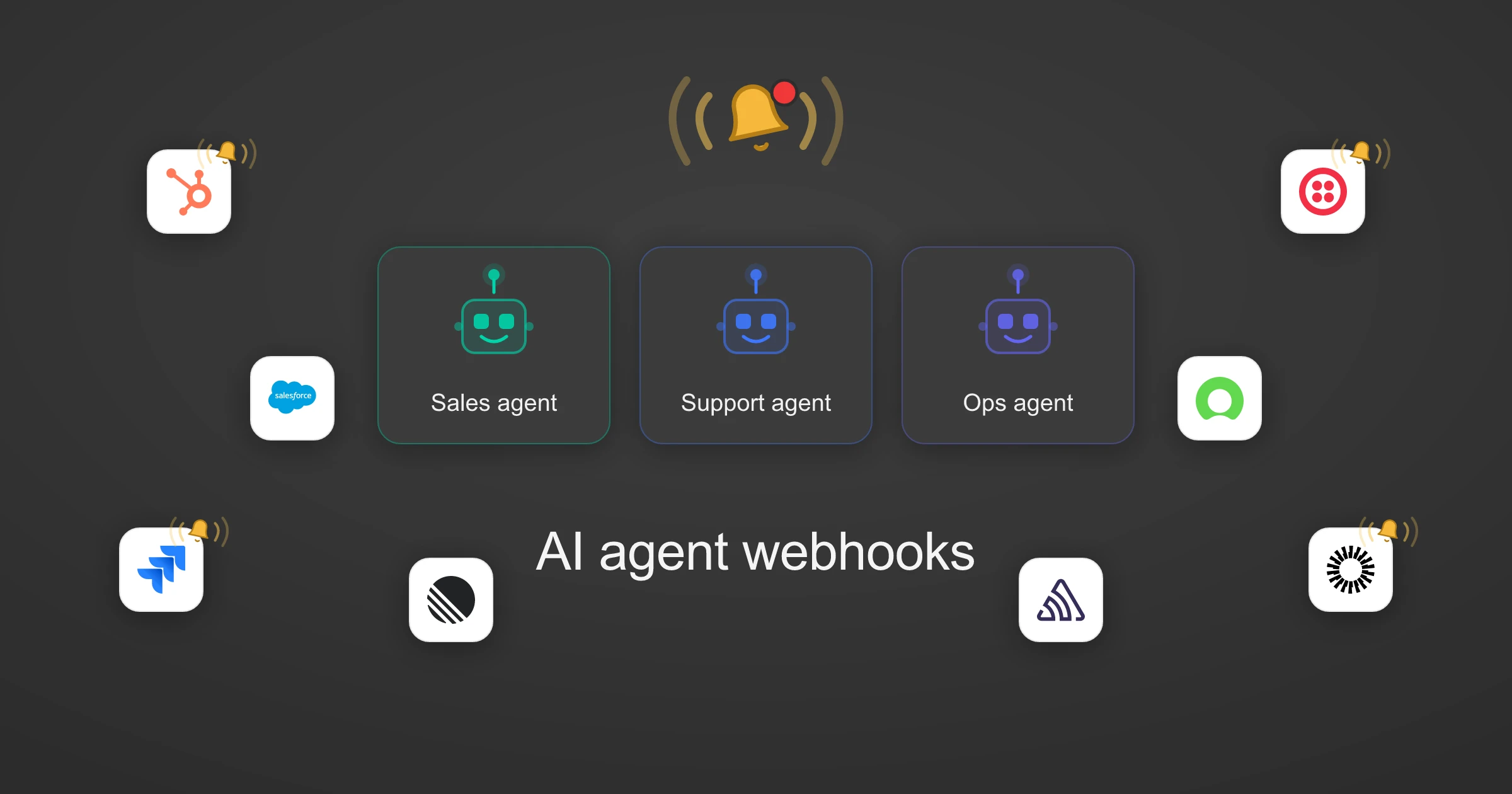
Webhooks for AI agents: why agentic workflows need them purpose-built
AI agents can act the moment a system changes, using webhooks. But webhooks built for software hit three limits in agentic workflows. Here is how to fix each.
7 min read
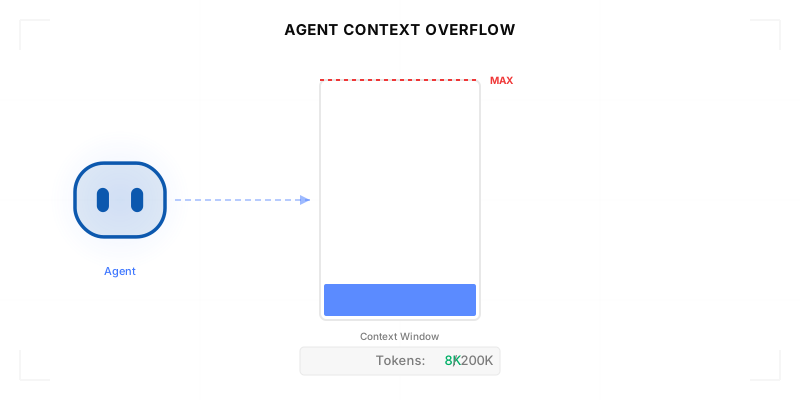
Agentic Context Engineering: Why AI Agents Kill Their Own Context Windows
AI agents exceed their context windows without knowing it. Six failure patterns and seven survival architectures for agentic context engineering.
15 min
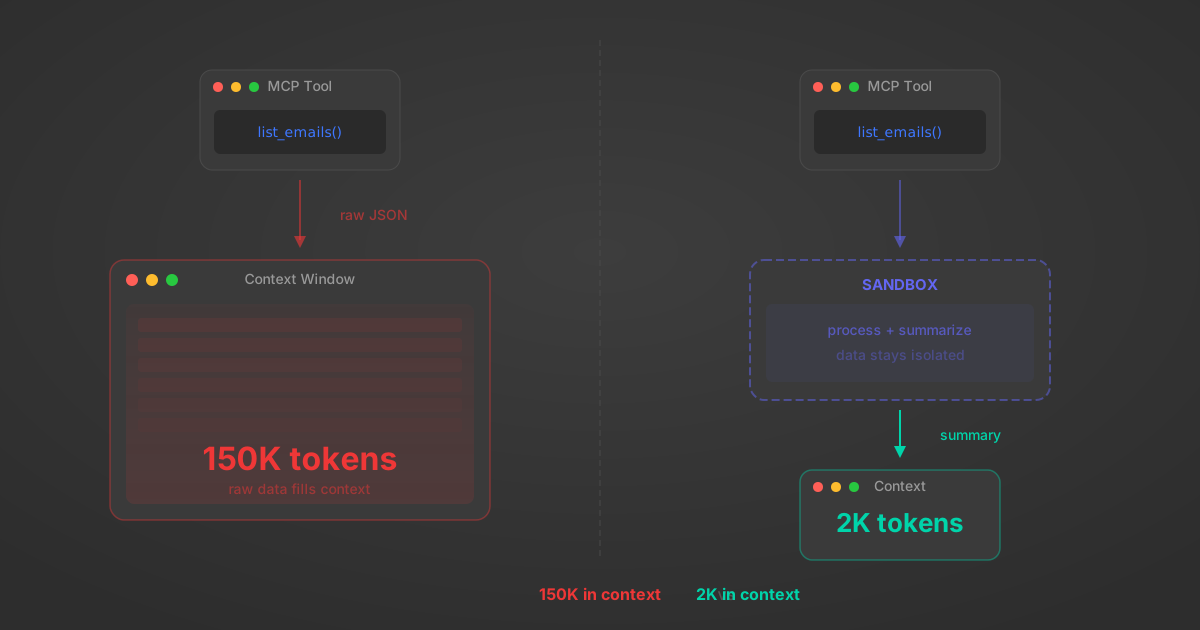
MCP Code Mode: Keeping Tool Responses Out of Agent Context
Anthropic's code_execution processes data already in context. Custom MCP code mode keeps raw tool responses in a sandbox. 14K tokens vs 500.
11 min
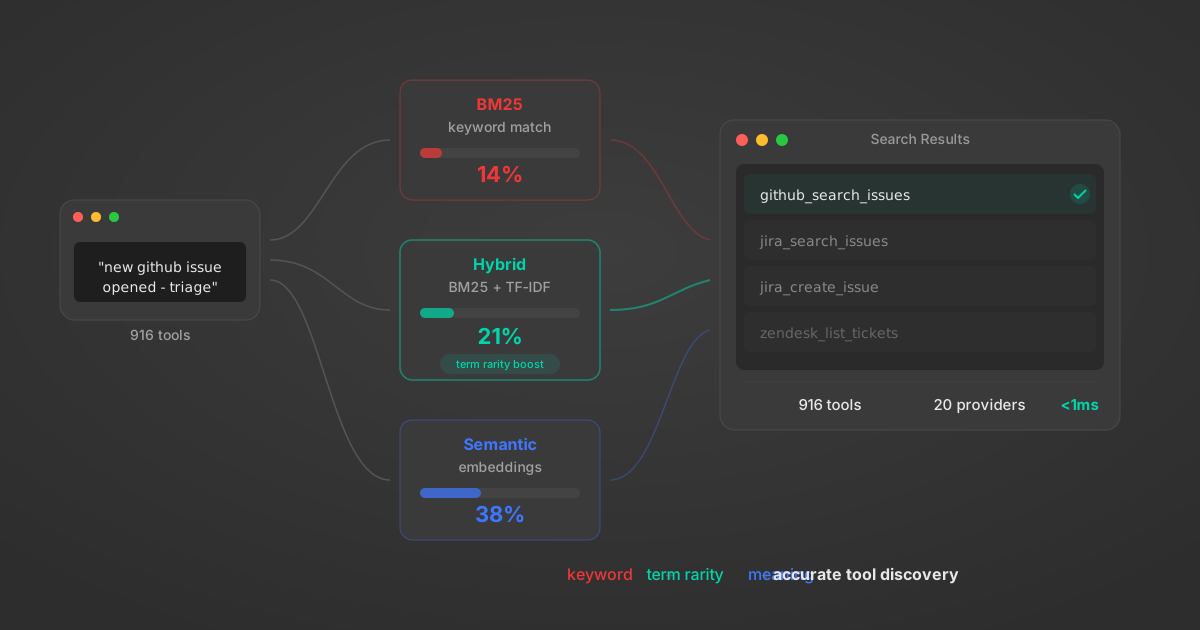
Comparing BM25, TF-IDF, and Hybrid Search for MCP Tool Discovery
Benchmarking BM25, TF-IDF, and hybrid search for MCP tool discovery across 916 tools. The 80/20 TF-IDF/BM25 hybrid hits 21% Top-1 accuracy in under 1ms.
10 min
Put your AI agents to work
All the tools you need to build and scale AI agent integrations, with best-in-class connectivity, execution, and security.