
New Relic MCP Server
for AI Agents
Connect your AI agent to StackOne's New Relic MCP server and give it 135 MCP tools out of the box. Auth, tool execution, and security all managed.
 StackOne





Coverage
135 Agent Actions
Create, read, update, and delete across New Relic — and extend your agent's capabilities with custom actions.

Authentication
Agent Tool Authentication
Per-user OAuth in one call. Your New Relic MCP server gets session-scoped tokens with zero credentials stored on your infra.
Agent Auth →
Security
Agent Protection
Every New Relic tool response scanned for prompt injection in milliseconds — 88.7% accuracy, all running on CPU.
Prompt Injection Defense →
Performance
Max Agent Context. Min Cost.
Free up to 96% of your agent's context window to enhance reasoning and reduce cost, on every New Relic call.
Tools Discovery →What is the New Relic MCP Server?
A New Relic MCP server lets AI agents read and write New Relic data through the Model Context Protocol — Anthropic's open standard for connecting LLMs to external tools. StackOne's New Relic MCP server ships with 135 pre-built actions, fully extensible via the Connector Builder — plus managed authentication, prompt injection defense, observability, and agent execution runtime. Connect it from MCP clients like Claude Desktop, Claude Code, Cursor, Goose, and VS Code, or from agent frameworks like OpenAI Agents SDK, LangChain, and Vercel AI SDK.
All New Relic MCP Tools
Every action from New Relic's API, ready for your agent. Create, read, update, and delete — scoped to exactly what you need.
Accounts
- Create Account
Create a new account within the New Relic organization
- List Accounts
List all New Relic accounts accessible to the authenticated user
- Get Account
Get details for the configured New Relic account
- Update Account
Rename an existing account within the New Relic organization
Alert Policys
- Create Alert Policy
Creates a new alert policy in the account.
- Update Alert Policy
Updates an existing alert policy by ID.
- Delete Alert Policy
Deletes an alert policy by ID.
Alert Conditions
- Create Alert Condition
Creates a new APM alert condition for a policy.
- List Alert Conditions
Retrieves all alert conditions for a given policy.
- Update Alert Condition
Updates an existing APM alert condition by ID.
- Delete Alert Condition
Deletes an alert condition by ID.
NRQL Alert Conditions
- Create NRQL Alert Condition
Creates a new NRQL alert condition for a policy.
- List NRQL Alert Conditions
Retrieves all NRQL alert conditions for a given policy.
- Update NRQL Alert Condition
Updates an existing NRQL alert condition by ID.
- Delete NRQL Alert Condition
Deletes a NRQL alert condition by ID.
External Service Conditions
- Create External Service Condition
Creates a new external service alert condition for a policy.
- List External Service Conditions
Retrieves all external service alert conditions for a given policy.
- Update External Service Condition
Updates an existing external service alert condition by ID.
- Delete External Service Condition
Deletes an external service alert condition by ID.
Synthetics Alert Conditions
- Create Synthetics Alert Condition
Creates a new Synthetics alert condition for a policy.
- List Synthetics Alert Conditions
Retrieves all Synthetics alert conditions for a given policy.
- Update Synthetics Alert Condition
Updates an existing Synthetics alert condition by ID.
- Delete Synthetics Alert Condition
Deletes a Synthetics alert condition by ID.
Applications
- List Applications
Retrieve a paginated list of APM applications with optional filters for name, host, IDs, or language
- Get Application
Retrieve detailed information about a specific APM application by its ID
- Update Application
Update an APM application's name or settings such as Apdex thresholds and real user monitoring
- Delete Application
Remove an APM application that is no longer reporting data
Application Hosts
- List Application Hosts
Retrieve the hosts running a specific APM application
- Get Application Host
Retrieve detailed information about a specific host running an APM application
Application Instances
- List Application Instances
Retrieve the running instances of a specific APM application
- Get Application Instance
Retrieve detailed information about a specific instance of an APM application
Browser Applications
- Create Browser Application
Create a new browser (real user monitoring) application in New Relic
- List Browser Applications
Retrieve a list of browser (real user monitoring) applications with optional filters
Notification Channels
- Create Notification Channel
Creates a new alert notification channel.
- List Notification Channels
Retrieves all alert notification channels in the account.
- Delete Notification Channel
Deletes a notification channel by ID.
Dashboards
- Create Dashboard
Create a new dashboard with pages and widgets
- List Dashboards
Search for dashboards using NerdGraph entity search
- Get Dashboard
Retrieve a dashboard by GUID with all pages and widgets
- Update Dashboard
Update an existing dashboard by GUID
- Delete Dashboard
Delete a dashboard by GUID
Deployments
- Create Deployment
Record a new deployment for a specific APM application
- List Deployments
Retrieve a paginated list of deployments recorded for a specific APM application
- Delete Deployment
Remove a specific deployment record from an APM application
Unified Groups
- List Unified Groups
List unified groups in New Relic.
- Get Unified Group
Get a unified New Relic group by ID.
Unified Organizations
- List Unified Organizations
List unified organizations in New Relic.
- Get Unified Organization
Get a unified New Relic organization by ID.
Unified Roles
- List Unified Roles
List unified roles in New Relic.
- Get Unified Role
Get a unified New Relic role by ID.
Unified Users
- List Unified Users
List unified users in New Relic.
- Get Unified User
Get a unified New Relic user by ID.
Key Transactions
- List Key Transactions
Retrieve a paginated list of key transactions with optional filters for name or IDs
- Get Key Transaction
Retrieve detailed information about a specific key transaction by its ID
Mobile Applications
- Create Mobile Application
Create a new mobile application entity in New Relic via NerdGraph
- List Mobile Applications
Retrieve a paginated list of mobile applications monitored by New Relic
- Get Mobile Application
Retrieve detailed information about a specific mobile application by its ID
Muting Rules
- Create Muting Rule
Creates an alert muting rule to suppress notifications.
- List Muting Rules
Retrieves all alert muting rules for the account.
- Get Muting Rule
Retrieves a specific alert muting rule by its ID.
- Update Muting Rule
Updates an existing alert muting rule.
- Delete Muting Rule
Deletes an alert muting rule by ID.
Notification Destinations
- Create Notification Destination
Create a notification destination for alert delivery
- List Notification Destinations
List all notification destinations in the account
- Get Notification Destination
Retrieve a specific notification destination by ID
- Update Notification Destination
Update an existing notification destination
- Delete Notification Destination
Delete a notification destination by its ID
Notification Workflows
- Create Notification Workflow
Create a notification workflow for alert routing
- List Notification Workflows
List all notification workflows for alert routing
- Get Notification Workflow
Retrieve a specific notification workflow by ID
- Update Notification Workflow
Update an existing notification workflow
- Delete Notification Workflow
Delete a notification workflow by its ID
Service Level Indicators
- Create Service Level Indicator
Create a new service level indicator (SLI) on an entity
- List Service Level Indicators
List all service level indicators (SLIs) defined for an entity
- Update Service Level Indicator
Update an existing service level indicator (SLI)
- Delete Service Level Indicator
Delete a service level indicator (SLI) by its ID
Synthetic Monitors
- List Synthetic Monitors
Search for synthetic monitors using NerdGraph entity search
- Get Synthetic Monitor
Retrieve a synthetic monitor by GUID
- Delete Synthetic Monitor
Delete a synthetic monitor by GUID
Simple Monitors
- Create Simple Monitor
Create a simple ping synthetic monitor
- Update Simple Monitor
Update a simple ping synthetic monitor by GUID
Simple Browser Monitors
- Create Simple Browser Monitor
Create a simple browser synthetic monitor
- Update Simple Browser Monitor
Update a simple browser synthetic monitor by GUID
Private Locations
- Create Private Location
Create a synthetic private location in New Relic
- Delete Private Location
Delete a synthetic private location by GUID
Script API Monitors
- Create Script API Monitor
Create a scripted API monitor that executes custom Node.js scripts to test REST APIs
- Update Script API Monitor
Update a scripted API synthetic monitor by GUID
Script Browser Monitors
- Create Script Browser Monitor
Create a scripted browser monitor that runs Selenium WebDriver scripts for end-to-end web testing
- Update Script Browser Monitor
Update a scripted browser synthetic monitor by GUID
Certificate Check Monitors
- Create Certificate Check Monitor
Create a synthetic monitor that checks SSL certificate expiration
- Update Certificate Check Monitor
Update a certificate check synthetic monitor by GUID
Broken Links Monitors
- Create Broken Links Monitor
Create a synthetic monitor that checks for broken links on a web page
- Update Broken Links Monitor
Update a broken links synthetic monitor by GUID
Step Monitors
- Create Step Monitor
Create a no-code step monitor that executes a sequence of UI actions in a browser
- Update Step Monitor
Update a step synthetic monitor by GUID
Entity Tags
- Add Entity Tags
Add tags to an entity without removing existing tags
- List Entity Tags
List all tags associated with an entity
- Delete Entity Tag
Delete one or more tag keys and all their values from an entity
Users
- Create User
Create a new user in a New Relic authentication domain
- List Users
List all users across authentication domains in the organization
- Update User
Update a user's type or email address in New Relic
- Delete User
Delete a user from New Relic by user ID
Workloads
- Create Workload
Create a new workload to group related entities
- List Workloads
List all workloads defined in the account
- Get Workload
Get a specific workload by its GUID
- Update Workload
Update an existing workload's name or entity membership
- Delete Workload
Delete a workload by its GUID
Other (28)
- Add Channel To Policy
Links one or more notification channels to an alert policy.
- Add Entity To Condition
Associates an entity with an existing alert condition.
- Create Dashboard Snapshot
Generate a shareable snapshot URL for a dashboard page
- Create Change Tracking Deployment
Record a deployment via NerdGraph change tracking API.
- List Alert Policies
Retrieves all alert policies configured in the account.
- List Policy Notification Channels
Retrieves all notification channels, each including its linked policy IDs.
- List Entity Alert Conditions
Retrieves all alert conditions associated with a specific entity.
- List Application Metric Names
Retrieve the available metric names for a specific APM application
- Get Application Metric Data
Retrieve metric timeslice data for a specific APM application
- Search Entities
Search for monitored entities using an NRQL-like query string
- Get Entity
Get detailed information about a specific entity by its GUID
- Get Entity Relationships
Get the relationships between an entity and other connected entities
- Get Entity Golden Metrics
Get the golden metrics and golden tags defined for an entity
- Get Unified Credentials
Get the current New Relic connection's unified credentials and identity.
- List Synthetic Private Locations
List private monitoring locations using entity search
- List Authentication Domains
List all authentication domains in the organization
- Get Current User
Get the currently authenticated user's information
- Remove Channel From Policy
Unlinks a notification channel from an alert policy.
- Remove Entity From Condition
Removes an entity from an existing alert condition.
- Delete Entity Tag Values
Delete specific tag values from an entity while preserving other values under the same key
- Cancel Account
Cancel an account within the New Relic organization
- Undelete Dashboard
Recover a recently deleted dashboard
- Test Notification Destination
Test a notification destination configuration before creating it
- Test Notification Destination By ID
Test an existing notification destination by its ID
- Run NRQL Query
Execute an NRQL query against your New Relic data
- Run NRQL Query With Metadata
Execute an NRQL query and return results with metadata including facets, event types, and time window
- Replace Entity Tags
Replace all tags on an entity with the provided set
- Duplicate Workload
Duplicate an existing workload into the same or a different account
Set Up Your New Relic MCP Server in Minutes
One endpoint. Any framework. Your agent is talking to New Relic in under 10 lines of code.
Agent Frameworks


 JSON
JSON{
"mcpServers": {
"stackone": {
"command": "npx",
"args": [
"-y",
"mcp-remote@latest",
"https://api.stackone.com/mcp?x-account-id=<account_id>",
"--header",
"Authorization: Basic <YOUR_BASE64_TOKEN>"
]
}
}
}Platform Resources
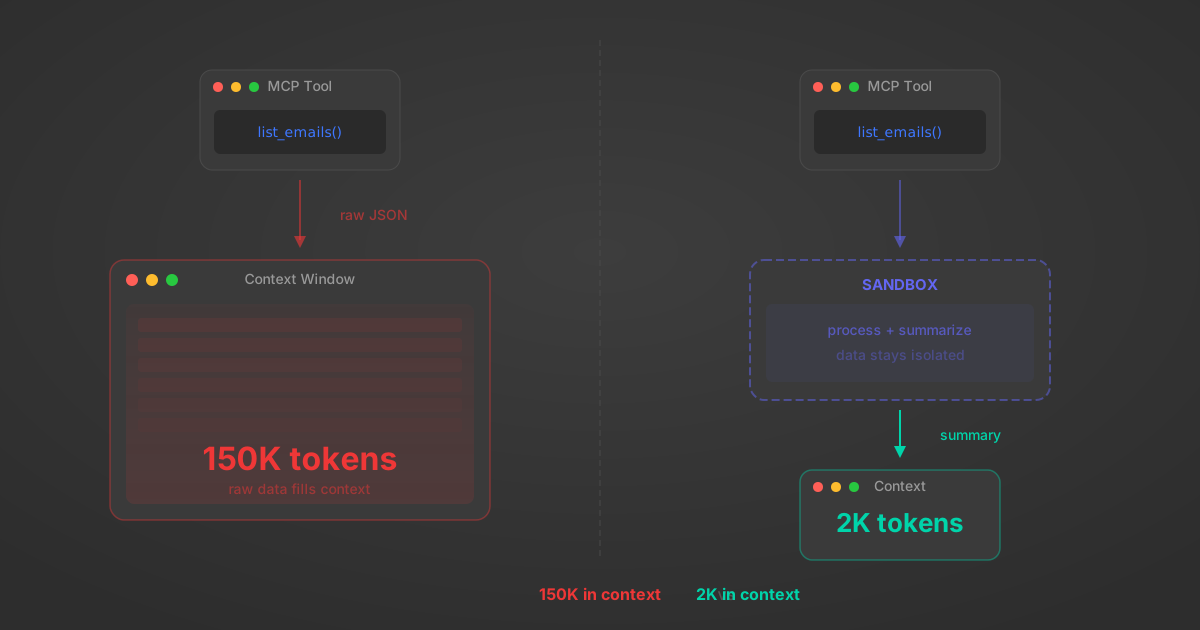
MCP Code Mode: Keeping Tool Responses Out of Agent Context
Anthropic's code_execution processes data already in context. Custom MCP code mode keeps raw tool responses in a sandbox. 14K tokens vs 500.
11 min
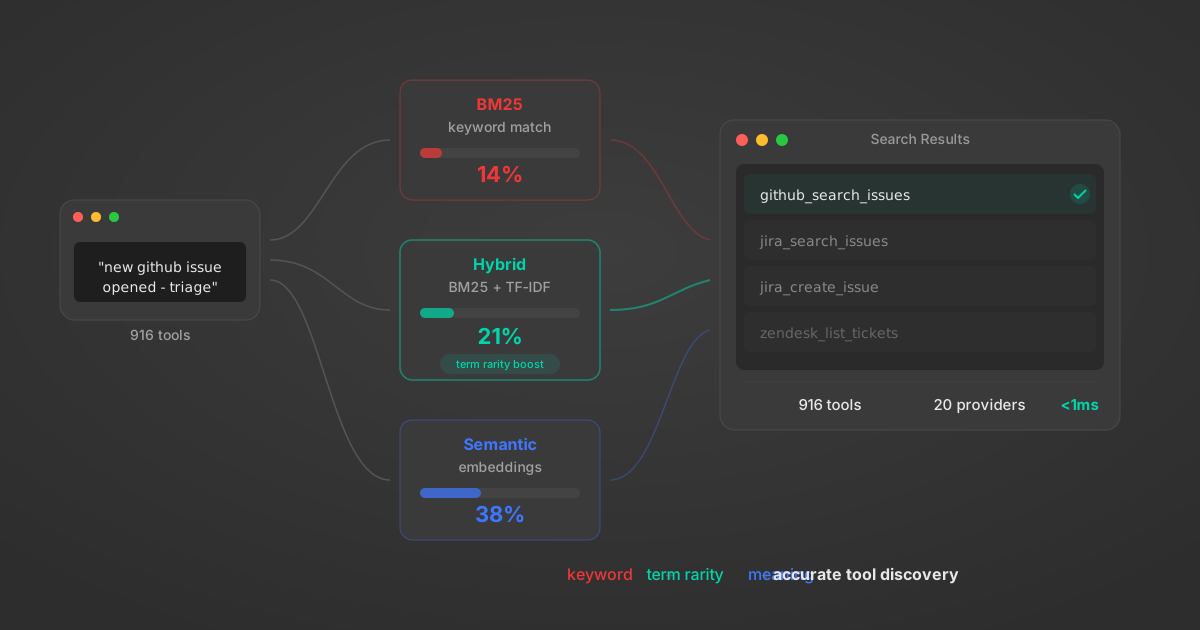
Comparing BM25, TF-IDF, and Hybrid Search for MCP Tool Discovery
Benchmarking BM25, TF-IDF, and hybrid search for MCP tool discovery across 916 tools. The 80/20 TF-IDF/BM25 hybrid hits 21% Top-1 accuracy in under 1ms.
10 min
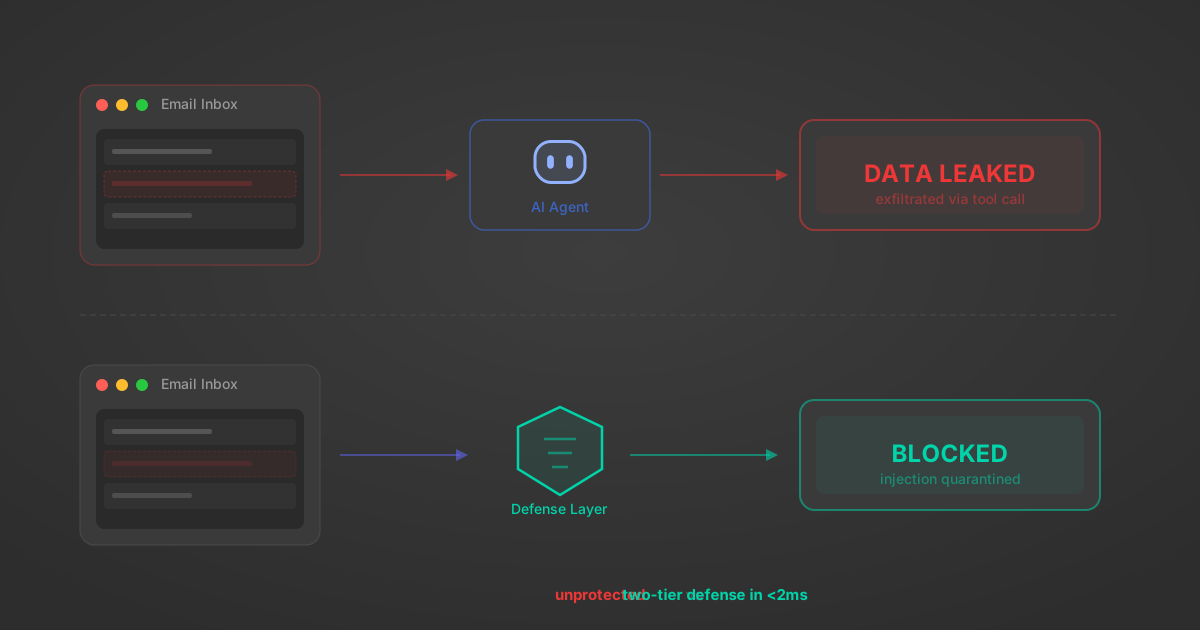
Indirect Prompt Injection Defense for MCP Tools: A Technical Guide
MCP tools that read emails, CRM records, and tickets are indirect prompt injection vectors. Here's how we built a two-tier defense that scans tool results in ~11ms.
12 min
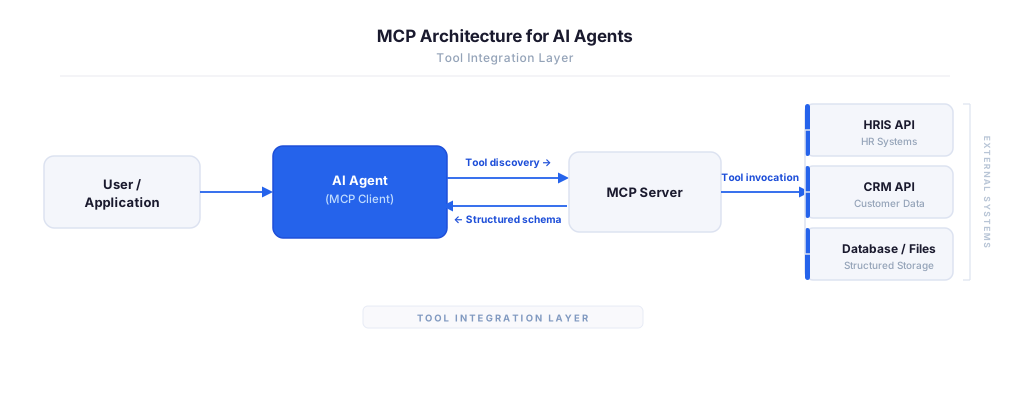
MCP vs A2A: Architecture, Security, and When to Use Each
MCP vs A2A: what each protocol standardizes, how they differ, their shared security risks including indirect prompt injection, and when to use one, both, or a hybrid architecture.
12 min
MCP vs API: What Hundreds of Connector Builds Taught Us
MCP wraps APIs, it doesn't replace them. After building hundreds of connectors that serve both, here's when each approach wins.
14 min read
New Relic MCP Server FAQ
Does StackOne have a New Relic MCP server?
New Relic MCP server vs direct API integration — what's the difference?
How does New Relic authentication work for AI agents?
origin_owner_id.Are New Relic MCP tools vulnerable to prompt injection?
What is the context bloat of a New Relic agent and how do I avoid it?
Can I limit which actions my New Relic agent can access?
Can I create custom agent actions for my New Relic MCP server?
When should I NOT use a New Relic MCP server?
What AI frameworks and AI clients does the StackOne New Relic MCP server support?
Put your AI agents to work
All the tools you need to build and scale AI agent integrations, with best-in-class connectivity, execution, and security.