
Linear MCP Server
for AI Agents
Connect your AI agent to StackOne's Linear MCP server and give it 138 MCP tools out of the box. Auth, tool execution, and security all managed.
 StackOne






Coverage
138 Agent Actions
Create, read, update, and delete across Linear — and extend your agent's capabilities with custom actions.

Authentication
Agent Tool Authentication
Per-user OAuth in one call. Your Linear MCP server gets session-scoped tokens with zero credentials stored on your infra.
Agent Auth →
Security
Agent Protection
Every Linear tool response scanned for prompt injection in milliseconds — 88.7% accuracy, all running on CPU.
Prompt Injection Defense →
Performance
Max Agent Context. Min Cost.
Free up to 96% of your agent's context window to enhance reasoning and reduce cost, on every Linear call.
Tools Discovery →What is the Linear MCP Server?
A Linear MCP server lets AI agents read and write Linear data through the Model Context Protocol — Anthropic's open standard for connecting LLMs to external tools. StackOne's Linear MCP server ships with 138 pre-built actions, fully extensible via the Connector Builder — plus managed authentication, prompt injection defense, observability, and agent execution runtime. Connect it from MCP clients like Claude Desktop, Claude Code, Cursor, Goose, and VS Code, or from agent frameworks like OpenAI Agents SDK, LangChain, and Vercel AI SDK.
All Linear MCP Tools
Every action from Linear's API, ready for your agent. Create, read, update, and delete — scoped to exactly what you need.
Agent Sessions
- List Agent Sessions
Retrieve agent sessions with cursor pagination
- Get Agent Session
Retrieve a specific agent session by ID
Attachments
- Create Attachment
Link an external resource to an issue as an attachment
- Update Attachment
Edit an existing attachment's title, subtitle, icon, or metadata (does NOT remove it — use delete_attachment to remove/detach an attachment)
- Delete Attachment
Remove (delete) an attachment from its issue by attachment ID — this is the action for a 'remove/delete this attachment' request
Comments
- Create Comment
Create a new comment on an issue
- List Comments
Retrieve comments with optional filtering and cursor pagination
- Get Comment
Retrieve a specific comment by ID
- Update Comment
Update an existing comment's body
- Delete Comment
Delete a comment by ID
Customers
- Create Customer
Create a new customer with name, domains, and optional revenue, size, status, and tier
- List Customers
Retrieve customers with optional filtering and cursor pagination
- Get Customer
Retrieve a specific customer by ID
- Update Customer
Update an existing customer's name, domains, revenue, size, status, or tier
- Delete Customer
Delete a customer by ID
Customer Needs
- Create Customer Need
Create a new customer need attached to an issue, project, or comment
- List Customer Needs
Retrieve customer needs with optional filtering and cursor pagination
- Get Customer Need
Retrieve the full details of a specific customer need by its ID (call this after list_customer_needs to return the requested details)
- Update Customer Need
Update a customer need's body, priority, customer, or the issue/project it is linked to
- Delete Customer Need
Delete a customer need by ID
Customer Status
- Create Customer Status
Create a new customer status with a color and a name or displayName, plus optional description and position
- Get Customer Status
Retrieve a specific customer status by ID
- Update Customer Status
Update an existing customer status's name, description, color, or position
- Delete Customer Status
Delete a customer status by ID
Customer Tiers
- Create Customer Tier
Create a new customer tier with name and optional description
- List Customer Tiers
Retrieve customer tiers with cursor pagination
- Get Customer Tier
Retrieve a specific customer tier by its ID (resolve a tier name to its ID via list_customer_tiers first)
- Update Customer Tier
Update an existing customer tier's display name, description, color, or position
- Delete Customer Tier
Delete a customer tier by ID
Custom Views
- Create Custom View
Create a new saved custom view with filters
- Update Custom View
Update an existing custom view's name, filters, or sharing settings
- Delete Custom View
Delete a custom view by ID
Cycles
- Create Cycle
Create a new cycle for a team
- List Cycles
Retrieve cycles with optional filtering and cursor pagination
- Get Cycle
Retrieve a specific cycle by ID
- Update Cycle
Update an existing cycle's name, description, or dates
Documents
- Create Document
Create a new document with title, content, and optional project or initiative association
- List Documents
Retrieve documents with optional filtering and cursor pagination
- Get Document
Retrieve a specific document by ID
- Update Document
Update an existing document's title, content, or associations (does NOT trash a document — use delete_document to move a document to trash)
- Delete Document
Move a document to trash by ID — this is the action for a 'move to trash', 'trash this document', or 'delete document' request
External Users
- List External Users
Retrieve external users for the organization with cursor pagination
- Get External User
Retrieve a specific external user by ID
Favorites
- Create Favorite
Add an item (issue, project, cycle, custom view, document, label, or user) to the user's favorites
- List Favorites
Retrieve the authenticated user's favorites, including the subject each one points to
- Delete Favorite
Remove an item from favorites by favorite ID
Initiatives
- Create Initiative
Create a new initiative to group projects
- List Initiatives
Retrieve initiatives with optional filtering and cursor pagination
- Get Initiative
Retrieve a specific initiative by ID
- Update Initiative
Update an existing initiative's name, description, dates, or other properties
- Delete Initiative
Delete an initiative by ID
Initiative To Project Links
- Create Initiative To Project Link
Link an initiative to a project
- Delete Initiative To Project Link
Remove the link between an initiative and a project
Issues
- Create Issue
Create a new issue in Linear with title, description, team, and optional fields
- List Issues
Retrieve issues with optional filtering by team, project, assignee, or status and cursor pagination
- Get Issue
Retrieve a specific issue by ID or identifier
- Search Issues
Search issues by text term with optional filtering and cursor pagination
- Update Issue
Update an existing issue's title, description, assignee, priority, state, or other fields
- Batch Create Issues
Create multiple issues at once
- Batch Update Issues
Update multiple issues at once by their UUIDs
- Delete Issue
Delete an issue by ID
Issue Relations
- Create Issue Relation
Create a relationship between two issues
- Delete Issue Relation
Remove a relationship between two issues
Issue Labels
- Create Issue Label
Create a new issue label for a team
- List Issue Labels
Retrieve issue labels with optional filtering and cursor pagination
- Get Issue Label
Retrieve a specific issue label by ID
- Update Issue Label
Update an existing issue label's name, description, or color
- Delete Issue Label
Delete an issue label by ID
Projects
- Create Project
Create a new project with name, description, and optional team associations
- List Projects
Retrieve projects in the workspace with optional filtering and cursor pagination
- Get Project
Retrieve a specific project by ID with full details
- Update Project
Update an existing project's details
- Delete Project
Delete a project by ID
Project Labels
- Create Project Label
Create a new project label
- List Project Labels
Retrieve project labels with optional filtering and cursor pagination
- Get Project Label
Retrieve a specific project label by ID
- Update Project Label
Update an existing project label's name, description, or color
- Delete Project Label
Delete a project label by ID
Project Milestones
- Create Project Milestone
Create a new milestone for a project
- List Project Milestones
Retrieve project milestones with optional filtering and cursor pagination
- Get Project Milestone
Retrieve a specific project milestone by ID
- Update Project Milestone
Update an existing project milestone's name, description, or target date
- Delete Project Milestone
Delete a project milestone by ID
Project Status
- Create Project Status
Create a new project status with name, type, and optional description, color, and position
- Get Project Status
Retrieve a specific project status by ID
- Update Project Status
Update an existing project status's name, description, type, color, or position
Reactions
- Create Reaction
Add an emoji reaction to a comment, issue, or project update
- Delete Reaction
Remove an emoji reaction by reaction ID
Releases
- Create Release
Create a new release in a pipeline
- Update Release
Update an existing release's name, version, description, or other properties
- Delete Release
Delete a release by ID
Teams
- Create Team
Create a new team with name and optional settings
- List Teams
Retrieve teams in the workspace with optional filtering and cursor pagination
- Get Team
Retrieve a specific team by ID
- Update Team
Update an existing team's name, description, icon, color, or other properties
- Delete Team
Delete a team by ID
Team Memberships
- Create Team Membership
Add a user to a team, with optional owner role assignment
- List Team Memberships
List the memberships of a team, returning each membership's ID alongside its user — needed to remove a user from a team
- Delete Team Membership
Remove a user from a team
Templates
- Create Template
Create a new issue or project template
- Update Template
Update an existing template's name, description, data, or other properties
- Delete Template
Delete a template by ID
Users
- List Users
Retrieve users in the workspace with optional filtering and cursor pagination, use the filter input to search.
- Get User
Retrieve a specific user by ID
- Update User
Update your own Linear user profile, status, or display settings
Webhooks
- Create Webhook
Create a new webhook to receive HTTP notifications for data updates
- List Webhooks
Retrieve webhooks in the organization with cursor pagination
- Get Webhook
Retrieve a specific webhook by ID
- Update Webhook
Update an existing webhook's URL, enabled status, or resource types
- Delete Webhook
Delete a webhook by ID
Workflow States
- Create Workflow State
Create a new workflow state for a team with a specified type, name, and color
- List Workflow States
Retrieve workflow states with optional filtering and cursor pagination
- Get Workflow State
Retrieve a specific workflow state by ID
- Update Workflow State
Update an existing workflow state's name, color, description, or position
Other (24)
- Create Organization Invite
Invite a new member to the organization by email (admin only)
- Create Initiative Update
Create a status update for an initiative
- Create Notification Subscription
Subscribe to notifications for a team, project, cycle, label, custom view, initiative, or user
- Create Project Update
Create a status update for a project
- Get Unified Credentials
Get the current Linear connection's unified credentials and identity.
- Get Application Info
Get basic information for an application by client ID
- List Customer Statuses
Retrieve customer statuses with cursor pagination
- List Project Statuses
Retrieve project statuses with cursor pagination
- Get Viewer
Retrieve the currently authenticated user (viewer)
- Update Organization
Update organization settings (admin only)
- File Upload
Step 1 of a two-step upload: request a signed upload URL for a file. This action does NOT transfer any file bytes — it only returns a pre-signed URL that the caller must then PUT the file contents to. Use it to prepare an image/video/attachment for use as a Linear asset.
- Suspend User
Suspend a user account (admin only)
- Resolve Comment
Mark a comment thread as resolved
- Unresolve Comment
Reopen a resolved comment thread
- Upsert Customer
Create or update a customer by matching on id or externalId, useful for idempotent sync workflows
- Archive Cycle
Archive a cycle by ID
- Archive Initiative
Archive an initiative by ID
- Issue Filter Suggestion
Suggests filters for an issue view based on a text prompt
- Archive Issue
Archive an issue by ID
- Unarchive Issue
Restore an archived issue by ID
- Archive Project
Archive a project by ID
- Archive Project Status
Archive a project status by ID
- Complete Release
Mark a release as complete in a pipeline
- Rotate Webhook Secret
Rotate the signing secret for a webhook
Set Up Your Linear MCP Server in Minutes
One endpoint. Any framework. Your agent is talking to Linear in under 10 lines of code.
Agent Frameworks


 JSON
JSON{
"mcpServers": {
"stackone": {
"command": "npx",
"args": [
"-y",
"mcp-remote@latest",
"https://api.stackone.com/mcp?x-account-id=<account_id>",
"--header",
"Authorization: Basic <YOUR_BASE64_TOKEN>"
]
}
}
}Check More Project Management MCP Servers
203+ actions
185+ actions
147+ actions
145+ actions
142+ actions
136+ actions
133+ actions
Platform Resources
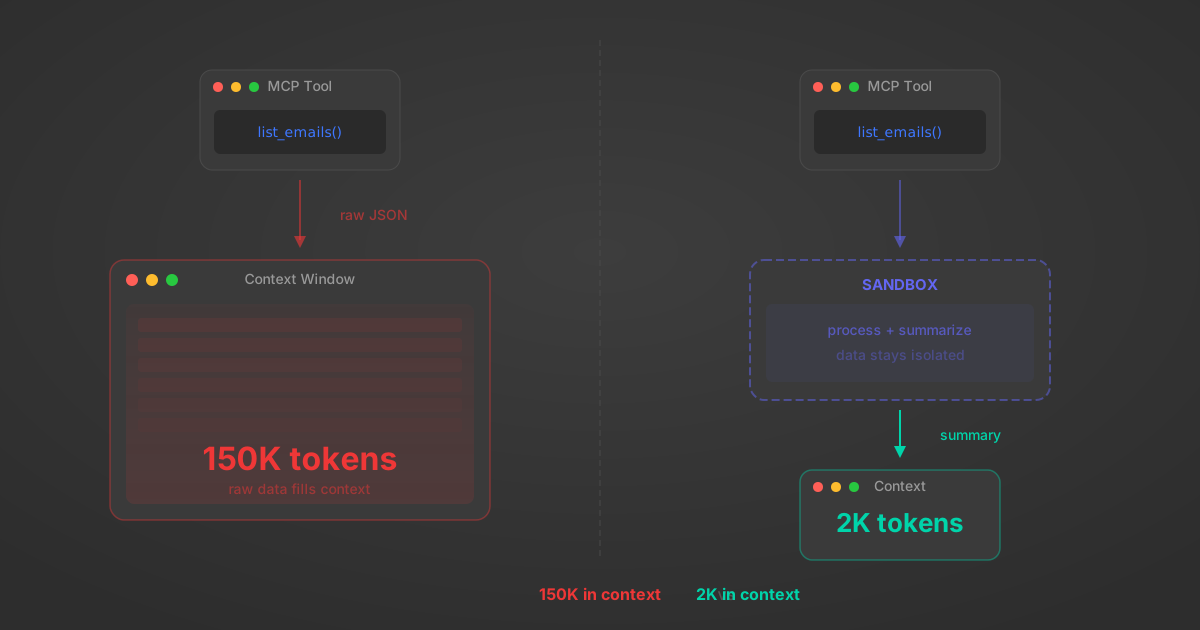
MCP Code Mode: Keeping Tool Responses Out of Agent Context
Anthropic's code_execution processes data already in context. Custom MCP code mode keeps raw tool responses in a sandbox. 14K tokens vs 500.
11 min
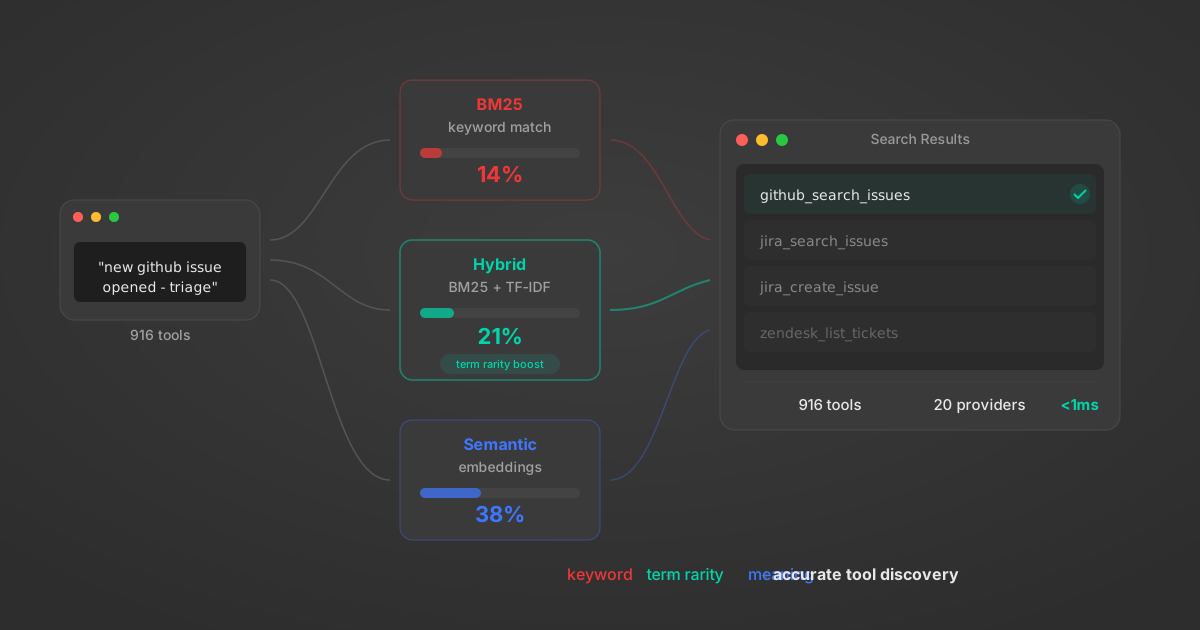
Comparing BM25, TF-IDF, and Hybrid Search for MCP Tool Discovery
Benchmarking BM25, TF-IDF, and hybrid search for MCP tool discovery across 916 tools. The 80/20 TF-IDF/BM25 hybrid hits 21% Top-1 accuracy in under 1ms.
10 min
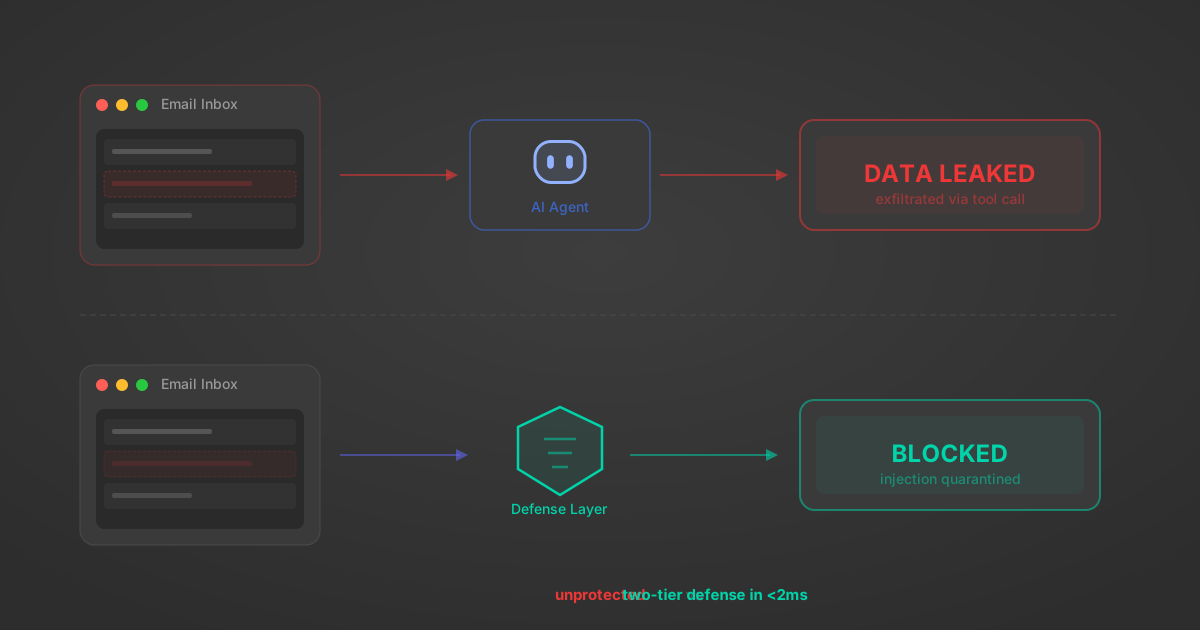
Indirect Prompt Injection Defense for MCP Tools: A Technical Guide
MCP tools that read emails, CRM records, and tickets are indirect prompt injection vectors. Here's how we built a two-tier defense that scans tool results in ~11ms.
12 min
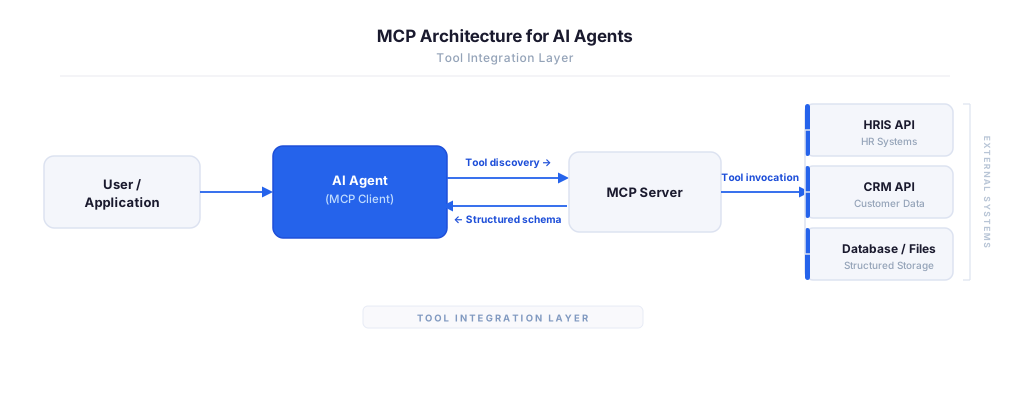
MCP vs A2A: Architecture, Security, and When to Use Each
MCP vs A2A: what each protocol standardizes, how they differ, their shared security risks including indirect prompt injection, and when to use one, both, or a hybrid architecture.
12 min
MCP vs API: What Hundreds of Connector Builds Taught Us
MCP wraps APIs, it doesn't replace them. After building hundreds of connectors that serve both, here's when each approach wins.
14 min read
Linear MCP Server FAQ
Does StackOne have a Linear MCP server?
Linear MCP server vs direct API integration — what's the difference?
How does Linear authentication work for AI agents?
origin_owner_id.Are Linear MCP tools vulnerable to prompt injection?
What is the context bloat of a Linear agent and how do I avoid it?
Can I limit which actions my Linear agent can access?
Can I create custom agent actions for my Linear MCP server?
When should I NOT use a Linear MCP server?
What AI frameworks and AI clients does the StackOne Linear MCP server support?
Put your AI agents to work
All the tools you need to build and scale AI agent integrations, with best-in-class connectivity, execution, and security.