
Kenjo MCP Server
for AI Agents
Connect your AI agent to StackOne's Kenjo MCP server and give it 63 MCP tools out of the box. Auth, tool execution, and security all managed.
 StackOne






Coverage
63 Agent Actions
Create, read, update, and delete across Kenjo — and extend your agent's capabilities with custom actions.

Authentication
Agent Tool Authentication
Per-user OAuth in one call. Your Kenjo MCP server gets session-scoped tokens with zero credentials stored on your infra.
Agent Auth →
Security
Agent Protection
Every Kenjo tool response scanned for prompt injection in milliseconds — 88.7% accuracy, all running on CPU.
Prompt Injection Defense →
Performance
Max Agent Context. Min Cost.
Free up to 96% of your agent's context window to enhance reasoning and reduce cost, on every Kenjo call.
Tools Discovery →What is the Kenjo MCP Server?
A Kenjo MCP server lets AI agents read and write Kenjo data through the Model Context Protocol — Anthropic's open standard for connecting LLMs to external tools. StackOne's Kenjo MCP server ships with 63 pre-built actions, fully extensible via the Connector Builder — plus managed authentication, prompt injection defense, observability, and agent execution runtime. Connect it from MCP clients like Claude Desktop, Claude Code, Cursor, Goose, and VS Code, or from agent frameworks like OpenAI Agents SDK, LangChain, and Vercel AI SDK.
All Kenjo MCP Tools
Every action from Kenjo's API, ready for your agent. Create, read, update, and delete — scoped to exactly what you need.
Employees
- Create Employee
Create a new employee
- List Employees
Get a list of all employees
- Get Employee
Get a specific employee by ID
Employee Accounts
- List Employee Accounts
Get a list of employee account sections
- Update Employee Account
Update the account section of an employee
Employee Personals
- List Employee Personals
Get a list of employee personal sections
- Update Employee Personal
Update the personal section of an employee
Employee Works
- List Employee Works
Get a list of employee work sections
- Update Employee Work
Update the work section of an employee
Employee Financials
- List Employee Financials
Get a list of employee financial sections
- Update Employee Financial
Update the financial section of an employee
Employee Homes
- List Employee Homes
Get a list of employee home sections
- Update Employee Home
Update the home section of an employee
Departments
- Create Department
Create a new department
- List Departments
Get a list of departments
- Get Department
Get a specific department by ID
- Update Department
Update a department
- Delete Department
Delete a department
Offices
- Create Office
Create a new office
- List Offices
Get a list of offices
- Get Office
Get a specific office by ID
- Update Office
Update an office
- Delete Office
Delete an office
Teams
- Create Team
Create a new team
- List Teams
Get a list of teams
- Get Team
Get a specific team by ID
- Update Team
Update a team
- Delete Team
Delete a team
Areas
- Create Area
Create a new area
- List Areas
Get a list of areas
- Get Area
Get a specific area by ID
- Update Area
Update an area
- Delete Area
Delete an area
Calendars
- List Calendars
Get a list of calendars
- Get Calendar
Get a specific calendar by ID
Attendances
- Create Attendance
Create a new attendance entry
- List Attendances
Get a list of attendance entries
- Get Attendance
Get a specific attendance entry by ID
- Update Attendance
Update an attendance entry
- Delete Attendance
Delete an attendance entry
Other (23)
- Create Processed Time Off Request
Create a pre-approved (processed) time off request
- List Employee Addresses
Get a list of employee address sections
- List Employee Emergencies
Get a list of employee emergency contact sections
- List User Accounts
Get a combined list of all employees with account, personal, and work data
- List Companies
Get a list of companies
- List Custom Fields
Get a list of custom fields
- List Time Off Requests
Get a list of time off requests
- List Time Off Types
Get a list of time off types
- Get Time Off Balance Status
Get time off balance status for an employee and type
- List Attendance Categories
Get a list of attendance categories
- List Attendance Expected Time
Get expected working time per employee for a date range
- List Compensation Contracts
Get a list of employment contracts
- List Compensation Contract Types
Get a list of contract types
- List Compensation Salaries
Get a list of salaries
- List Additional Payments
Get a list of additional payments
- List Additional Payment Types
Get a list of additional payment types
- List Company Documents
Get a list of company documents
- Update Employee Address
Update the address section of an employee
- Update Employee Emergency
Update the emergency contact section of an employee
- Set Time Off Balance
Set time off balance for an employee
- Activate Employee
Send activation email to an employee
- Deactivate Employee
Deactivate an employee
- Track Attendance
Track attendance time for an employee
Kenjo AI Agent Use Cases
Connect your AI agent to Kenjo and help your team scale the HR operations they run by hand today.
Use StackOne to connect your AI agent to your HRIS, identity management, and LMS to automate employee onboarding.
ViewUse StackOne to connect your AI agent to your HRIS, knowledge base, and messaging tools to automate HR policy Q&A.
ViewUse StackOne to connect your AI agent to your HRIS, identity management, and ITSM to automate employee offboarding and deprovisioning.
ViewSet Up Your Kenjo MCP Server in Minutes
One endpoint. Any framework. Your agent is talking to Kenjo in under 10 lines of code.
Agent Frameworks


 JSON
JSON{
"mcpServers": {
"stackone": {
"command": "npx",
"args": [
"-y",
"mcp-remote@latest",
"https://api.stackone.com/mcp?x-account-id=<account_id>",
"--header",
"Authorization: Basic <YOUR_BASE64_TOKEN>"
]
}
}
}Check More HRIS / HCM MCP Servers
163+ actions
162+ actions
129+ actions
127+ actions
120+ actions
117+ actions
116+ actions
Platform Resources
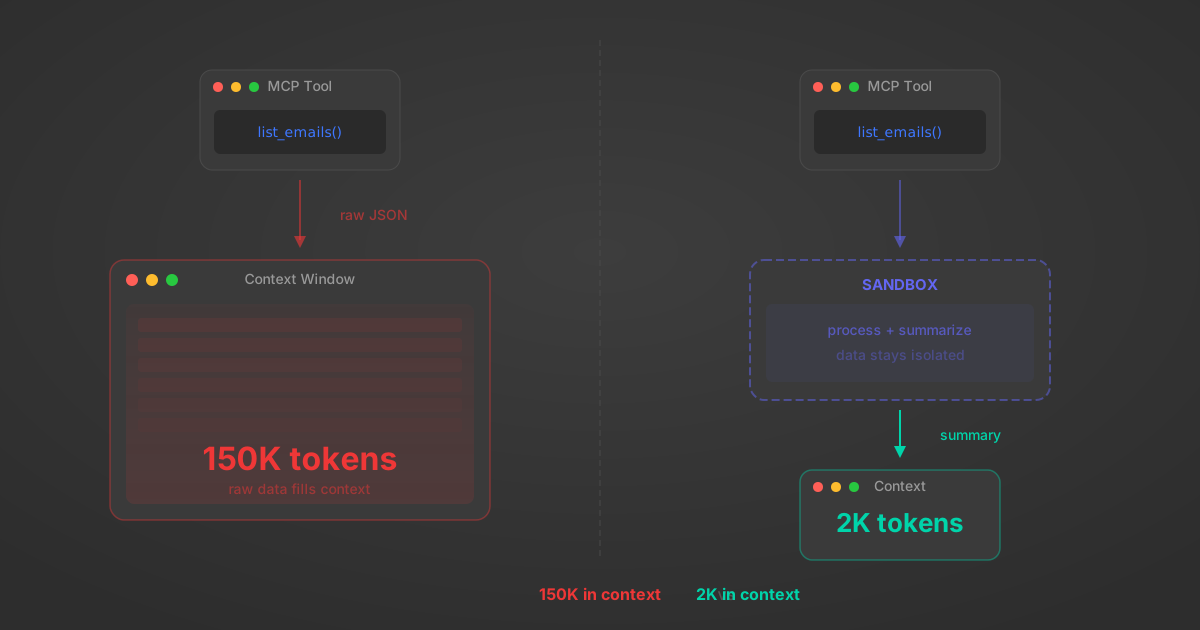
MCP Code Mode: Keeping Tool Responses Out of Agent Context
Anthropic's code_execution processes data already in context. Custom MCP code mode keeps raw tool responses in a sandbox. 14K tokens vs 500.
11 min
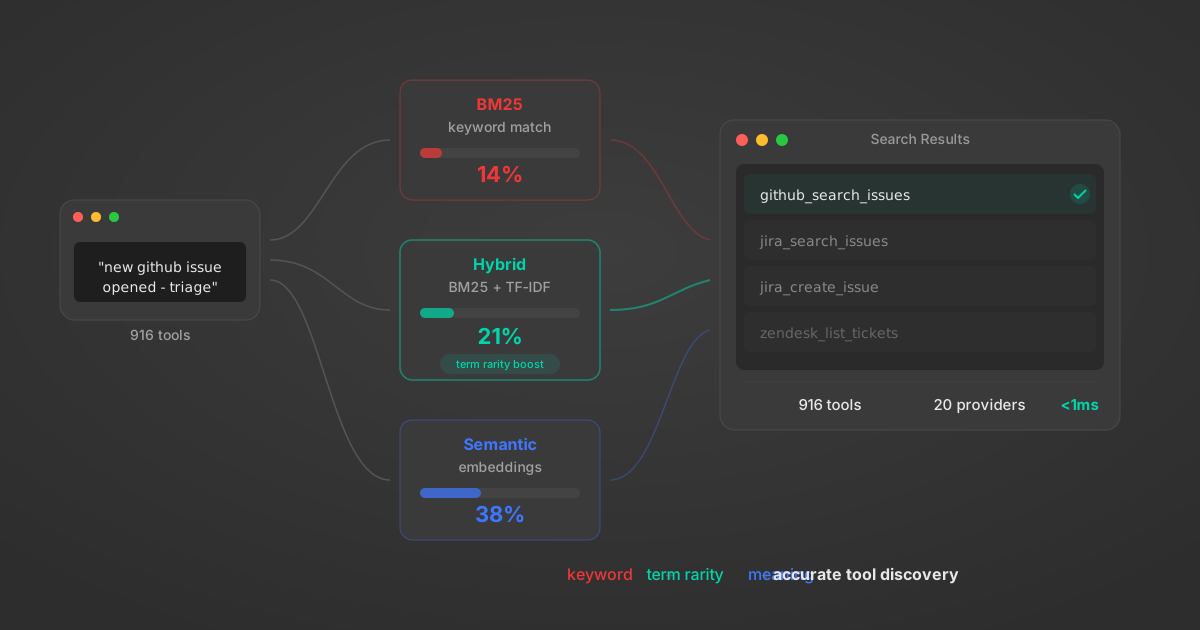
Comparing BM25, TF-IDF, and Hybrid Search for MCP Tool Discovery
Benchmarking BM25, TF-IDF, and hybrid search for MCP tool discovery across 916 tools. The 80/20 TF-IDF/BM25 hybrid hits 21% Top-1 accuracy in under 1ms.
10 min
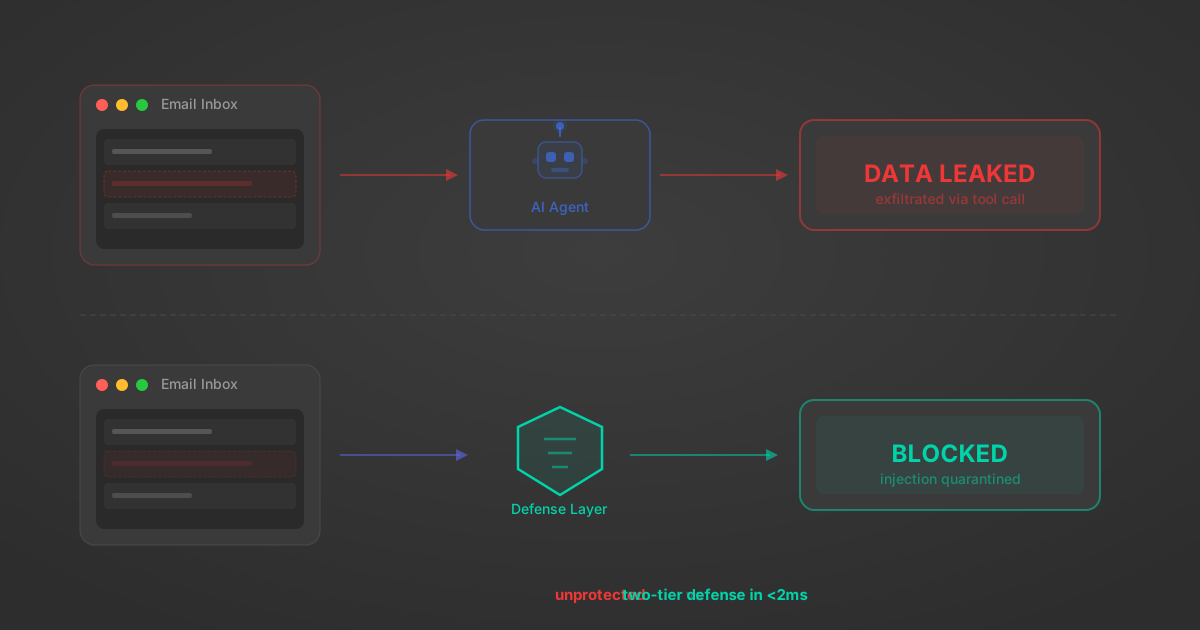
Indirect Prompt Injection Defense for MCP Tools: A Technical Guide
MCP tools that read emails, CRM records, and tickets are indirect prompt injection vectors. Here's how we built a two-tier defense that scans tool results in ~11ms.
12 min
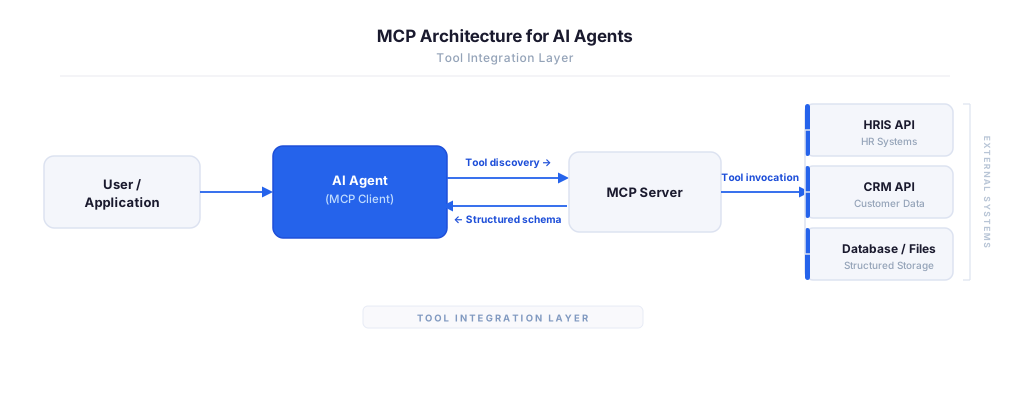
MCP vs A2A: Architecture, Security, and When to Use Each
MCP vs A2A: what each protocol standardizes, how they differ, their shared security risks including indirect prompt injection, and when to use one, both, or a hybrid architecture.
12 min
MCP vs API: What Hundreds of Connector Builds Taught Us
MCP wraps APIs, it doesn't replace them. After building hundreds of connectors that serve both, here's when each approach wins.
14 min read
Kenjo MCP Server FAQ
Does StackOne have a Kenjo MCP server?
Kenjo MCP server vs direct API integration — what's the difference?
How does Kenjo authentication work for AI agents?
origin_owner_id.Are Kenjo MCP tools vulnerable to prompt injection?
What is the context bloat of a Kenjo agent and how do I avoid it?
Can I limit which actions my Kenjo agent can access?
Can I create custom agent actions for my Kenjo MCP server?
When should I NOT use a Kenjo MCP server?
What AI frameworks and AI clients does the StackOne Kenjo MCP server support?
Put your AI agents to work
All the tools you need to build and scale AI agent integrations, with best-in-class connectivity, execution, and security.